Interviewing Tina Connolly

A few weeks ago, I discovered that it was a lot of fun to hand people some casual interview questions and see what they had to say. This is the fourth interview I’m putting on the blog.

I met Tina Connolly in 2006 when she went to the Clarion West Writers Workshop where I’d gone the year before. Weirdly, I can’t tell you a single thing about the first time I met her 10(I wonder if she remembers? Tina, perhaps you’ll enlighten me later), but I’m sure I instantly liked her–she’s warm, smart, and a great storyteller, in person and on paper.

I published Tina several times during my run as editor at PodCastle. I’m not sure what my favorite piece was, but here’s one that’s fun — “The Goats Are Going Places.” She’s also a smart, funny narrator who read a lot of stories for us. As a narrator, she eventually started her own podcast, Toasted Cake (unfortunatey now retired), which used to run flash fiction reprints. Here she is reading one of my stories, “Again and Again and Again,” on Toasted Cake.

Tina doesn’t always write humor–her Ironskin trilogy, for instance, is a mix of steampunk, Jane Eyre, and malevolent fairies (check it out if that sounds interesting to you)–but, for me at least, her fiction always has a core of warmth like the one she radiates in person.

Tina also recently took a turn into writing young adult novels, starting with the recently published Seriously Wicked.

The Interview:

I love the humor in your writing. You have a natural, quirky voice when you write humor that doesn’t seem cliche or affected. How did you come into writing humor, and how do you approach it?

Thanks, Rachel! I love writing humor. This kind of goes with your next question, but I’m sure I started writing humor from the same reason that I loved performing. I used to say that my favorite role was the be the comedic lead in a drama. Because you get so much juicy stuff to do, and because the audience is so glad to see you. I loved being comic relief.


And I suppose also that this is my favorite kind of story—where comedy and drama are blended. Even my darker stories tend to have funny bits sneak in, and my funny stories are generally grounded by more serious themes.


On a micro level, I’m not sure if I have any advice on how I approach humor – I have a tendency to go for the joke and I indulge that. (And then, sadly, sometimes you do have to cut jokes that are dragging down the pacing.) On a macro level, I used to do a lot of farces, and I found that the sort of fast-paced plot of Seriously Wicked worked on an intuitive level for me. First you get all the plates spinning, and then you run back and forth opening and slamming the doors….eventually someone gets a pie in the face.

I know you’ve spent time on the stage. When I’m writing, I find that the comedic timing I learned from playing comedic roles helps with figuring out how to write and land humor. Do you draw on those skills?

YES. Timing is very important to me. I often write by rhythm – like, I’m not sure what is going to go in the second half of this witty banter but it needs to have a specific number of beats. My first drafts are littered with “X”s as placeholders.


In general, my time in theatre has been helpful – when I started writing I had no clue about plot, but I spent a lot of time thinking about characters – what they would and wouldn’t do. One thing that was challenging for me at the beginning is that I would leave too much unsaid, because it was always clear to me what complex things the characters were thinking! And then I slowly figured out how to get more of that out of my head and on the page.


Lately I’ve been doing playwriting and thinking about this stuff all over again. For example, there’s a good reason you’re told not to do a ‘as you know Bob” infodump in prose. And you think, sure, that’s good advice, but if you’re a beginning writer you might not understand why. But boy, when you see it on stage – one character monologuing with no purpose behind it except to infodump – you can feel the energy drop like a rock. Dialogue must be persuasive.


You recently began publishing young adult fiction as well as books for us grown-ups. What are you finding inspiring and wonderful about YA?

Even with my adult fiction, I tend to write about younger characters just starting to figure things out. I think the thing that’s wonderful about the young adult / early adulthood time period is that there’s so much you do need to figure out, and it makes for many dramatic life choices and learning arcs.


Face painting. You do it. Tell me an awesome story about face painting.

I took my face paints to Clarion West in 2006, and again to Kij Johnson’s novel workshop at KU in 2012. Great fun. Vernor Vinge was our teacher that week at CW and he let me paint a goldfish on his cheek (something about the singularity…) And Kij picked a praying mantis, and Vylar Kaftan picked a Cthulhu. It wasn’t a very good Cthulhu, but I’ve been practicing. The next one will be better.


Lovecraft, Marie Antoinette, and President Obama are all clamoring for face paint at your booth at the fair. You’ve asked them what they want, but they trust your artistic instincts. So, what are you going to paint?

Lovecraft obviously gets the improved Cthulhu. Antoinette… well, I do have a cute cupcake arm. But I think she would be happiest with the delicate swirlies around the eye, with the sparkles. Obama – well, I have to take into account the fact that I would be simultaneously super nervous and really really wanting to do a good job, so it would not be a good time to attempt something new and ridiculous. I’ve got a nice standby of an American flag with fireworks arm painting (July 4th is a popular time to hire a face painter) so I’d probably suggest that. I think his media relations people would approve that one, too.


The projects question. What are you working on, and what’s coming out?

I just turned in Seriously #2 (which is titled Seriously Shifted, and involves a whole quartet of wicked witches), and that’s due out November 2016 from Tor Teen. I’m just starting in on Seriously #3, which will be out November 2017. In the meantime, I also have my debut collection (On the Eyeball Floor and Other Stories) coming from Fairwood Press in August 2016 – there’ll be a release party at WorldCon in Kansas City!

 

Posted in Interviews, Mandolin | Comments Off on Interviewing Tina Connolly

Some Criticism Of That Swedish “Fat And Fit is a Myth” Study

jessica-jones

So a new Swedish study has been making headlines:

The study, “Aerobic fitness in late adolescence and the risk of early death: a prospective cohort study of 1.3 million Swedish men”, was published in December in the International Journal of Epidemiology. The authors are Gabriel Högström, Anna Nordström, and Peter Nordström. The reason the study made headlines was its finding that “unfit normal-weight individuals had 30% lower risk of death from any cause than did fit obese individuals.” It’s an interesting study – but not nearly as conclusive as the headlines (and some internet commenters) seem to believe.

This is only one study.

Many studies have found that fitness matters more than fat, for mortality. For instance, this 2014 meta-analysis of ten peer-reviewed studies found that “Compared to normal weight-fit individuals, unfit individuals had twice the risk of mortality regardless of BMI. Overweight and obese-fit individuals had similar mortality risks as normal weight-fit individuals.”

Similarly, this 2010 meta-analysis of 36 peer-reviewed studies concluded “that the risk for all-cause and cardiovascular mortality was lower in individuals with high BMI and good aerobic fitness, compared with individuals with normal BMI and poor fitness.” ((I want to acknowledge that the same meta-analysis also found that being fat, even for fit individuals, “was a greater risk for the incidence of type 2 diabetes and the prevalence of cardiovascular and diabetes risk factors, compared with normal BMI with low physical activity.” But it’s interesting that these risk factors didn’t translate to greater mortality.))

Overall, results are mixed. I’m not saying that this Swedish study should be ignored (although it has limitations – see below). But it’s one data point among many, rather than meaning that “the debate is over,” as one person told me on Facebook.

This study only measured fitness at age 18.

This study’s method was to measure fitness of over a million young Swedish men (average age 18), and then follow them for approximately 30 years, keep track of if they died and what they died from. ((I’m simplifying a bit for the sake of space and simplicity.))

So the study didn’t measure if being currently fat and fit reduces current mortality; it measured whether being fat and fit at age 18 reduces mortality over the next three decades. That’s an interesting thing to study – but it’s hard to see how this speaks to whether or not someone like me – a 47 year old fat man – might reduce my risk of mortality with regular exercise in my current life.

Furthermore, since the study only followed male subjects, it’s unclear if these results can be generalized to women. (The study used Swedish army data from young men who were conscripted into the military; I don’t know if any comparable database exists of young Swedish women’s fitness.)

Pragmatically, it doesn’t matter, because weight-loss diets don’t work

The “can you be fat and fit?” debate ignores the fact that, for most fat people, adding regular mild exercise is achievable, and significant long-term weight loss is not.

Of course, not everyone can exercise – there are many barriers (such as health, economics, the need to care for children, long work hours, and so on…) that can prevent people from exercising. Plus, some people just don’t want to exercise, and that’s fine, too. (No one is obliged to exercise, and fat people who exercise are not better than fat people who don’t).

Nonetheless, for many or most fat people, exercise is possible, if that’s what they want. So even if in some theoretical sense being thin is better for health than exercising, that doesn’t matter for fat people like me, because being thin is not one of my available options.

Posted in Fat, fat and more fat | 1 Comment

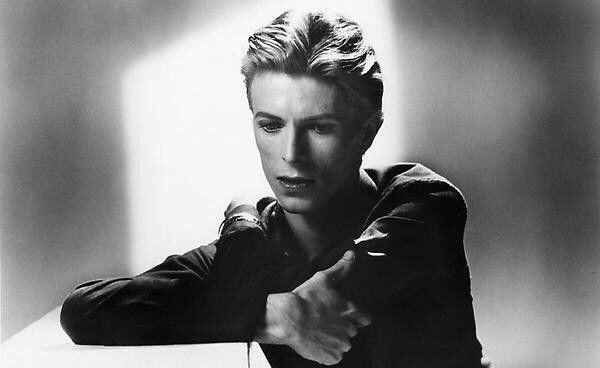
David Bowie 1947-2016

david-bowie

david-bowie4

David Bowie, Pop Star Who Transcended Music, Art and Fashion, Has Died at 69 – The New York Times

Posted in In the news | 4 Comments

Interviewing Megan O’Keefe

A few weeks ago, I discovered that it was a lot of fun to hand people some casual interview questions and see what they had to say. This is interview #3.

Thanks to Megan O’Keefe for playing! I don’t know Megan very well, except by coincidence it turns out that I’ve been buying her etsy soaps and perfumes for a while. (I like them!) Megan is a Writers of the Future winner.

Her first novel comes out today from Angry Robot Books, Steal the Sky.

The interview:

You’re a professional soap maker. I’ve actually bought a lot of your soap. I was buying your soap before I knew you were you. Can you talk a little bit about how you make soap (note–just to clarify the question without it being wordier–I mean how do you personally make soap, not how is soap made in general), and how you got into it?

That’s so awesome! I didn’t know you were buying from me before we met. Lately I’ve discovered that there’s a surprisingly large overlap between people who are my soap customers and people who love fantasy and science fiction. It’s definitely been a pleasant surprise.


I make soap using the cold process method of soapmaking. This is one of the oldest methods, the origins of which were people using ash from their fires to clean greasy pots, as they found it worked better than plain scouring because there were traces of sodium hydroxide (that’s lye) in the ash created by burning wood. The lye would react with the grease in the pots to create a very basic soap. My method has evolved some since then.


My standard formula is one I developed over the years to suit most skin types, but is skewed toward those with dry skin. Each oil you add to a soap mix brings its own properties, and mine began with the three “pillar” oils of soapmaking: olive, coconut, and palm. Olive oil brings moisture to soap, palm oil brings stability to the lather (often called “creaminess”) and coconut oil brings big, fluffy lather. Despite popular belief, coconut oil when turned into soap is actually extra cleansing – it can dry you out if not balanced with other oils. I then add safflower for silkiness/glide, and castor oil for another bubble boost. The resulting bar is capable of producing lots of fluffy lather while not drying out your skin.


Random cool fact about coconut oil: a 100% coconut oil soap is the only kind that is capable of lathering in salt water.


2. How do you go about developing new perfumes? In particular, I’m interested about the inspiration–does instinct tell you what scents might mix? Experimentation? Etc.?

I have an arsenal of accords I’ve created over the years – blends of scents that achieve a single note fragrance, such as red rose or fern. When I have an idea for a new scent I review these and start making notes on which ones I suspect will blend well together to achieve the scent I want, then I start testing.


For example, when I was creating my scent The Librarian, I knew I wanted something warm and spicy, reminiscent of books, and with a hint of banana as an ode to Terry Pratchett. I had to blend up the banana accord from scratch, but I started out with my bourbon vanilla, white oak, and chai spice accords. Once the fragrance has the basic feel I’m going for, I start refining by tweaking percentages and adding small amounts of other accords just to see what happens. Then I move on to longevity testing to see how long the scent can “stand” on skin, and from there I move on to testing it in soap. It’s an involved process, but I find it fun and relaxing.


3. Your new book, Steal the Sky, comes out in 2016. As an epic fantasy, it’s coming onto the scene at a time where G. R. R. Martin’s Grimdark is ruling TV, while simultaneously The Goblin Emperor’s lighter approach earned it places on the major award ballots. Where is your book coming into that conversation?

Steal the Sky is sliding into the middle of that conversation with a wink and a nudge. The Scorched Continent is a desperate place, full of people struggling to earn their daily bread and water, and also home to a variety of human rights abuses. It’s not an easy place to live, but there are some elements of hope that remain.


In his past, my protagonist, the conman Detan Honding, hasn’t exactly been give the short end of the stick – he’s been hit with it. Repeatedly. When we meet him, there’s a hint of this troubled past, but he is blithely wise-cracking and generally willing to stir up mischief just for the sake of mischief. It feels light. It feels fun. But you’re tightly in Detan’s point of view – and there’s a reason he’s quick with a quip, and it’s nothing to do with jolliness.


I’ve always felt that humor and darkness are inextricably intertwined. There’s silliness, of course, but the stuff that really gets you – that makes you choke out laughing despite yourself – that’s the stuff that cuts. The stuff that reveals some darker nature and points out the absurdity of it. It says that – yeah, we’re human. We’ve moved beyond our baser natures, built civilizations, and transcended the primordial mud. But we’re still animals. Can’t help ourselves. And confronting this intrinsic fault with a laugh is an excellent way to cope. Some of the darkest scenes I’ve ever read have been in Terry Pratchett novels.


So, sure, from the start the surface of Steal the Sky is a fun adventure. Detan jokes his way through his troubles and Tibs plays the straight man, a ready contrast to Detan’s ridiculousness. But Detan’s laughing because he has to. Because as soon as he stops laughing, something’s going to break within him, perhaps irreversibly, and it won’t be pretty for anyone involved.


4. You have some writing advice articles on worldbuilding on your blog. Can you recommend some novels that you think do worldbuilding really right?

This is probably cheating, but I have to recommend The Malazan Book of the Fallen by Steven Erikson. The world – Wu – is huge and fully realized. Erikson is a professional archaeologist, and his attention to detail is eloquently demonstrated in the cultures he creates. Not only does he avoid the trap of mono-cultures, he has also built in somewhere around 300k years of history to his world, and the cultures that exist in the “modern” time period of Malazan feel like they have naturally grown out of that rich past. It’s an unforgiving read, however. Erikson dumps you straight into his world and right behind the eyes of the characters, not bothering to have them explain things that they would naturally know the answers to. I’ve heard that some people have a rough time getting started with Malazan, but if you can make it through that tricky first book, then you’re in for a treat.


That said, the world of Wu was originally created as a setting for a role-playing game, and at times that does shine through. For a truly unique take on worldbuilding, look to N.K. Jemisin’s Dreamblood Duology. The culture’s aesthetics are inspired by ancient Egypt, but the magic and political systems are wholly their own. There’s no hint of the Aristotelian elements here. The magic is loosely based on Egyptian medicine with a dash of Freudian dream theory, and the city’s rule is focused on the preservation of peace. Jemisin deepens her world by layering in stories of its past rulers.

5. Obviously, your novel is due out soon. Do you have any other writing news you’d like to share, or opportunities for us to see more of you and your work?

In the Scorched Continent Series, book two is well on its way to being complete and book three has a hearty outline, ready for drafting. I do have another novel project in the works, but that one’s a secret for the time being. In the meantime, you can find a handful of my stories for free around the web. My Writers of the Future winning story, Another Range of Mountains, is free to read on Wattpad. And my short story, Of Blood and Brine, which has been featured on SFWA’s Nebula reading list, can be read for free over at Shimmer or listened to at Podcastle. I also have a fun, tongue-in-cheek piece of Christmas flash fiction that just went up on the Barnes & Noble blog.

Source: Rachel Swirsky’s blog

Posted in Interviews, Mandolin | Tagged | Comments Off on Interviewing Megan O’Keefe

Open Thread and Link Farm, Drones Blending Under The Sea Edition

  1. Horizons: Republicans are Stuck in an Argument from the 1990’s
    More undocumented Mexican immigrants are returning to Mexico than are coming from Mexico – primarily because the Mexican economy is improving.
  2. Thousands Of Ted Cruz Supporters Play A Game That Might Win Iowa | FiveThirtyEight
    If you click through and check out the table, any idea why the Democrats have been putting so much more effort (at least, by the numbers) into Iowa than the Republicans? I find that a bit counter-intuitive, given how much more competitive the GOP race is.
  3. Speaking of Iowa, I think the way the Democrats vote in the Iowa caucuses – basically, they just stand in big groups and then and try to talk people standing in other groups to walk over and stand with their group instead – is really pretty awesome.
  4. To Win In Iowa Or New Hampshire, It May Be Better To Poll Worse Nationally | FiveThirtyEight
    I’m looking forward to the primary voting (or caucusing) actually beginning. The race becomes much more interesting once there are real numbers attached to it.
  5. Lèse humanité: What happened when slaves and free men were shipwrecked together | The Economist
    It did not end well for the slaves. But an interesting read.
  6. Why it took so long to charge Bill Cosby: Social media and public opinion had to force hand of justice system – Salon.com
  7. Discharged Atlanta Fire Chief Strikes Back in Federal Lawsuit.
    Grace pointed this case out to me – a Fire Chief wrote and self-published a book of right-wing Christian thought, including a couple of typical anti-gay statements (although it doesn’t appear that was the book’s focus). He gave copies to some employees – he says generally those who asked him for a copy – and the mayor. And he was fired. They’ve investigated and found no evidence of him discriminating against lgbt employees. Grace wanted to know if I think he should have been fired; my feeling is that he shouldn’t have been, but I’m less sure of that than I ordinarily am, because of his status as Fire Chief (i.e., he’s a boss more than an employee, and a public figure).
  8. We’re not here for your inspiration – The Drum (Australian Broadcasting Corporation)
    “Inspiration porn shames people with disabilities. It says that if we fail to be happy, to smile and to live lives that make those around us feel good, it’s because we’re not trying hard enough.”
  9. Use of deadly force by police disappears on Richmond streets – ContraCostaTimes.com
    This is a very encouraging article about what might be possible. Has this model been successfully used in other cities?
  10. For some reason – well, for the sake of procrastination – I yammer on and on about a Spider-Man page by Frank Miller and Klaus Jansen from 1981.
  11. Crap apps and female email | language: a feminist guide
    There’s no evidence that saying “sorry” and “I just” is harmful to women.
  12. “Christina H Sommers liked one of your tweets” is not a sentence I ever expected to read. ((It was a tweet wishing Cathy Young a Happy New Year.))
  13. TV shows distort which women get abortions — and why they get them – The Washington Post.
  14. What We Talk About When We Talk About Lying Crazypants Liars Who Lie | Lynch Industries
    Scott Lynch evaluates John C Wright’s accusations against Patrick Nielsen Hayden. Spoiler: Wright is wrong.
  15. 4 Things That Were Supposed To Happen By 2016 Because Obama Was Reelected | ThinkProgress
  16. Undercover Police Have Regularly Spied On Black Lives Matter Activists in New York
  17. How long has John Travolta been in that car?
  18. Herd Mentality | Quillette What Social Justice liberals and Libertarians have in common.
  19. Can Putting Your Baby to Bed Be a Crime? – The Daily Beast
    A mother was arrested after her baby, who had been put to sleep belly-down, died.
  20. The Year of the Imaginary College Student – The New Yorker
    “The alarm about offense-seeking college students may say more about the critics of political correctness than it does about the actual state of affairs.”
  21. The Value of the Oberlin Food Protests: Dining-hall food might not be the most pressing injustice in the world—but students need space to experiment with activism.
    I don’t think that students have changed. I do think that the tendency of silly things students say or do to be magnified all over the world on social media is a change, though. If I were a student editor of a student newspaper, I might take the newspaper offline, or make it accessible only to computers on the campus network.
  22. 25 Graphic Novels Written By Women, A Guide For Beginners | Bustle.
    This list includes some comics I love, some that didn’t do much for me, and of course some I haven’t read yet.
  23. Lost Soles – The Awl She stepped on hot coals and didn’t tell anybody.
  24. Time to Party Like It’s 1998. Republicans are dusting off the “Hillary is married to Bill, therefore she’s no feminist” arguments.
  25. The Key To The GOP Race: The Diploma Divide | FiveThirtyEight
    If you’re a Republican, who you say you’ll vote for is strongly associated with if you went to college. The folks without college degrees are supporting Trump.

    Buuuu-bah… Bu-bu-bu BAAAH bu!

  26. Hasbro has been bizarrely reluctant to include Rey, the star of the movie, in their Star Wars merchandise.
  27. The “Star Wars” fandom menace: The glaring emotional blind spots that power “The Force Awakens” – Salon.com
    For the record, I really enjoyed TFA, but I also enjoyed this article.
  28. On the Millennium Falcon, and the issue of Parsecs…
    “Parsecs” is used correctly, darn it!
  29. Willrow Hood is now my favorite character in the Star Wars universe.
  30. ​The 11 Sci-Fi Films That Defined 2015 | Motherboard
    “Star Wars” is on the list, but not in the number one slot.

Posted in Link farms | 90 Comments

Interviewing Megan O’Keefe

A few weeks ago, I discovered that it was a lot of fun to hand people some casual interview questions and see what they had to say. This is interview #3.

Thanks to Megan O’Keefe for playing! I don’t know Megan very well, except by coincidence it turns out that I’ve been buying her etsy soaps and perfumes for a while. (I like them!) Megan is a Writers of the Future winner.

Her first novel comes out today from Angry Robot Books, Steal the Sky.

The interview:

You’re a professional soap maker. I’ve actually bought a lot of your soap. I was buying your soap before I knew you were you. Can you talk a little bit about how you make soap and how you got into it?

That’s so awesome! I didn’t know you were buying from me before we met. Lately I’ve discovered that there’s a surprisingly large overlap between people who are my soap customers and people who love fantasy and science fiction. It’s definitely been a pleasant surprise.


I make soap using the cold process method of soapmaking. This is one of the oldest methods, the origins of which were people using ash from their fires to clean greasy pots, as they found it worked better than plain scouring because there were traces of sodium hydroxide (that’s lye) in the ash created by burning wood. The lye would react with the grease in the pots to create a very basic soap. My method has evolved some since then.


My standard formula is one I developed over the years to suit most skin types, but is skewed toward those with dry skin. Each oil you add to a soap mix brings its own properties, and mine began with the three “pillar” oils of soapmaking: olive, coconut, and palm. Olive oil brings moisture to soap, palm oil brings stability to the lather (often called “creaminess”) and coconut oil brings big, fluffy lather. Despite popular belief, coconut oil when turned into soap is actually extra cleansing – it can dry you out if not balanced with other oils. I then add safflower for silkiness/glide, and castor oil for another bubble boost. The resulting bar is capable of producing lots of fluffy lather while not drying out your skin.


Random cool fact about coconut oil: a 100% coconut oil soap is the only kind that is capable of lathering in salt water.


2. How do you go about developing new perfumes? In particular, I’m interested about the inspiration–does instinct tell you what scents might mix? Experimentation? Etc.?

I have an arsenal of accords I’ve created over the years – blends of scents that achieve a single note fragrance, such as red rose or fern. When I have an idea for a new scent I review these and start making notes on which ones I suspect will blend well together to achieve the scent I want, then I start testing.


For example, when I was creating my scent The Librarian, I knew I wanted something warm and spicy, reminiscent of books, and with a hint of banana as an ode to Terry Pratchett. I had to blend up the banana accord from scratch, but I started out with my bourbon vanilla, white oak, and chai spice accords. Once the fragrance has the basic feel I’m going for, I start refining by tweaking percentages and adding small amounts of other accords just to see what happens. Then I move on to longevity testing to see how long the scent can “stand” on skin, and from there I move on to testing it in soap. It’s an involved process, but I find it fun and relaxing.


3. Your new book, Steal the Sky, comes out in 2016. As an epic fantasy, it’s coming onto the scene at a time where G. R. R. Martin’s Grimdark is ruling TV, while simultaneously The Goblin Emperor’s lighter approach earned it places on the major award ballots. Where is your book coming into that conversation?

Steal the Sky is sliding into the middle of that conversation with a wink and a nudge. The Scorched Continent is a desperate place, full of people struggling to earn their daily bread and water, and also home to a variety of human rights abuses. It’s not an easy place to live, but there are some elements of hope that remain.


In his past, my protagonist, the conman Detan Honding, hasn’t exactly been give the short end of the stick – he’s been hit with it. Repeatedly. When we meet him, there’s a hint of this troubled past, but he is blithely wise-cracking and generally willing to stir up mischief just for the sake of mischief. It feels light. It feels fun. But you’re tightly in Detan’s point of view – and there’s a reason he’s quick with a quip, and it’s nothing to do with jolliness.


I’ve always felt that humor and darkness are inextricably intertwined. There’s silliness, of course, but the stuff that really gets you – that makes you choke out laughing despite yourself – that’s the stuff that cuts. The stuff that reveals some darker nature and points out the absurdity of it. It says that – yeah, we’re human. We’ve moved beyond our baser natures, built civilizations, and transcended the primordial mud. But we’re still animals. Can’t help ourselves. And confronting this intrinsic fault with a laugh is an excellent way to cope. Some of the darkest scenes I’ve ever read have been in Terry Pratchett novels.


So, sure, from the start the surface of Steal the Sky is a fun adventure. Detan jokes his way through his troubles and Tibs plays the straight man, a ready contrast to Detan’s ridiculousness. But Detan’s laughing because he has to. Because as soon as he stops laughing, something’s going to break within him, perhaps irreversibly, and it won’t be pretty for anyone involved.


4. You have some writing advice articles on worldbuilding on your blog. Can you recommend some novels that you think do worldbuilding really right?

This is probably cheating, but I have to recommend The Malazan Book of the Fallen by Steven Erikson. The world – Wu – is huge and fully realized. Erikson is a professional archaeologist, and his attention to detail is eloquently demonstrated in the cultures he creates. Not only does he avoid the trap of mono-cultures, he has also built in somewhere around 300k years of history to his world, and the cultures that exist in the “modern” time period of Malazan feel like they have naturally grown out of that rich past. It’s an unforgiving read, however. Erikson dumps you straight into his world and right behind the eyes of the characters, not bothering to have them explain things that they would naturally know the answers to. I’ve heard that some people have a rough time getting started with Malazan, but if you can make it through that tricky first book, then you’re in for a treat.


That said, the world of Wu was originally created as a setting for a role-playing game, and at times that does shine through. For a truly unique take on worldbuilding, look to N.K. Jemisin’s Dreamblood Duology. The culture’s aesthetics are inspired by ancient Egypt, but the magic and political systems are wholly their own. There’s no hint of the Aristotelian elements here. The magic is loosely based on Egyptian medicine with a dash of Freudian dream theory, and the city’s rule is focused on the preservation of peace. Jemisin deepens her world by layering in stories of its past rulers.

5. Obviously, your novel is due out soon. Do you have any other writing news you’d like to share, or opportunities for us to see more of you and your work?

In the Scorched Continent Series, book two is well on its way to being complete and book three has a hearty outline, ready for drafting. I do have another novel project in the works, but that one’s a secret for the time being. In the meantime, you can find a handful of my stories for free around the web. My Writers of the Future winning story, Another Range of Mountains, is free to read on Wattpad. And my short story, Of Blood and Brine, which has been featured on SFWA’s Nebula reading list, can be read for free over at Shimmer or listened to at Podcastle. I also have a fun, tongue-in-cheek piece of Christmas flash fiction that just went up on the Barnes & Noble blog.

Posted in Interviews, Mandolin | Comments Off on Interviewing Megan O’Keefe

New Story, “Tea Time,” in Lightspeed Magazine

A new story of mine, “Tea Time,” is now available from Lightspeed Magazine.

It is never polite to go out-of doors without a hat. One’s hat should remain on one’s head no matter the extremity. Even if the rest of one’s clothing should happen to be removed by some improbable whim of the weather, such as a particularly dexterous gale with a penchant for buttons, one must be sure to hold one’s hat fixedly on one’s head.


The hatter is a poor man. He has no hats of his own. Those he keeps on his head or in his house are merely inventory, soon to be shuffled away when a purchaser is found.

“Tea Time” is a retelling of sorts, about the Hatter and the Hare from Alice in Wonderland, and their endless tea time. Alice in Wonderland is one of those stories that always gets in my head and stays there. My parents are fans. I have an annotated copy from just after my father was born, filled with pencil notes, which my parents gave me while I was writing this story. When he was in college, my father colored a black light poster of Alice on the chess grounds, which still hangs in their kitchen.

As a child, I watched many televised Alice retellings. I’ve always been fond of retellings because of the way different people — and different actors — choose to reinterpret a text; there’s so much living, interesting variance. I had Alice Blue Dress, Alice Disney, Alice Orange Dress (it was a bit of a revelation to realize she didn’t have to be in blue!). Carol Channing was in one of them as the White Queen. My favorite these days as an adult is a Broadway production from 1983 featuring Nathan Lane as a rat who is almost drowned by Alice’s tears. It’s a somber, adult version of the tale, which begins with Alice smoking as she stares into her dressing room mirror, somber if not dead-eyed.

Alice is a story that translates well from young to old, innocent to mature. Unlike The Wizard of Oz (which I also like quite a bit) in which Dorothy is repeatedly described in blushing, innocent, girlish terms, Alice is unsentimentally portrayed. She’s an interesting but flawed heroine, not sugar and spice. I have a particular love for child characters who are written as sharp and strange, the way real children are, rather than the rosy cherubs we adults want them to be.

Rereading Alice in Wonderland as an adult also shows how sharp and intelligent the prose is! There’s a reason the story works on a lot of levels, and that’s because it was written that way. There’s the adventure, but there’s also strange meditations on the nature of reality and growing up, and it hasn’t lost any of its edge since it was written.

“Tea Time” isn’t about Alice — she shows up a couple times in the background as an annoyance to the Hatter and Hare. Instead, it’s about the two of them, and how characters might navigate a surreal, inconsistent world. I started writing something absurd because I love absurdity, but it eventually tracked into a meditation about love and time.

Q: Why is a raven like a writing desk?

A: Because they both have quills.


Q: Why is a vain woman like a hatter?

A: Because they both love their hare.


Q: Why is tea time like eternity?

A: One begins with tea and the other ends with it.

You can read the story for free online, or listen to the podcast narrated by Stefan Rudnicki (available on the same page).

CW: Rated R, lots of Victorian slang about sex.

Posted in Fiction, Mandolin | Comments Off on New Story, “Tea Time,” in Lightspeed Magazine

New Story, “Tea Time,” in Lightspeed Magazine

A new story of mine, “Tea Time,” is now available from Lightspeed Magazine.

It is never polite to go out-of doors without a hat. One’s hat should remain on one’s head no matter the extremity. Even if the rest of one’s clothing should happen to be removed by some improbable whim of the weather, such as a particularly dexterous gale with a penchant for buttons, one must be sure to hold one’s hat fixedly on one’s head.


The hatter is a poor man. He has no hats of his own. Those he keeps on his head or in his house are merely inventory, soon to be shuffled away when a purchaser is found.

“Tea Time” is a retelling of sorts, about the Hatter and the Hare from Alice in Wonderland, and their endless tea time. Alice in Wonderland is one of those stories that always gets in my head and stays there. My parents are fans. I have an annotated copy from just after my father was born, filled with pencil notes, which my parents gave me while I was writing this story. When he was in college, my father colored a black light poster of Alice on the chess grounds, which still hangs in their kitchen.

As a child, I watched many televised Alice retellings. I’ve always been fond of retellings because of the way different people — and different actors — choose to reinterpret a text; there’s so much living, interesting variance. I had Alice Blue Dress, Alice Disney, Alice Orange Dress (it was a bit of a revelation to realize she didn’t have to be in blue!). Carol Channing was in one of them as the White Queen. My favorite these days as an adult is a Broadway production from 1983 featuring Nathan Lane as a rat who is almost drowned by Alice’s tears. It’s a somber, adult version of the tale, which begins with Alice smoking as she stares into her dressing room mirror, somber if not dead-eyed.

Alice is a story that translates well from young to old, innocent to mature. Unlike The Wizard of Oz (which I also like quite a bit) in which Dorothy is repeatedly described in blushing, innocent, girlish terms, Alice is unsentimentally portrayed. She’s an interesting but flawed heroine, not sugar and spice. I have a particular love for child characters who are written as sharp and strange, the way real children are, rather than the rosy cherubs we adults want them to be.

Rereading Alice in Wonderland as an adult also shows how sharp and intelligent the prose is! There’s a reason the story works on a lot of levels, and that’s because it was written that way. There’s the adventure, but there’s also strange meditations on the nature of reality and growing up, and it hasn’t lost any of its edge since it was written.

“Tea Time” isn’t about Alice — she shows up a couple times in the background as an annoyance to the Hatter and Hare. Instead, it’s about the two of them, and how characters might navigate a surreal, inconsistent world. I started writing something absurd because I love absurdity, but it eventually tracked into a meditation about love and time.

Q: Why is a raven like a writing desk?

A: Because they both have quills.


Q: Why is a vain woman like a hatter?

A: Because they both love their hare.


Q: Why is tea time like eternity?

A: One begins with tea and the other ends with it.

You can read the story for free online, or listen to the podcast narrated by Stefan Rudnicki (available on the same page).

CW: Rated R, lots of Victorian slang about sex.

Source: Rachel Swirsky’s blog

Posted in Fiction, Mandolin | Tagged | Comments Off on New Story, “Tea Time,” in Lightspeed Magazine

Eight Points About The Armed Anti-Government Activists In Oregon

family-guy-okay-not-okay

In a nutshell: Some armed anti-government folks – they claim to number 150, but probably the real figure is closer to a dozen – have occupied a Federal wildlife management building in Burns, Oregon (which is a long way from basically anything other than Burns, Oregon). The building was empty for the holiday weekend, so there hasn’t been any violence so far; however, one of the occupiers, Ryan Bundy, told a reporter that they are willing to “kill and be killed.”

(Incidentally, it doesn’t seem like any of these folks are actually from Oregon.)

For a much more complete summary of the situation, Vox has a primer.

1) I’m not convinced that the government would already have rushed in with blazing guns if these folks were not white, but the situation were otherwise (isolated Federal building, no immediate threat, no decisions being made on-the-spot by lower-rank police) identical. (There is the example of the bombing of MOVE in 1985 – but that was decades ago, and a local police force, not the Federal government).

There’s no denying that law enforcement is sometimes violently racist. But you can’t go from that to saying “this specific event would definitely go differently!”

2) On the other hand, I agree with Vox that media coverage of protests sure looks different when demonstrators are white. And the different media coverage means that there will be less pressure on government to resolve the situation quickly. (Related example: “CNN Analyst Says Black Protesters Are More Dangerous Than Armed Militiamen“).

3) I’ve seen right-wingers on Twitter suggest that this situation is comparable to Occupy Wall Street, or to Black Lives Matter. But neither of those groups threatened to “kill and be killed” if anyone tried to arrest them. That’s a huge difference.

4) In a situation like this – where there is no one in immediate danger, and the occupiers are shut up in a building far from anyone, and there’s a danger of police getting injured or killed if the situation escalates – we should want the authorities to take their time and be cautious.

5) But seeing these guys treated with kid gloves is infuriating, as David Atkins points out:

So on the one hand it’s understandable that federal officials would not want to make martyrs of the right-wing domestic terrorists who are actively seeking to engage in a confrontation and make themselves appear to be downtrodden victims of the federal beast. But on the other hand, it’s infuriating that they receive special kid glove treatment that would not be afforded to minority and liberal activists. […]

As much as restraint is the better part of valor when dealing with entitled conservative crazies, principles of basic justice and fair play also need to apply.

But the fair play I want is for police to use restraint and care in every case possible – not for them to treat this situation without restraint or care.

6) I don’t think what these folks are doing is “terrorism,” and calling it terrorism seems to be part of expanding the term “terrorism” to cover people who aren’t setting bombs or attacking random people in order to effect political change. So far, these folks have done nothing but occupying a building, and warned that they will defend themselves with force if attacked; that’s deplorable, but it doesn’t meet my personal threshold for calling someone a terrorist.

Mark Kleiman suggests that the correct charge is “seditious conspiracy.”

If two or more persons in any State or Territory, or in any place subject to the jurisdiction of the United States, conspire to overthrow, put down, or to destroy by force the Government of the United States, or to levy war against them, or to oppose by force the authority thereof, or by force to prevent, hinder, or delay the execution of any law of the United States, or by force to seize, take, or possess any property of the United States contrary to the authority thereof, they shall each be fined under this title or imprisoned not more than twenty years, or both.

That seems spot-on. These folks richly deserve to spend time behind bars.

7) Kevin Drum says he “would like to hear all the Republican presidential candidates denounce them in no uncertain terms.” I agree. But so far, all of them but Kasich have been staying studiously quiet. Profiles in courage, ammirite?

8) Some folks (example) have been claiming that the Hammonds – father-and-son ranchers whose sentencing for arson set off this chain of events – were merely setting fires on their own lands, which inadvertently spread onto Federal lands. But according to the US Attorney’s Office, that’s not true.

P.S. A good cartoon from Jen Sorenson’s archives applies to this situation.

Posted in Conservative zaniness, right-wingers, etc., In the news, Race, racism and related issues | 23 Comments

Hereville drawing process: Using reference photos

Here’s my part of a panel from Hereville 3. (It’s from page 128, if you have the book and would like to compare.)

hereville-photo-ref-process

I usually don’t use photo reference for figures – it’s difficult to prevent photo-referenced figures from looking lifeless, at least for me (other cartoonists do it better). When I use a photo ref and the resulting drawing looks like it was photo-referenced, I think of that as me “getting beat up by the photo.” But some poses are just too hard to figure out without reference. This three-way hug is definitely one such pose.

So I made my housemates Matt, Maddox and Sydney pose for for this photo (Matt is the girls’ dad), and used that as the basis for my drawing. Even with the photo, there are still differences between the reference and the final image – although there are also bits that are very similar (compare Fruma’s hands to Matt’s). The biggest change was Mirka’s entire figure, and turning Layele’s head so that readers could see her happy expression.

I think I’ve gotten much better at not letting source photos beat up my drawings. In the first Hereville book, there are some drawings that still make me wince because they look so obviously drawn from photos.

Posted in Cartooning & comics, Hereville | Comments Off on Hereville drawing process: Using reference photos