What Lies at the Edge of a Petal Is Love

What Lies at the Edge of a Petal Is Love” began with a dream. For a while, I was writing dream stories, such as this one and “How the World Became Quiet: A Post-Human Creation Myth.” It hasn’t happened lately. Maybe my sleep habits have changed. The stories just seemed full-formed–but odd. Vanilla scent was vivid in the dream, for some reason.

What Lies at the Edge of a Petal is Love

Lynch Albert Young Woman Holding Flower“After the wedding, Ruth moved into the Victorian mansion on Jack’s vast, rural estate. She brought only two bags. One was full of clothes. The other she unpacked like a devotee arranging an altar: an assortment of vanilla-scented lotions, deodorants, soaps, moisturizers, scrubs and splashes.

Every morning, Jack watched Ruth stand by the pedestal sink in her white silk robe: rubbing, dabbing, spraying, powdering, and anointing. When she emerged, he took her hand and inhaled her from soft wrist to slender shoulders.

Jack had met Ruth only two months earlier, during his obligatory annual visit to his relatives in the city. Ruth was also visiting the city, on doctor’s orders; she suffered from a pair of charmingly old-fashioned diseases, malaise and neurasthenia. Her physician believed they might be cured by exposure to the warm southern climate, so Ruth’s mother, an old family friend, had arranged for an extended stay with Jack’s aunts.

Both Ruth and Jack felt out of place in high society, never sure which fork to use and whether or not it was polite to dab one’s face with a napkin between courses. “Being a person is so much work,” Ruth confided. Jack was forced to agree. He fell in love with her slender paleness like the stalk of an exotic plant; with the way drops of water lingered in her hair after she swam in the lake, like dew; and, of course, with her exquisite vanilla scent.”

It was an honor to appear in the first issue of The Dark and to be listed on Locus recommended reading list, 2013. The title nods to William Carlos William’s 1923 “Spring and All:” It is at the edge of the / petal that love waits.

Read here.

Posted in Fiction, My publications | Comments Off on What Lies at the Edge of a Petal Is Love

A Video of the First US Launch Reading for Veils, Halos & Shackles

https://youtu.be/unDjxal1P18

Note: the poems in this video deal with sexual violence. This reading, which took place at the Long Island Writers House on April 17th, was truly powerful. It was a privilege to be the first reader among such fine poets. I hope you’ll take a look at the video and, if you haven’t already, consider buying a copy of Veils, Halos & Shackles for yourself or someone else.

Posted in Poetry, Rape Culture, Rape, intimate violence, & related issues, sexual assault, Writing | Comments Off on A Video of the First US Launch Reading for Veils, Halos & Shackles

Friday Read! “The Cartographer Wasps and the Anarchist Bees” by E. Lily Yu

The Cartographer Wasps and the Anarchist Bees” by E. Lily Yu is one of the most gorgeous, surprising and strange stories I’ve ever read. Some stories just seem to wing free of convention, to follow an unexpected trail to something excitingly new. Sometimes Carmen Maria Machado does that. Sometimes Kelly Link.

Lily Yu masters the technique in this beautiful story, made even more striking by the fact that she published it so early in her career. In recognition of this piece and her other first publications, she won the Campbell Award for new writers in 2012.

The Cartographer Wasps and the Anarchist Bees:

Wasp March 2008 Polistes dominula European paper wasp wikipedia

For longer than anyone could remember, the village of Yiwei had worn, in its orchards and under its eaves, clay-colored globes of paper that hissed and fizzed with wasps. The villagers maintained an uneasy peace with their neighbors for many years, exercising inimitable tact and circumspection. But it all ended the day a boy, digging in the riverbed, found a stone whose balance and weight pleased him. With this, he thought, he could hit a sparrow in flight. There were no sparrows to be seen, but a paper ball hung low and inviting nearby. He considered it for a moment, head cocked, then aimed and threw.

Much later, after he had been plastered and soothed, his mother scalded the fallen nest until the wasps seething in the paper were dead. In this way it was discovered that the wasp nests of Yiwei, dipped in hot water, unfurled into beautifully accurate maps of provinces near and far, inked in vegetable pigments and labeled in careful Mandarin that could be distinguished beneath a microscope.”

Read here.

Posted in Fiction, Recommended Reading | Comments Off on Friday Read! “The Cartographer Wasps and the Anarchist Bees” by E. Lily Yu

Silly Interview with Effie Seiberg, Liar.

Thanks to Effie Seiberg for granting me a silly interview!
EffieSeibergEffie is a San-Francisco-based writer with the requisite San-Francisco-based tech job. In college, she studied philosophy and logic. Now she bakes novelty cakes shaped like “spaceships and facehuggers.” Follow her on Twitter at @effies, or check out her other stories at effieseiberg.com.
1) One of the first times I met you, it was because you were on the liar’s panel at FogCon where people compete to tell outrageous lies. If I remember correctly, it’s an annual panel, and I think you’ve been on it before. How did you get involved?
The 2014 FOGcon Liar’s Panel was my favorite panel ever. For my slot on the panel, it was a tie between me, the zombified head of Richard Nixon, and a Magic 8 Ball, but of those I was the only one willing to do it without an outrageous speaking fee.
It was a lot of fun! If I recall, at one point one panelist was both Neil Gaiman and Seanan McGuire at the same time, and another panelist was the entire Nebula voting committee, and I believe I shot a raygun at the first audience member who asked a question. Sadly, FOGcon hasn’t had another Liar’s Panel since. I can’t imagine why.
2) Is the above an outrageous lie?
This sentence is a lie.
3) If the answer to number one is not an outrageous lie, can you tell us an outrageous lie?
The answer to question 4 is the truth.
4) Wait, how do I know you aren’t sneakily telling the truth?
The answer to question 3 is a lie.
5) All right, I’ll let it go. Just know that I’m aware that at any point you could be LYING. So. You studied philosophy and logic. Do you use that in your fiction?
Absolutely! There’s a long tradition of slipping philosophy into speculative fiction, especially since they’re both about exploring ideas and taking them to their logical conclusions. Some of my favorites are Italo Calvino’s “All at One Point” and Asimov’s “The Last Question” for metaphysical cosmology, Ken Liu’s “Mono No Aware” for ethics, and Roald Dahl’s “William and Mary” for epistemology, and the movies Labyrinth and Monty Python’s Holy Grail for classic logic. Also the entire Discworld series for all the philosophy ever.
The fun of it is putting it into a story that doesn’t sound like a dry philosophy text. So, take metaphysical cosmology, which is about questions of the nature of the universe, its existence, and its origin. That’s a pretty good basis for a science fictional story! Calvino turned that first state of all matter condensed into a single point as a crowded apartment building. Asimov used increasing magnitudes of computational ability to define the pre-conditional state for creation. For my take on it, I just went with a recipe. No really, “Recipe: 1 Universe” uses a mix of real references about the states of the universe after the Big Bang, plus some baking tips, plus a bit of whimsy thrown in for good measure, so that you too can create and be destroyed by your own universe.
Or take utilitarianism, a branch of ethics that says that you should optimize to do the most good for the most people. Liu created a moving story of self-sacrifice in the face of peril to save the human race. (Seriously, go read it. And have tissues on hand.) I, on the other hand, wrote a story about a cute and naive smartbomb. “Rocket Surgery” (available in the Jan issue of Analog) is about a smartbomb named Teeny who, while going through a variety of test simulations, starts to question how to optimize its actions to do the most good. These actions don’t always align with the General’s plans.
It’s also fun to take logical fallacies like the slippery slope argument, where you extrapolate something to its logical extreme until it really makes no sense anymore, as a foundation for satire. Jonathan Swift’s “A Modest Proposal” uses this to propose that we all eat babies. I decided to go with a toy line launch predicating the end of the world. “Re: Little Miss Apocalypse Playset” is a corporate epistolary showing a string of well-meaning decisions with disastrous outcomes. (Also the characters chose to re-brand the four ponies of the apocalypse as Punchy, Bonesy, Sniffles, and Om-Nom, so you can already tell that this wasn’t going to end well.)
6) Repeating: you studied philosophy and logic. Does that make you more or less susceptible to “Someone is wrong on the internet” syndrome? (https://xkcd.com/386/)
It pains me to inform you that humans aren’t logical and never will be. This is why I welcome the upcoming rise of our robot overlords.
7) What was your experience with Women Destroy Science like?
I’m so grateful that “Ro-Sham-Bot”, about a robot who just wants to play rock-paper-scissors, was a part of Lightspeed’s “Women Destroy Science Fiction!”. When I heard that an entire special issue of the magazine (which walks and quacks like an anthology) was going to be 100% written, edited, and illustrated by women, and took as its title the core of a snarky misogynistic comment from twitter, I was delighted. It’s the most elegant screw-you response to misogyny I’ve ever seen, all while staying positive in tone. The fact that it was my first pro story sale was just icing on the cake!
It was pretty shocking and humbling to have a story nestled in the table of contents among some of your favorite authors (N.K. Jemisin! Seanan McGuire! Sarah Pinsker! You!) and then see WDSF go on to win awards and become required classroom reading, but my favorite part of the whole experience was watching the conversation unfold online after publication. On reddit, sometimes known as a bastion of intolerance and misogyny, I watched people talk about the personal essays and share their own experiences. Trolls saying they didn’t like it when women wrote science fiction and to “get your feelings off my spaceship” were shut up when others talked about other great SF writers like Nancy Kress and Connie Willis and Anne McCaffey. The tone of the conversation shifted, and it was incredibly gratifying to watch.
It’s also been amazing to see the projects that this has spawned. Women are far from the only marginalized voices in the field. Since then we’ve seen Queers Destroy and People of Color Destroy, and People with Disabilities Destroy will come next. The Escape Artists podcasts have put out Artemis Rising and Artemis Rising 2, two all-women collections. Fantastic Stories of the Imagination just announced a Queers Take Over special issue. The projects just keep coming!
It’s exciting to be a tiny ant surfing on this growing wave of inclusion!
8) Upcoming projects: got some? 
After having a string of short stories come out recently, I’m switching the focus to novels. I’m finishing up a YA fantasy novel right now about a naive princess chemist who tries to gain membership to the neighboring country’s scientific society, only to find out that it’s full of corruption and sabotage and is a front for an upcoming arms race. It’s got explosions and pre-steampunk flying machines and academic satire and awkward nerds flailing at each other in attempts at flirting. Mostly explosions though. Now that I think of it, there are a lot of things on fire in that book.
After that, I think I’m going to try my hand at a Middle Grade novel that I’m thinking of as candy-colored noir, with mobsters and a failed heist and a chicken-parrot hybrid that belches out fireballs. Hmm, I think I see a theme here. You don’t need to worry – you don’t seem to be wearing anything that flammable.
9) Were you lying about your upcoming projects? You were, weren’t you?
I can neither confirm nor deny that [[[MESSAGE REDACTED BY GOVERNMENTAL CENSORS]]], especially about the baboons.
Posted in Interviews | Comments Off on Silly Interview with Effie Seiberg, Liar.

“I will be wild. I will be brutal. I will encircle you.”

A few people have made graphics featuring a quote from one of my short stories. I’m including two of them below, which take the quote and make a narrative out of it (using movie images), which is neat. It’s awesome that anyone did this at all, but if I’m going to call out one extra awesome thing, it’s the fancy typesetting in the first set.

The quote is from my short story, “A Memory of Wind:”

I will be wild. I will be brutal. I will encircle you and conquer you. I will be more powerful than your boats, and your swords, and your blood lust. I will be inevitable.

“A Memory of Wind” is a retelling of the Greek myth about Iphigenia, whose father, Agamemnon, sacrificed her so his army could sail to Troy. The classic Greek tragedy Iphigenia at Aulis tells Agamemnon’s story of struggle as he decides whether or not to kill his daughter. There’s a modern play that tells the story from Clytemnestra’s perspective–Iphigenia’s mother and Agamemnon’s wife–and it’s very good. I figured Iphigenia needed a story from her own perspective, too, so I wrote “A Memory of Wind.”

Iphigenia’s story is terribly depressing since she is betrayed (and killed) by her father at a young age. She doesn’t have much opportunity to change her fate. “A Memory of Wind” tells the story from after her death, when she has been changed into a wind powerful enough to blow the ships to Troy.

The thing that interests me about this quote is that, in context, it’s actually an expression of Iphigenia’s futility. When Artemis transforms her into a wind, and she fills with that power, she has a moment’s mad fantasy about avenging her murder. That’s this quote. But the fantasy is abruptly cut off:

But no, I am helpless again, always and ever a hostage to someone else’s desires. With ease, Artemis imposes her will on my wild fury. I feel the tension of her hands drawing me back like a bowstring. With one strong, smooth motion, she aims me at your fleet. Fiercely, implacably, I blow you to Troy.

So there’s an irony in the quote’s original context.

However! Pull it out of the context, and it’s a perfectly cromulent expression of power, anger, and resolve.

So, at some point, someone pulled the quote out of the story. Maybe they saw its potential for being empowering and that’s where the context shift happened. Or maybe they posted the quote somewhere–and then people who haven’t read the story would, of course, see the powerful and angry side of it.

So, basically, this is all really cool. First, some people made fan art of a thing I did — awesome! Second, pretty pictures! Third, I get a nifty shift in perspective.

From hermiohes:

1 wild

I will be wild. I will be brutal.

2 encircle

I will encircle you and conquer you.

3 powerful

I will be more powerful than your boats, and your swords, and your blood lust.

4 inevitable

I will be inevitable.


From reyoflights:

1 wild

I will be wild.

2 brutal

I will be brutal.

3 encircle

I will encircle you and conquer you.

4 powerful

I will be more powerful than your boats,

5 blood lust

and your swords, and your blood lust.

6 inevitableI will be inevitable.

Posted in Fiction, My publications, Stuff I like | Comments Off on “I will be wild. I will be brutal. I will encircle you.”

On Writing and Mortality

This essay originally appeared on the blog Big Other and was later reprinted on the SFWA website. I’ve rewritten it to make its points more sharply and eliminate repetition. The original version is still available on the other sites.

It was originally published in 2011. I had recently had a death scare.


On Writing and Mortality

A year or two ago, an article made the rounds which had asked a number of famous authors for ten pieces of writing advice. Some of the advice was irritating, some banal, some profound, and some amusing.

One piece of advice that got picked up and repeated was the idea that if you were working on a project, and found out that you had six weeks to live, if you were willing to set the project down then it was the wrong project for you to be writing.

I dislike that advice. It seems to come from the same place that makes writers say things like “a real writer has to write” or “any writers who can be discouraged should be.” (A convenient excuse for acting like a jerk.)

Saying that “I have to write” is a way of denying agency. Writing is a risky career and one that doesn’t always yield a lot of concrete rewards or social approval. But if you have to do it, then you can avoid the question of choice.

But ultimately, I don’t have to write. I have to eat. I have to sleep. I might miss writing. I could even see it having a psychological effect. But I don’t have to do it.

And if I had six weeks, I wouldn’t.

Recently, I came a little close to dying. Not as close as some others have been. I don’t want to make too much of the experience. But it changed how I looked at my life, and inevitably, how I looked at my writing. For a while, when I thought I might die, I was viewing myself and my future with tunnel vision–there didn’t seem to be a future to write in.

I regretted that. I wished to have experienced more, and helped more people–and yes, I wished I’d written better things.

But what I really wanted, what I really would have missed, was time with my husband, my parents, my family, and my friends.

This isn’t a novel idea, that someone facing death would wish they’d spent more time with their loved ones. It’s a pretty normal idea, and one most people would probably agree with in another context. But if any project that you’d put aside if you only had six weeks to live is the wrong project and writing is something you have to do, that if you could be discouraged from it, you should be–then that implies anyone who prioritizes family and friends over art isn’t doing writing right.

For me, art isn’t something I do in isolation. I do it to communicate. I want to talk about the messy, wondrous human experience of being human. I’ve been honored to know I’ve written stories that have reached people, moved them, and/or made them think. But my abstract commitment to communicating with an audience that lives beyond me weighs less than my commitment to spending a few more hours with my husband. I do not believe these strangers’ lives would be impoverished more than his and my lives would be enriched.

This isn’t an argument against art. When one has more than six weeks to live, calculations change. My husband and I have decided it’s worth it for him to work eight hours a day so we have enough money to live the way we want to live. I spend time that I could be with him writing and working.

Life is amazing. Art is amazing. Human being are amazing. If I didn’t think so, I wouldn’t write.

But art isn’t only important if it’s the kind of art someone would write in their last six weeks.

And artists aren’t only real artists if they’d spend their last few days creating art.

Posted in Essays, My publications | 1 Comment

Open Thread and Link Farm, Dresses Sewn From Architecture Edition

fashion-cutout

  1. Universal basic income: This nonprofit is about to test it in a big way.
    They’ll be providing 15-year basic incomes to thousands of people in Kenya, to see what happens. It’ll take years, as any good study of this kind would, but I’ll be very interested to see the outcome.
  2. If Basic Income creates dependence, that isn’t necessarily a bad thing.
  3. Magical Thinking: Sanders, Clinton, and the Federal Reserve Board | Beat the Press
    The snark about Arthur Brooks that opens this column is pretty generic, but the final two paragraphs are really interesting. “Given the views of [The Federal Reserve], any candidate who indicates a desire to substantially lower the unemployment rate without addressing the Fed’s plans is engaged in magical thinking.”
  4. It’s Confederate History Month?
    A post gathering links to David Neiwert‘s series on Confederate history (and against the lost cause myth). I haven’t read these yet, but Neiwert is usually excellent. (Thanks, Mandolin!)
  5. On renaming the Woodrow Wilson School: The standards of his time, and ours | Economic Policy Institute
    I don’t agree with the author’s opposition to renaming the building, but the discussion of why the “standards of his time” argument is historically ignorant is very good.
  6. A woman could be replacing Jackson on the $20 bill — and Hamilton stays on the $10 – Vox
    Presumably, all the people who say that buildings can never be renamed will be against replacing Jackson. Funny point: Jackson himself was opposed to paper money.
  7. All the things that people say about millennials’ relationship to social media have been said about other media. / Boing Boing
  8. The Sheriff Who Wants the Public to See How Brutal His Jail Guards Can Be – The Atlantic
    As is too often the case with prison reform efforts, the union is on the side of wrong here, trying to keep prisoner abuse secret.
  9. Muslim anti-Isis march not covered by mainstream media outlets.
    When someone says “why don’t any Muslims object to” blah blah blah, have they considered that maybe the media doesn’t report it when they do?
  10. I Was a Men’s Rights Activist — MEL Magazine
    One man’s journey from MRA to feminism.
  11. Pro-War Dead-enders and Our Unending Wars | The American Conservative
    “To make matters worse, every intervention always has a die-hard group of dead-enders that will defend the rightness and success of their war no matter what results it produces.”
  12. Some decent counter-arguments against EvoPsych | SINMANTYX
  13. What would the end of the gender wage gap look like?
  14. Ghost in the Shell & Scarlett Johansson
    There’s been a lot of justified criticism of the movie’s producers for casting a white woman in the lead (the comic is about an Asian woman). But this person argues, persuasively, that Johansson – who can afford to turn down roles – should be criticized as well.
  15. And see also this: ‘Ghost in the Shell’ Producers Ran SFX Tests to Make White Actors Look Asian
    Andrew Wheeler commented, “We now have confirmation that Hollywood thinks Asian people are a fantastical mythical race that must be built in CG, like elves and orcs.”
  16. 272 Slaves Were Sold to Save Georgetown. What Does It Owe Their Descendants? – The New York Times
  17. ‘You want to know what they’re writing, even if it hurts’: my online abuse | Technology | The Guardian
    ” Five tales from the frontline of online shaming.” Includes an account from former Feministe blogger Jill Filipovic.
  18. Statistics about Abusive Comments at The Guardian
    “Although the majority of our regular opinion writers are white men, we found that those who experienced the highest levels of abuse and dismissive trolling were not. The 10 regular writers who got the most abuse were eight women (four white and four non-white) and two black men.”
  19. The Guardian analyzed 75 million internet comments. What it found explains an entire culture war. – Vox
    “The organization’s approach to moderating comments is a good start, but it won’t work for the bulk of the internet.”
  20. The real reason mass incarceration happened – Vox
    Shorter Vox: Because voters wanted it to happen.
  21. Ted Cruz helped defend Texas ban against sale of sex toys in 2007 | US news | The Guardian
    “Cruz and the state argued that masturbation (and/or sex for pleasure alone) is not covered by the right to privacy and thus is subject to state regulation.” This was from when Texas (with Cruz as its Solicitor General,) was trying to ban sex toys. But conservatives are all about small government, and protecting liberty.
    UPDATE: Ted Cruz Says He Won’t Ban Dildos If He Becomes President – BuzzFeed News. Phew!
  22. Some thoughts about identity and the Democratic primary – Lirael
  23. The Cultural Revolution: An Anniversary Steeped in Embarrassment | The Diplomat
  24. official opinion on “Chariot for Women”, the new Uber competitor that only hires women drivers and only picks up women – The Unit of Caring And then read this rebuttal.
  25. Video shows white cops performing roadside cavity search of black man – The Washington Post
    As Popehat points out, this is a form of rape.
  26. Are Most Body Cavity Searches Even Constitutional? – The Atlantic
    “What I can’t fathom is why Americans tolerate this when it happens so frequently that multiple examples have now made their way onto YouTube.”
  27. The Strange Case of the Woman Who Can’t Remember Her Past—Or Imagine Her Future | WIRED
  28. You Can’t Whitewash The Alt-Right’s Bigotry
    An article by Cathy Young, criticizing the “alt-right” for racism and anti-semitism. It’s nice to see something like this coming from someone in Cathy’s camp. (Although, unsurprisingly, a section of the article blames the alt-right on the left.) There’s a follow-up on Cathy’s blog in which she answers some alt-right critics.
  29. The Mess That Came After Nintendo Fired An Employee
  30. A National Report Card On Women and Firefighting
    Pdf file. I’m including this link because the issue of women and firefighting – and in particular, the controversy over the strength and physical standards – comes up fairly frequently, and there’s a section of this report giving a basic overview of the issue. But there’s also other stuff on interest in the report.
  31. Taking an deeper look at Clinton’s record as secretary of state. | The Diplomat
    A longish overview, focused entirely on her record as it pertains to Asia. If Clinton is elected, I think we can expect to see a renewed emphasis on relations and trade with countries in Asia.
  32. The Secret History Of The Photo At The Center Of The Black Confederate Myth – BuzzFeed News.
    Fascinating longread about the life of the man often identified as a Black confederate soldier. “Not even death could prevent them from being forced to serve the Confederate cause one last time.”

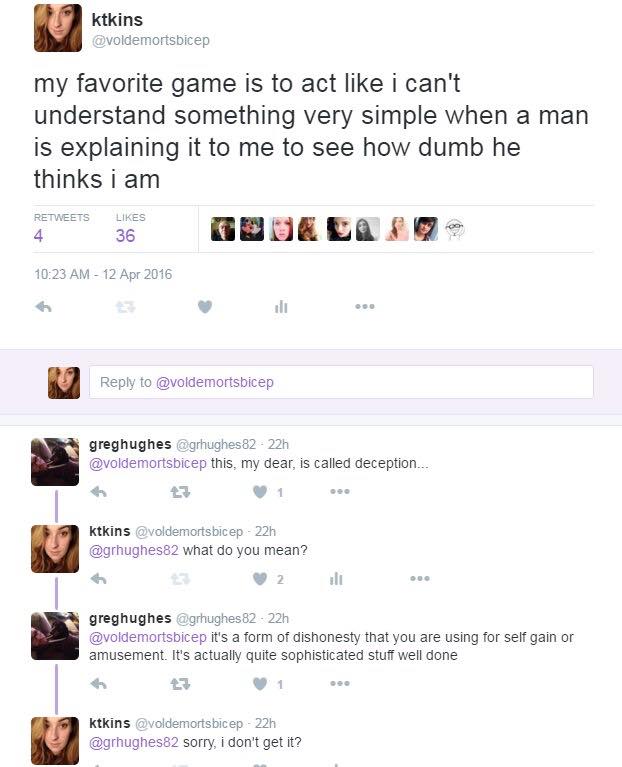
my-favorite-game

Posted in Link farms | 43 Comments

Poem: A Season with the Geese

This poem originally appeared in Abyss & Apex Magazine.


A Season with the Geese

by Rachel Swirsky

Once when we
were young, we flew
to Europe with the geese.
Twined neck to neck
we sailed the Seine
chasing ripples and water bugs,
lost ourselves in Madrid
when sudden snow
veiled us, white on white,
nested in crumbling ramparts
overlooking Rome until
blossoms cracked
the frozen meadows,
reviving spring.

Our season ended
we flew home
clipped our wings
devoted ourselves
to grounded lives.
Now I watch
my window as geese
feather the moon
and long for
one more flight.

Posted in My publications, Poetry | Comments Off on Poem: A Season with the Geese

Farewell to Carrrie Vaughn’s urban fantasy series about a werewolf named Kitty

Poor Kitty Norville. Everyone always laughs at the werewolf named Kitty, even though, as she points out, she had the name first.

I’ve read every single one of Carrie Vaughn’s urban fantasy series staring a werewolf named Kitty. So, of course, just like Mary Robinette’s Glamourist Histories and John Scalzi’s Old Man’s War, Carrie’s books ended last year.

The best one is book four. It packs a hell of a punch.

Carrie is an extremely smart writer. The urban fantasy books have all the good traits of commercial books–they’re fun, engaging, and easy to read. However, the book also rewards closer attention, with intelligent character development and interaction with genre tropes. (Her short stories are often even more vividly engaging on that level.)

Kitty is an upbeat, optimistic character in a loving relationship with her husband. Carrie says she wanted to prove that happy characters could be the protagonists of interesting stories. The series has a number of unconventional points. Kitty married the “beta” lawyer, whom she chose over the “alpha” assassin. Unlike many urban fantasy heroes, Kitty doesn’t embark on her journey as a bad-ass; instead, she has to take the journey from pack omega to pack alpha, and from victim to defender.

Instead of talking more about that, I’m just going to show off my silly pictures.

I started out wanting to make a scary Kitty Werewolf. I’m sure there’s a graphic somewhere out there on the wide internet, but I wanted to try my own version first. I really like the sketch I came up with (below, left), but I haven’t found a way to finish it that works for me. For instance, in the colored version (below, right), you can see that the feline werewolf has apparently become a floundering stand-up comedian. “Eh? Eh? Get it?”

Feline Werewolf sketchFeline Werewolf

So, I was forced to admit defeat. And really, since Kitty is such a kind-hearted, optimistic character, I thought I should try a different approach.

Kitty werewolf

“On the full moon, I turn into a house cat.”

“Is that a problem?”

“Well, I have pretty bad allergies…”

Thanks, Carrie, for the great books. I’ll miss ’em.

Posted in Fan art, Reviews and Criticism | Comments Off on Farewell to Carrrie Vaughn’s urban fantasy series about a werewolf named Kitty

My father playing a German hand organ

My parents collect automated musical instruments, like this modern German hand organ that my father brings to organ rallies and music festivals. Note the stuffed monkey.

It’s actually quite difficult to play so that it sounds good. You have to be strong enough to keep up the crank, obviously, but you also have to train yourself to move your arm steadily through the swing. Otherwise, you tend to speed up and slow down, and the music gets distorted.

My parents do some cool things.

Posted in Living a life | Comments Off on My father playing a German hand organ