
Grace Loves Lioness: a love letter for our anniversary

lioness

Recently, Barry let me know that he was travelling, and I wondered if he would be anywhere near me, so that we could meet in person for the first time. And he was going to be, on a particular date! We high-fived electronically, and I assured him that I could probably be there.

Then I noticed the date. Lioness’ and my twenty-fifth wedding anniversary. (Yes, she and I have been married for twenty-five years, since long before the legal advent of marriage equality. The State did even less due diligence than the doctor who delivered me, and made the rash assumption that since we looked more-or-less like adults of different genders, we must have heterosexual external genitalia, and who needs to know more than THAT?! Foolish State. Our genitalia may or may not have been heterosexual at the time, but it’s too late to check NOW, isn’t it?! We’ll never tell. The World Must Never Know.)

So, I did a thing which has helped our marriage thrive and grow for 25 years: I went to my wife, explained my scheduling conundrum, and asked how she would feel about it if, on the morning of our twenty-fifth wedding anniversary, I drove down to meet my friend, Barry. I told her frankly (and I told her true) that if she said, “No,” it was completely all right, and I would tell Barry that we would have to await the next opportunity.

She said, “Yes.”

So I e-mailed Barry that I could be there.

On the appointed day, I drove an hour or so and visited Barry in an Undisclosed Location, where his handlers were keeping him safe from the raving hordes of groupies and paparazzi which follow him everywhere. When I reached the perimeter, I told Security who I was, and they stopped pointing the big guns at me, scanned my retina, and lifted the velvet rope so that I could proceed.

You know, even after hearing it described for so many years on Alas, I had NO IDEA how wealthy cartoonists are! Just feeding the entourage must cost a fortune! To say nothing of how much Jell-O it took to fill that pool!

After I had partaken, in a modest and chaste fashion, of the bacchanalian delights surrounding me, I informed Barry sadly that I had to leave. He very kindly threw on a bathrobe and showed me out. On the way, I explained that it was my twenty-fifth wedding anniversary, and he stopped short and stared, and said, “Were you married at sixteen?” (Ah, Barry, you smooth-talker; alas for my vanity, he was caught betwixt flatteries and feared going lower without offering offense.) No, I assured him, not sixteen, but not many years higher. He wished me a happy anniversary and congratulations and directed the perimeter detail to salute me on the way out. (That Barry. He thinks of everything.)


Then I drove home to my True Love. (Note that I have bent the truth slightly in my account thus far. I confess to a modest embellishment in one or two details. However, starting at the sentence before this parenthetical aside, this is all simply and flatly true, which serves to show how lucky I am. So, if modest embellishments or even prevarication would alarm you, I warn you that this account contains several, but if you’ve gotten this far, you’re past them now.) ((Apologies to Monty Python.))

Upon my arrival, we celebrated our marriage calisthenically. In the languor which followed, we chatted aimlessly about this and that, and I thanked her for enabling me to meet my friend Barry in person, and remarked, as I am sometimes wont to do, on how much more fortunate were we than those possessed merely of “dull sublunary lovers’ love, (whose soul is sense) [and whose love] cannot admit absence, because it doth remove those things which elemented it.”

And she smiled.


It cannot come as a surprise to regular readers at Alas that I love beautiful use of language, and married accordingly. We have shared elegant and piercing poetry and prose since we courted. The first poem she gave to me was one she had been carrying with her until she found the person who fit it.

Tell me not, Sweet, I am unkind
That from the nunnery
Of thy chaste breast and quiet mind,
To war and arms I fly.

True, a new mistress now I chase,
The first foe in the field;
And with a stronger faith embrace
A sword, a horse, a shield.

Yet this inconstancy is such
As you too shall adore;
I could not love thee, Dear, so much,
Loved I not Honour more.

–Lovelace, To Lucasta, on Going to the Wars

Not only did Lovelace speak for both of us on matters of love and honor, but against all probability, she had found a spouse who could use a sword, and did ride horseback competitively. Often, on nights when we neither of us wanted me to strap on a ballistic vest and put a patrol car in Drive, I would say to her as I went out the door, “I could not love thee, Dear, so much, loved I not Honour more.” And she would smile and we would touch hands and hear our wedding bands tick past each other as our hands parted.

There were other poems, over the years. Lioness is older than I, and dark where I am fair. She does not understand it, but I have told her many times that her eyes are nothing like the sun:

My mistress’ eyes are nothing like the sun;
Coral is far more red than her lips’ red;
If snow be white, why then her breasts are dun;
If hairs be wires, black wires grow on her head.
I have seen roses damasked, red and white,
But no such roses see I in her cheeks;
And in some perfumes is there more delight
Than in the breath that from my mistress reeks.
I love to hear her speak, yet well I know
That music hath a far more pleasing sound;
I grant I never saw a goddess go;
My mistress when she walks treads on the ground.
And yet, by heaven, I think my love as rare
As any she belied with false compare.

–Bill Shakespeare, Sonnet 130

Indeed, her eyes are lovely, dark and deep, ((Hat tip to Robert Frost.)) but twinkling betimes, as sunlight flashes from a deep pool on a partly-cloudy summer afternoon. She loves the summer sun, as I love the mossy groves of the deep forest, Entwife to my Ent, but without the estrangement.

Lo! Young we are and yet have stood
like planted hearts in the great Sun
of Love so long (as two fair trees
in woodland or in open dale
stand utterly entwined and breathe
the airs and suck the very light
together) that we have become
as one, deep rooted in the soil
of Life and tangled in the sweet growth.

–J.R.R. Tolkien, written for his wife, Edith

It’s a lovely poem, but it’s not my favorite of his, not even on the topic of love. That title belongs to this one, the last stanza of Beren’s Song, which also showcased how Tolkien dealt with what is sometimes called The Problem of Evil.

Though all to ruin fell the world,
and were dissolved and backward hurled
unmade into the old abyss,
yet were its making good, for this—
the dusk, the dawn, the earth, the sea—
that Lúthien for a time should be.


After Lioness smiled, on the afternoon of our anniversary, she told me that I had no idea how truly our thoughts ran together, and she invited me to go into the kitchen, where she had set an anniversary gift on the table. I found a small box. Opening it, I found two tiny books, each perhaps a fraction larger than an inch square, bound in black leather. And in the books, in her handwriting, I found written all of the poems I have quoted above… and also the one I had referenced in my languorous remarking:

As virtuous men pass mildly away,
And whisper to their souls to go,
Whilst some of their sad friends do say
The breath goes now, and some say, No:

So let us melt, and make no noise,
No tear-floods, nor sigh-tempests move;
‘Twere profanation of our joys
To tell the laity our love.

Moving of th’ earth brings harms and fears,
Men reckon what it did, and meant;
But trepidation of the spheres,
Though greater far, is innocent.

Dull sublunary lovers’ love
(Whose soul is sense) cannot admit
Absence, because it doth remove
Those things which elemented it.

But we by a love so much refined,
That our selves know not what it is,
Inter-assured of the mind,
Care less, eyes, lips, and hands to miss.

Our two souls therefore, which are one,
Though I must go, endure not yet
A breach, but an expansion,
Like gold to airy thinness beat.

If they be two, they are two so
As stiff twin compasses are two;
Thy soul, the fixed foot, makes no show
To move, but doth, if the other do.

And though it in the center sit,
Yet when the other far doth roam,
It leans and hearkens after it,
And grows erect, as that comes home.

Such wilt thou be to me, who must,
Like th’ other foot, obliquely run;
Thy firmness makes my circle just,
And makes me end where I begun.

–John Donne, A Valediction: Forbidding Mourning

I know of no tune for that poem, but it reminds me of a song which I sometimes sing to Lioness. It’s written in the voice of someone who has just died and gone “out beyond the iron gate”. ((An image which sometimes puts me in mind of the low stone wall of the Dead Lands i LeGuin’s Earthsea.)) It took me a long time to sing it properly, because I would always start to weep at the second-to-last verse. Earlier in our marriage, I said something thoughtless and stupid, and came to realize it later. Sometime after that, after I had made it clear that I understood and regretted what an idiot I had been, she was able to forgive me. That crisis proved to be the foundation for a greater happiness in our marriage than we had yet known. This song puts me in mind of that near-disaster, and the second-to-last verse describes a joyous outcome far beyond hope for this helpless agnostic. (One’s reach should exceed one’s grasp, or what’s a heaven for? ((Hat tip to Robert Browning.)))

There you were, right by my side,
Reaching down to lift me high.
I held on with all my might,
Held on to a world made right.

Out beyond the iron gate,
Out there where you said you’d wait.

–Richard Shindell, Out Beyond the Iron Gate

I love you, Lioness, for as much as I am able and as long as I am permitted. And may our firmness ever keep our circles just.

Grace

Posted in Uncategorized | 10 Comments

“Grand Jeté” included in this year’s The Best Science Fiction and Fantasy of the Year

fotosjcmdotcom-dance-prints-721w-008

Mandolin’s 2014 novella Grand Jeté (The Great Leap) has been included in this year’s The Best Science Fiction and Fantasy of the Year anthology, edited by Jonathan Strahan. Congrats to Mandolin!

As previously mentioned, this novella is also one of this year’s Nebula Award nominees for best novella, which is pretty awesome.

You can read the novella here, and read Brit Mandelo’s review of it here.

Posted in Mandolin's fiction & poems | 2 Comments

Letter From Robert: Stop Sending Me Money, Alas!

So I received this letter from Rob a few weeks ago, and then a few days later I had some free time so I thought I’d scan it in and post it on “Alas.”

So I looked on my desk, where I KNEW I’d left it. Nothing.

Well, maybe it fell. I looked under my desk. Nothing. Looking through the huge pile of books to see if it was stuck between a couple. Looked on the shelf, looked in the drawer, looked through the huge pile of stuff on my desk a second time, and then a third.

Nothing, nothing, nothing.

Aaargh.

Anyway, yesterday, I needed to scan a page of a book, opened the scanner, and there, on the scanner glass: Rob’s letter.

Brave Head Desk photo tumblr_m2zbcakAp71qf9d9no1_r3_500.gif

Without further ado, your letter from Rob.


April 1, 2015

Dear Barry and/or Alas! miscreants, ne’er-do-wells, and riff-raff:

Thank you for the recent gifts, but please don’t send me any more money! Well, I mean, you can if you really want too – it isn’t like you’re pouring holy water onto a Whedonesque vampire by so doing – but at this point you are, literally, buying me soda and donuts and cheeseburgers, not keeping me in touch with the outer world and buying me precious dimestore novels with which I ward off the ever-present threat of madness. I’m making $2 per day now, which goes to $3 in May and $4 if I’m still here in June, and while I admit that sounds like a laughably tiny amount of money, in prison it makes me comfortably middle class.

But I really appreciate what you have all sent, and it really did make an enormous difference in my quality of life (and in the sense of not being isolated and friendless), so thank you again for that. Going forward, give it to someone else in need and think of me. (Ha, and thus, I subtly subvert you further into the wickedly non-collective realm of altruistically-selfish donating and undermine the evil of left-wing thought. Bwa ha ha ha!)

OK, I might have had a little too much caffeine today. Free coffee at my job. Wheeeeee!

Barry suggests that if I want to inspire discussion and/or contro-versy, I need to make less agreeable assertions. Fine, I exist to serve.

1. The poor should be burned as a clean, renewable energy source. (Jesus said that “the poor you have always with you”, so it is a matter of theological certainty that we’ll never run out.)

2. Puppies are terrible and should be banned.

3. Kittens should be allowed to continue to exist, but only as a food animal. Small children should grow them in backyard ranches as a 4H-sponsored project.

4. Women who don’t want children should be forced to breed and rear them from menarche to menopause. Women who do want children should be sterilized and sent to labor battalions in bleak, childless work camps.

5. Men should be encouraged to be sensitive and caring on even-numbered days, and encouraged to be brutal and domineering on odd-numbered days. (Wait, we do this now, only without the sensible on/off organizing principle.)

6. Blueberry Pop-Tarts should be the only kind of Pop-Tarts.

7. All sexual acts must be done in public. If it’s not good enough for the street, it’s not good enough period.

That ought to keep you going for a couple weeks at least. Enjoy.

Best wishes,

Rob


RobberAward

I’ll eventually send any comments left on this post to Robert (possibly after losing them in my scanner for a few weeks).

To send Robert a letter through the mail, use this address:

Robert Luty Hayes, Jr. 165970
FMCC Unit E – Four Mile Correctional Center
P.O. Box 300
Cańon City CO, 81215-0300

If you’d rather send him an email, you can go to Jpay.com and enter Robert’s state (Colorado) and his DOC Number – 165970 – into the search fields. (Sometimes I’ve had to do this twice before it worked). Then you can use your debit card to send him an “email” (he’ll actually get it in the form of a print-out). If you contact Robert via Jpay, be sure to give him your mailing address – he can’t use Jpay, so the only means he has for writing back to you is to send you mail through the post office.

Posted in Bob Behind Bars | 22 Comments

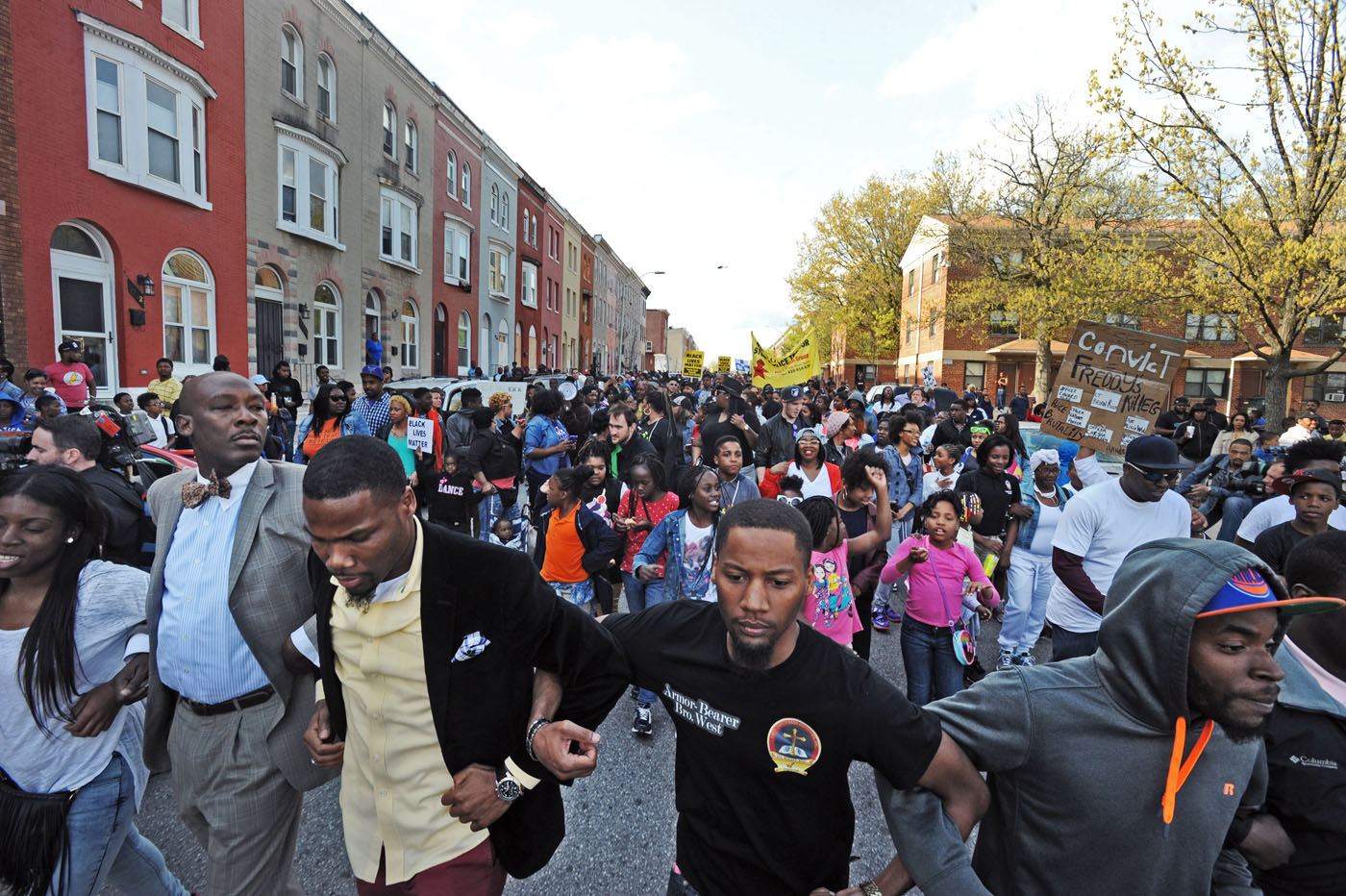
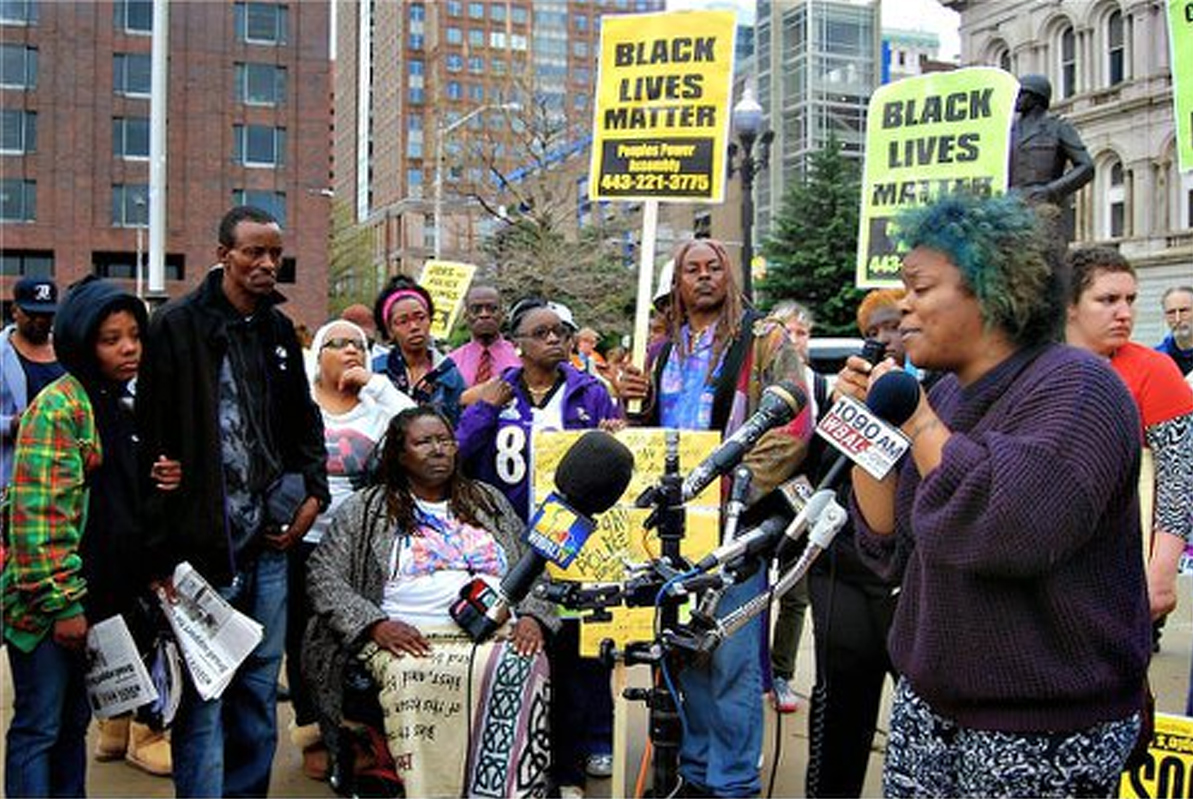
Baltimore

I really don’t have anything to say. But I can quote.

Ta-Nehisi Coates, “Nonviolence as Compliance“:

Now, tonight, I turn on the news and I see politicians calling for young people in Baltimore to remain peaceful and “nonviolent.” These well-intended pleas strike me as the right answer to the wrong question. These well-intended pleas strike me as the right answer to the wrong question. To understand the question, it’s worth remembering what, specifically, happened to Freddie Gray. An officer made eye contact with Gray. Gray, for unknown reasons, ran. The officer and his colleagues then detained Gray. They found him in possession of a switchblade. They arrested him while he yelled in pain. And then, within an hour, his spine was mostly severed. A week later, he was dead. What specifically was the crime here? What particular threat did Freddie Gray pose? Why is mere eye contact and then running worthy of detention at the hands of the state? Why is Freddie Gray dead?

The people now calling for nonviolence are not prepared to answer these questions. Many of them are charged with enforcing the very policies that led to Gray’s death, and yet they can offer no rational justification for Gray’s death and so they appeal for calm. But there was no official appeal for calm when Gray was being arrested. There was no appeal for calm when Jerriel Lyles was assaulted. (“The blow was so heavy. My eyes swelled up. Blood was dripping down my nose and out my eye.”) There was no claim for nonviolence on behalf of Venus Green. (“Bitch, you ain’t no better than any of the other old black bitches I have locked up.”) There was no plea for peace on behalf of Starr Brown. (“They slammed me down on my face,” Brown added, her voice cracking. “The skin was gone on my face.”)

When nonviolence is preached as an attempt to evade the repercussions of political brutality, it betrays itself. When nonviolence begins halfway through the war with the aggressor calling time out, it exposes itself as a ruse. When nonviolence is preached by the representatives of the state, while the state doles out heaps of violence to its citizens, it reveals itself to be a con. And none of this can mean that rioting or violence is “correct” or “wise,” any more than a forest fire can be “correct” or “wise.” Wisdom isn’t the point tonight. Disrespect is. In this case, disrespect for the hollow law and failed order that so regularly disrespects the rioters themselves.

Baltimore Bloc:

It has been 15 days since Freddie Gray was stuffed into a Baltimore Police Department van and no officer, elected official or agency has taken any responsibility for his subsequent death or the policies that allow it to stand.

Therefore, we continue to witness the further erosion of the already broken relationship between Black communities and law enforcement.

The truth is that our region’s elected officials have not seen it as politically useful to act on the long-standing issues of police violence in Black communities. What we are witnessing today is the crossing of a tipping point by communities that have remained unheard for far too long.

Baltimore United For Change is fundraising for Legal/Bail Support for Baltimore protestors. If you support the protests, I would think that even a small donation would help.

And another writer (pdf):

America must see that riots do not develop out of thin air. Certain conditions continue to exist in our society which must be condemned as vigorously as we condemn riots. But in the final analysis, a riot is the language of the unheard.

And what is it that America has failed to hear? It has failed to hear that the plight of the Negro poor has worsened over the last few years. It has failed to hear that the promises of freedom and justice have not been met. And it has failed to hear that large segments of white society are more concerned about tranquility and the status quo than about justice, equality, and humanity. And so in a real sense our nation’s summers of riots are caused by our nation’s winters of delay. And as long as America postpones justice, we stand in the position of having these recurrences of violence and riots over and over again. Social justice and progress are the absolute guarantors of riot prevention.

Posted in In the news, police brutality, Prisons and Justice and Police, Race, racism and related issues | 158 Comments

I’m Performing in the 2015 New Masculinities Festival in New York City

On Saturday, May 2nd, at the Clemente Soto Velez Cultural Center, I will be performing as part of ManQuestion.org’s 2015 New Masculinities Festival. Tickets are $10 per performance slot, each of which lasts about an hour, and $20 for the day. You can buy tickets here. There’s also a Facebook page. If you’re in the area, it would be lovely to see you there.

The festival’s organizers, who have partnered with some interesting organizations—MaleSurvivor, re:gender, and Applied Theatre Collectivedescribe the day this way:

Re-Performing Manhood: We examine the impact of expectations of masculinity on people’s lives and work to imagine new possibilities for gender expression…. [I]n the festival, we take advantage of the power of produced theatre, dance, and performance art to challenge our thinking and transport us to new worlds and perspectives.

Here’s the festival poster, which contains the schedule. I’m going on during the 5:30 slot:

Masc Festival 2015 04 med res

Posted in Men and masculinity | Comments Off on I’m Performing in the 2015 New Masculinities Festival in New York City

A Thread For Discussing Hugo Nominated Works, Without Reference To The Recent Controversy

You can find a list of this year’s Hugo finalists, along with links to online versions (for those that are available online), here.

This is a thread where spoilers are acceptable. If you want to avoid spoilers, then you’ll need to do what I’ll be doing – skimming over the discussions of works I haven’t read yet. :-)

Posted in literature | 37 Comments

“American Reflexxx,” a short film showing mob hatred of gender ambiguity

Content warning: This short film contains extreme transmisogyny, a hostile mob, violence, and is disturbing.

The film has a style of editing that makes it difficult to watch, even apart from the content; if the editing makes it hard to watch for you, turning the volume down or off may help. (It’s subtitled.) If the content makes it hard to watch, well, then you’re a decent person.

Tom Hawking of Flaverwire summarizes the film:

“…A camera [follows] a woman as she walks through a public space, recording the reactions of the members of the public she encounters. In this case, the woman is Pierce and the space is Myrtle Beach, South Carolina. Pierce certainly cuts a striking figure. She’s wearing a skimpy blue dress and neon yellow heels, and most strikingly, her face is entirely covered by a reflective mask. She’s also of apparently indeterminate gender; much of the video involves passersby trying to work out if she’s a cisgender man or woman, or a trans woman, or what. (I actually have no idea what Pierce’s gender identity is, which is kind of the point.)

The results are, as one might expect, pretty depressing. People seem genuinely terrified by her — several times groups of people scatter as she walks toward them, and at one point a girl shouts, “Oh hell no, don’t walk this way!” As the film progresses, the reactions become more violent — she has water thrown on her, someone attempts to trip her, and eventually she is pushed head-first into the pavement. Notably, all the acts of violence against her are carried out by women. The film ends with a sort of survey of her body, lingering on the blood streaming from the knee she gashed open when she hit the ground.

And a statement from the creators:

American Reflexxx is a short film documenting a social experiment that took place in Myrtle Beach, South Carolina. Alli Coates filmed performance artist Signe Pierce as she strutted down a busy oceanside street in stripper garb and a reflective mask. The pair agreed not to communicate until the experiment was completed, but never anticipated the horror that would unfold in under an hour.

The result is a heart wrenching technicolor spectacle that raises questions about gender stereotypes, mob mentality, and violence in America.

A few points:

1) In the comments at Pharyngula, “Janine” comments:

Just watched the film and I am still processing it. But I will say this, while I do not dress to call attention to myself and while I never had a crowd of people howling at me like that; I have heard everything shouted in that video shouted at me at some point.

Every single one.

… the editing, the stutter shots and the slowed down version of that rape anthem is all an attempt to show the disassociation that the person was feeling. When one is being yelled at and being assaulted, one sense of time and perception becomes distorted.

2) And in the same comments, “Caitiecat” writes:

And before anyone gets all righteous about how crappy the US is, you could shoot that same video in almost any city in the world, and it’d go the same way. I’ve encountered this kind of abuse in Canada, the US, the UK, France, Hong Kong and Thailand, also known as “every country I’ve been to since transition”.

3) The mirror-mask is interesting. It serves a bunch of functions: It implicitly says “you are the subject of this film, not me,” both to the people Pierce encounters, and to the viewers watching the film. It makes Pierce more gender-ambiguous. It draws attention to Pierce. A writer at Nylon comments, “Only after the deeply unsettling climax does the crowd begin to back off — away from themselves, really, considering the mirrored mask.”

4) In the sequence with the street preacher, I can’t tell if the preacher is responding to her, or is not reacting at all to her and just screaming what he would have been screaming regardless.

5) How different would the crowd have acted if there wasn’t a woman with a camera obviously filming their actions? Maybe some of them were performing for the camera, but I’m sure some would have acted worse if they hadn’t known they were being recorded.

6) The people we see physically attacking Pierce are all women or girls, apart from the guy who paws her right at the start of the video. One girl attacks Pierce three escalating times – first trying to slap her when running by (“I missed!”), then throwing water on her, then trying to trip her. But we can hear at least one man (and maybe multiple men) being warned not to attack her by their friends (“Don’t get arrested for her, man”).

7) “Goblinman,” in Pharyngula’s comments, had an interesting theory as to why the men in the crowd didn’t get violent:

I don’t think the women in the crowd were actually responding more negatively than the men. I think the men were holding back. It means something different, culturally-speaking, when men attack compared to when women attack (especially if we’re talking about a mob mentality). Women attacking someone doesn’t seem as “serious”: Men are “supposed” to be fighters. If the men had started attacking the person in the mask it would have been nearly the equivalent of someone drawing a weapon. It would have escalated things to a much more violent level.

8) A fun fluff-piece about the home of the film’s creators: PAPERMAG Galleries: Inside the Hot Pink Barbie Bungalow of Artists, “Cyberfeminists” and Real-Life Couple Signe Pierce and Alli Coates.

Posted in Feminism, sexism, etc, Transsexual and Transgender related issues | 22 Comments

The world’s languages, in 7 maps and charts – The Washington Post

This series of graphs, maps, and charts from the The Washington Post illustrates some fascinating information about the world’s languages. It’s not surprising that English is the most studied language in the world:

But I did find this chart illustrating how many countries a given language is spoken in to be worth thinking more deeply about:

The reach of English is due, of course, first to British colonialism and imperialism and, second, to the dominance of the United States, but it’s interesting to set English’s reach in comparison to these other languages next to the numbers of people who speak each language:

Just putting these numbers up against each other, of course, doesn’t tell us very much, but it does provide an interesting starting point for thinking about how the politics of language shape the world we live in.

Posted in Whatever | 4 Comments

On Hugos and the No-Award Option

The rules don't explicitly forbid it!

The rules don’t explicitly forbid it!

Winning the Hugo requires winning a two-stage process of voting. First a work is one of five winners of the nomination stage, and then one of those five wins the final stage.

The Puppy-nominated works did not legitimately win the first round of voting; therefore it is impossible for them to legitimately win the Hugos. Therefore, I intend to vote “no award” over any slate-nominated work, including works I personally enjoyed.

Imagine a race that’s in two stages. In stage one, the athletes run an obstacle course, each in their own lane, leaping over hurdles. The athletes who make it through the obstacle course fastest then compete in a footrace to determine the winner.

The Puppies noticed that there’s no rule explicitly forbidding spectators knocking down hurdles, and so they knocked down the hurdles in their favorite athlete’s lanes. And of course, those athletes ran the obstacle course the fastest.

Now we’re at the start line of the second stage. And now the puppies are telling me that how these athletes ended up reaching the second stage of the race doesn’t matter.

With all due respect, ARE YOU FRAKKING KIDDING ME?

Posted in In the news | 17 Comments

The Follies of Gin in “If You Were a Dinosaur, My Love”

gin-and-other-options

So, I have been thinking about my story, “If You Were a Dinosaur, My Love,” for obvious reasons. I’ve spent a lot more time thinking about that story than probably anything else I’ve ever written, which is amusing, given how short it is. On the plus side, that makes textual analysis relatively simple.

There are a lot of legitimate critiques of “Dinosaur” and I’m cool with people disliking it. I’m not cool with some other stuff that’s going on, but I don’t have a problem with people disliking it. (Which, for the record, is not limited to the puppies – the story actually has a mixed track record with “SJWs”. It was initially rejected by a market specializing in “diverse” fiction, as being too much like other queer fiction that’s been done before, and therefore not really surprising. Nick Mamatas dislikes it on aesthetic grounds, although I’m not sure if he counts as an SJW or not. Etcetera.)

Anyway, I have thinky thoughts about a lot of the story, and maybe I’ll write those down at some point. But maybe not, because internet arguments, meh.

What I wanted to address in this post is the criticism of my use of the word “gin.” The assailants in the story are described as gin-soaked.

This has been interpreted as a class marker. Initially, I didn’t pay much attention to this, as some of the framing of the way it was brought up was irritating. However, that doesn’t really matter. If it’s a problem, it’s a problem.

I will say that I did not intend “gin” to be a class marker. My primary association with gin is hipsters. I have friends who make their own. (I pictured a college bar when I was writing the story, although I didn’t want that image—or any distinct markers–to be in the story itself.) My secondary association with gin is bathtub gin as discussed in musicals about the 1920s. My third is the inappropriate anecdote that Eliza tells about gin in My Fair Lady–which, I suppose, should have clued me into the class association.

I did not want the assailants to be marked at all, except that they were into beating people up with flimsy excuses, an activity of which I disapprove.

So: what can I do? My intent to not be classist isn’t significant. Some of my previous trespasses have been totally unintentional, such as the fact that the dwarf in “The Lady Who Plucked Red Flowers Beneath the Queen’s Window” is easily read as an evil stereotype. (My intention was that, since the main character is evil, her judgment is unreliable.) Readers of Alas, a Blog brought that to my attention after the story had been published. I apologized but didn’t revise–it would have required substantial change, and I feel like the best way I can actually address that problem is to do a follow-up story from his perspective sometime. (Though my writing ambitions, alas, outstrip my productivity.)

However, this is where the brevity of “Dinosaur” is helpful. The change would be tiny. The story is online, which is a medium that allows for revision. People are still reading it, apparently, so revision is also potentially useful. I can’t do anything about printed copies, but I can ask the editor of Apex Magazine to switch out the word. (And leave a note in comments about having done so, which would allow people to easily trace the history.) He might decline, but I doubt he will.

So: what alcohol is unmarked? Pabst is definitely too distinct. Is Vodka too dourly Russian? Tequila too college party? Rum too, I dunno, piratey? Whisky too hardcore masculine? Wine sounds sort of melancholy poet, and beer seems Homer Simpsony. (From this list, rum seems like the most likely candidate to me.)

I don’t drink a whole lot, and when I do, I drink girly fru fru drinks because I’m a wimp. So, I don’t really know what the subcultures of alcohol are. Help me out. Sad Puppies welcome to contribute, especially since you’re the ones who spotted it.

(I assume it’s a given, but I’ll note anyway: please stay on topic and civil. That means everyone.)

Posted in Mandolin's fiction & poems | 77 Comments