
An exciting day for ACA-watchers! This morning a three-judge panel from The U.S. Court of Appeals for the D.C. Circuit ruled that Obamacare’s federal subsidies to help people afford health insurance can be offered to people who buy their insurance through state-run exchanges, but not to people buying health insurance through federal-run exchanges. (The case is Halwig v. Burwell (pdf link).) The ruling, if it gets to be applied (it’s on hold for appeal right now), could take away subsidies for over 7 million Americans, effectively gutting Obamacare.
Then, two hours later, the Fourth Circuit Court of Appeals issued an opposite ruling on the exact same question. that case is King v. Burwell.
Vox provides a useful three-sentence summary of the majority’s decision in Halwig:
1) The D.C. Circuit ruled that the Affordable Care Act never authorized subsidies for health insurance purchased on federally-run exchanges, rendering the subsidies illegal in 36 states.
2) Although this would absurdly undermine the entire purpose of Obamacare — which is to make affordable health coverage available to all — the court points to two other examples of “absurd” outcomes from the text of the law, including language that would have locked Guam and other U.S. territories into an unsustainable health insurance system.
3) The judges contend that there’s not sufficient evidence from the legislative history (like old drafts of the law, or other evidence predating this lawsuit) to determine whether Congress intended to use subsidies as a carrot or make them available in every state; without clear legislative history, the court defaults its interpretation of the plain text.
As I wrote last year, this issue is the single largest threat to Obamacare; if Obamacare can’t subsidize health insurance bought through Federal exchanges, that seems very likely to put Obamacare into a “death spiral”; prices will go up 70% or more, everyone but the most unhealthy will flee the heath exchanges, having only unhealthy people on the exchanges will cause prices to go up even more, etc etc..
On the legal merits, the courts can essentially decide one of three ways:
1) Read in full, the ACA unambiguously says that the subsidies are only available to people who buy insurance through state-run exchanges. This is what the majority in the Halwig case ruled.
2) Read in full, the ACA unambiguously says that the subsidies are available to people who buy insurance through either state or federal exchanges.
3) Read in full, the meaning of the ACA on this point is ambiguous. This is what the Fourth Circuit panel unanimously ruled. A ruling that the statutory text is ambiguous on this point is a victory for the Obama Administration, since in cases of genuine ambiguity Courts are supposed to defer to administrative agencies. (Although as Kevin Drum points out, that deference is a standard that the conservatives on the Court may be eager to overturn.)
The Obama administration has already announced its plan to appeal Halwig (which has been stayed pending appeal) to the full 11-judge panel of the D.C. Circuit. The three-judge panel that issued today’s ruling consisted of two Republican appointees and one Democratic appointee, all of whom voted along predictable party lines. However, the full 11-judge panel consists of 7 Democratic appointees (including 4 from Obama) and 4 Republican appointees, and I expect will go the other way. ((Hooray for the nuclear option!))
The question, then, is if the Supreme Court decides to take the case, and if so how they’ll rule. I could imagine that going either way, for reasons laid out in my earlier post.
P.S. The most quotable part of the fourth circuit’s ruling:
Appellants’ reading is not literal; it’s cramped. No case stands for the proposition that literal readings should take place in a vacuum, acontextually, and untethered from other parts of the operative text; indeed, the case law indicates the opposite.
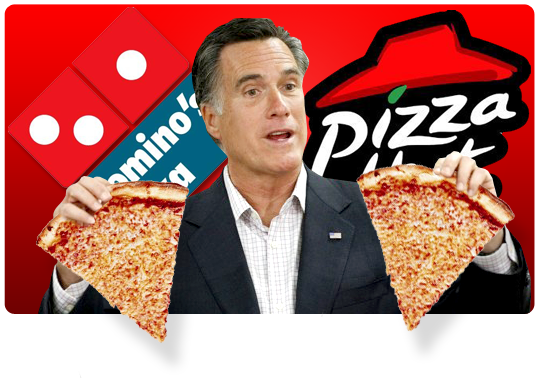
So does common sense: If I ask for pizza from Pizza Hut for lunch but clarify that I would be fine with a pizza from Domino’s, and I then specify that I want ham and pepperoni on my pizza from Pizza Hut, my friend who returns from Domino’s with a ham and pepperoni pizza has still complied with a literal construction of my lunch order.
That is this case: Congress specified that Exchanges should be established and run by the states, but the contingency provision permits federal officials to act in place of the state when it fails to establish an Exchange. The premium tax credit calculation subprovision later specifies certain conditions regarding state-run Exchanges, but that does not mean that a literal reading of that provision somehow precludes its applicability to substitute federally-run Exchanges or erases the contingency provision out of the statute. […]
Appellants insist that the use of “established by the State” in the premium tax credits calculation subprovision is evidence of Congress’ intent to limit the availability of tax credits to consumers of state Exchange-purchased health insurance coverage. Their reading bespeaks a deeply flawed effort to squeeze the proverbial elephant into the proverbial mousehole.













I heavily criticized Obama for his drone strikes, but I do think there are legal (maybe not moral[?]) differences even…