Barry will be at PCC Mini Con in Portland, February 4 and 5

I will be appearing at PCC Mini Con in Portland, February 4th and 5th (that’s a Thursday and Friday!), from 10am to 6pm each day. If you’re in SE Portland, please come and say hi!

“Hereville” colorist Jake Richmond will also be there.

That’s at 2305 SE 82nd Avenue, Portland, OR.

Posted in Cartooning & comics | Comments Off on Barry will be at PCC Mini Con in Portland, February 4 and 5

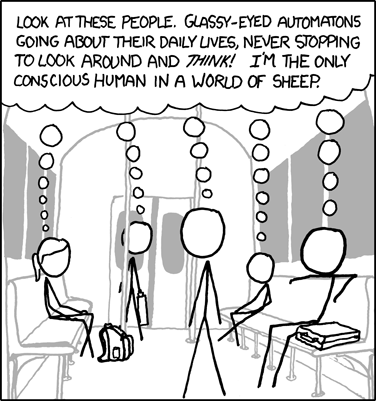
Open Thread and Link Farm: In A World Of Sheep Edition

  1. Undocumented immigrants in Flint say they’re denied water | Fusion
    The official policy was changed so that undocumented immigrants could get water – but not all government officials are obeying the new policy. And emergency flyers on how to get water are in English only.
  2. What Went Wrong In Flint | FiveThirtyEight
    A well-done, detailed overview.

  3. Rape and Justice in Mozambique | World Policy Institute
  4. Hey Vox you can’t be a feminist and be “pro-life” | Dr. Jen Gunter
  5. And then a partial counterpoint: Wanted Pregnancies and Unwanted Abortions: “So yes, in fact, affordable daycare can (and sometimes does) prevent abortions.”
  6. Han Solo: All Things Must Pass
    “In The Force Awakens Han has been distanced from us. Rather than the heroic male figure that we look up to, he’s now a figure looked up to by other figures that we’re watching. His death scene isn’t for us – it’s for Ren and Rey and Finn.”
  7. Nobody Catcalls The Woman In The Wheelchair – The Establishment
  8. A Real Dialogue for a Change | The Weekly Standard
    This is a Cathy Young article, so it has the predictable anti-feminist snark (“thoughtcrime” “unsafe space” etc), but Cathy also includes some interesting thoughts from Mary Koss.
  9. White House bans Federal prisons from putting juveniles in solitary.
  10. American democracy is doomed – Vox
    Clickbait title aside, this longread is an interesting article about Democratic failures. Basically, presidential democracies almost always collapse. The US hasn’t – but, arguably, the factors that made us distinct from other presidential democracies have faded. Also interesting: Dylan Matthews responds by arguing that what we’re going to see is not collapse, but the continued increase of Presidential power.
  11. Denying women abortion increases their risk of serious illness and death – new study
  12. Oregon ranchers who sparked standoff threatened to wrap official’s son in barbed wire and drown him
    I am feeling less sympathy for the Hammonds now.
  13. Tackling the Dreaded Bio – SFWA
    Luna Lindsey gives advice on how to write an author bio – which I’ve always found to be a very difficult task, and I think most authors have.
  14. WashU Expert: Proposed Missouri law revoking scholarships violates First Amendment | Newsroom | Washington University in St. Louis
    But remember, only lefties are attempting to censor on campus!
  15. Discrimination against Queer Women in the U.S. Workforce
    A study finds that otherwise-identical resumes get 30% fewer callbacks if the applicant appears to be a queer woman. (“One woman’s résumé was randomly assigned leadership experience at a lesbian, gay, bisexual, and transgender (LGBT) student organization to signal queer identity, while the other résumé, a control, was assigned experience at another progressive student organization.”) I suspect the difference would have been even larger if the organization was specifically a transgender organization, alas. (BTW, this and the next two links come via Slater Star Codex).
  16. The New Debate Over the Mariel Boatlift | RealClearPolicy
    A persuasive (although not conclusive) argument against a classic Card study that I’ve probably cited at some point, hence my including the link here. It should be noted, however, that the Card study is hardly the only piece of evidence indicating that employment effects of immigration on native wages are minimal.
  17. Anonymous Mugwump: The Empirics of Free Speech and Realistic Idealism: Part I, and Part II.
    These are very good (although there are bits I disagree with – for example, in the section on “The Effects of Money and Lobbying in Politics,” I don’t see how he can be certain that a 2002 study on campaign spending – before the recent jump in superpac spending and before Citizens United – is still relevant), but also very, very long.
  18. A new way of measuring sexism in ‘The Little Mermaid’ and other Disney movies – The Washington Post
    Although I don’t think this is a good stand-alone method of looking at a single movie – the story of Mulan genuinely requires most characters to be male, for example – it is a good way of noticing a troubling pattern across many movies.
  19. Austrailian Study Has Now Identified The Leading Causes Of Suicide In Men – Pedestrian TV
    One of those leading causes: “Unhelpful conceptions of masculinity – the ‘tough Aussie bloke’ stereotype in particular.” What’s that word? Oh, yes: toxic.
  20. The Republican myth of Ronald Reagan and the Iran hostages, debunked – Vox
    This is a side issue to the article’s main point, but if the allegations about William Casey are true, that’s just one more way he was a miserable scumbag.
  21. I find the special effect used in this music video (similar to the special effect used in Ex Machina, and with the same actress a supporting actress from that movie) utterly hypnotic to look at.
  22. A freestyle called “Seven Years” that Lin-Manuel Miranda wrote and performed during “In The Heights.”
  23. Study Shows That Male and Female Students Hold Female Professors to Gender-Based Double Standard | The Mary Sue
  24. MRAs are right, false rape accusations don’t happen at the often cited 8%. It’s more like 3%. (Lot’s of sources inside.) : SRSArmory
    I haven’t gone through this carefully and vetted it, but I’m saving the link here because even if I don’t turn out to agree with every argument (and maybe I will), the author has collected a lot of useful links.
  25. “No Cost” License Plate Readers Are Turning Texas Police into Mobile Debt Collectors and Data Miners | Electronic Frontier Foundation
    This is super-disturbing.
  26. Bernie Sanders has the most realistic plan to boost wages and job creation – Vox
    In the past I’ve been going back and forth between favoring Sanders and favoring Clinton. This – that Sanders is willing to use monetary policy to push down unemployment – in combination with Clinton’s hawkishness, now makes me favor Sanders.
  27. Ta-Nehisi Coates on Bernie Sanders and the Liberal Imagination – Ta-Nehisi Coates
    “A Democratic candidate who offers class-based remedies to address racist plunder because that is what is imminently doable, because all we have are bandages, is doing the best he can. A Democratic candidate who claims that such remedies are sufficient, who makes a virtue of bandaging, has forgotten the world that should, and must, be. Effectively he answers the trenchant problem of white supremacy by claiming ‘something something socialism, and then a miracle occurs.'”
  28. I’m a fan of the 2000 film Timecode, which told its story with four simultaneous shots, each taking up a quarter of the scene. The same director, using the same technique, made a three-minute PSA asking Londoners to be more polite on the bus.

Posted in Link farms | 17 Comments

Odds of a severely obese woman becoming “normal” weight: 1 in 677. For men, 1 in 1290.

empowerallbodies

[Image from Jes Baker’s awesome “Empower All Bodies” project.]

Another reason it just makes more sense to encourage fat people to love our bodies, rather than teaching fat people to hate our bodies until we attain “normal” weight:

The chance of an obese person attaining normal body weight is 1 in 210 for men and 1 in 124 for women, increasing to 1 in 1,290 for men and 1 in 677 for women with severe obesity, according to a study of UK health records led by King’s College London. The findings, published in the American Journal of Public Health, suggest that current weight management programmes focused on dieting and exercise are not effective in tackling obesity at population level.

The research, funded by the National Institute for Health Research (NIHR), tracked the weight of 278,982 participants (129,194 men and 149,788) women using electronic health records from 2004 to 2014. The study looked at the probability of obese patients attaining normal weight or a 5% reduction in body weight; patients who received bariatric surgery were excluded from the study. A minimum of three body mass index (BMI) records per patient was used to estimate weight changes.

The annual chance of obese patients achieving five per cent weight loss was 1 in 12 for men and 1 in 10 for women. For those people who achieved five per cent weight loss, 53 per cent regained this weight within two years and 78 percent had regained the weight within five years. […]

Weight cycling, with both increases and decreases in body weight, was also observed in more than a third of patients. The study concludes that current obesity treatments are failing to achieve sustained weight loss for the majority of obese patients.

And those “success” numbers include some patients who lost weight involuntarily due to health problems.

* * *

Another couple of fat-related research links, while I’m posting about this:

A 2009 article in Nutrition Research Review, “A review and meta-analysis of the effect of weight loss on all-cause mortality risk,” examined whether otherwise healthy obese people live longer if they lose weight.

It is less clear whether weight loss benefits longevity and hence whether weight reduction is justified as a prime goal for all individuals who are overweight (normally defined as BMI>25 kg/m2). The purpose of the present review was to examine the evidence base for recommending weight loss by diet and lifestyle change as a means of prolonging life. … There was no evidence for weight loss conferring either benefit or risk among healthy obese. In conclusion, the available evidence does not support solely advising overweight or obese individuals who are otherwise healthy to lose weight as a means of prolonging life. Other aspects of a healthy lifestyle, especially exercise and dietary quality, should be considered.

And another study looked at the link between perceived anti-fat discrimination and mortality:

The researchers were curious whether there would be a correlation between weight discrimination and an increased risk of mortality once you controlled for other factors that might also be associated with a heightened risk of dying — things like depressive symptoms and body-mass index, for example. Sure enough, that’s what they found — controlling for other factors reduced but did not eliminate a statistically significant link between weight discrimination and early death: All else being equal, respondents who said they felt like they’d been discriminated against on the basis of their weight were about 31 percent more likely to have died.

Posted in Fat, fat and more fat | 10 Comments

These Vindictive Responses To Students Saying Awful Things Are Disproportionate And Wrong

desert-vista-six

Six white seniors at Desert Vista High School in Arizona took a photo of themselves wearing shirts that spelled “ni**er.” ((In this post, I’ve blurred the faces and omitted the names of the people I’m talking about; but that’s not true of the other people I’m linking to.))

Understandably, students of color at Desert Vista are appalled at their classmates’ behavior – see the video at the top of this page for some student reactions. The Desert Vista Black Student Union tweeted that these six girls “do not represent the beliefs of the student body.”

There’s also been a lot of anger on social media – the girls have been doxed, and people are spreading the girls’ unblocked faces and names on social media. There’s also a petition with 17,000 signatures calling for the girls to be expelled and the principal fired.

This brings to mind the reaction to a video posted by the free speech group FIRE back in November, of students at Yale having a public square argument with Yale Professor Nicholas Christakis. ((There was a little discussion of the Yale situation in this open thread.)) The argument was three hours long, but a 90 second video FIRE posted went viral. The video shows a young black student losing her temper and yelling loudly at Christakis, including swearing at him.

The Yale student was doxed, and right-wingers rushed to spread her face and name on social media, calling for her to be expelled and even for her to be unemployable. To the right-wings’ credit, there was no petition with 17,000 signatures. To their discredit, the doxing and vindictiveness came not just from random people on the internet, but by respected Conservative publications and intellectuals, like The Daily Caller (which initially doxed the student, including her home address), The National Review, and The American Conservative‘s Rod Dreher, who called for the student to be expelled (twice). The conservative blog Victory Girls gloated “Sorry, Ms. ******, but the internet is forever.”

What do these two things have in common? Although I don’t approve of screaming at people in public, what the Yale student did – which was basically, to lose her temper for a few minutes – wasn’t even in the same league of wrongness as the smirking racism of the Desert Vista students.

But the responses are very similar. And they’re wrong.

Young people should be able to make mistakes without their faces and names becoming a national issue. It’s unreasonable to try to turn a student’s bad act into a permanent scarlet letter.

Whatever consequences these students suffer, should be proportionate to what they did – and should be up to the local community and to their schools. It should not be up to random internet “activists” – or, worse, to the Daily Caller – to vindictively seek to punish students. In both cases, I’ve seen people gleefully hoping that the students’ lives will be destroyed by the publicity. That this sort of reaction is vastly disproportionate to the offense never seems to be a concern.

When I was a teenager attending Oberlin College, I once got into a shouting match in public with Catherine MacKinnon, who was visiting Oberlin to make a speech. Well, not a “shouting match” – Professor MacKinnon kept her tone level. I shouted. I’m a bit embarrassed to think of it now. (In the unlikely event that I ever meet MacKinnon again, I’ll apologize to her.)

But you know what? I was eighteen. I did something stupid. And, thankfully, this was before smart phones and before YouTube, so no videos exist. I was allowed to be stupid and to get past it and to grow. Today’s students should get the same chance.

UPDATE: The “expel them!” petition is now at nearly 50,000 signatures, I’m sorry to say.

Posted in Education, Free speech, censorship, copyright law, etc., norms of discourse, Race, racism and related issues | 54 Comments

Open Thread and Link Farm, Brick in Washing Machine on Trampoline Edition

  1. Fixing the Eyewitness Problem – The New Yorker
    Excellent longread, about an innocent man’s conviction for rape in 1986 due to bad police ID procedures. This story could make a good movie, although movie producers would be tempted to focus entirely on the white characters.
  2. Ex-cop Daniel Holtzclaw was just sentenced to 263 years in prison for raping black women – Vox
  3. History News Network | Why We Should Junk the Electoral College
    The EC was created to protect slavery, not the small states. (The link currently isn’t working, so so here’s a link to the original article on Findlaw.)
  4. The Invisibility of Black Women | Boston Review
    (via)
  5. Labeling sex offenders’ passports is overkill | Lenore Skenazy, New York Post
    A horrifyingly bad idea. However, contrary to what Skenazy claims, I don’t think it’s passed the Senate yet (unless it’s there under a different title). I asked her on Twitter but got no response.
  6. Inside The Persistent Boys Club Of Animation
    A good article, that both covers how much things have improved and how much things still need improving. I’m irrationally relieved that Glen Keane, whose drawings I love, comes off well in a brief reference.
  7. Waiting for Bowie — Sady Doyle.
    Probably the best essay about David Bowie I’ve read since his death.
  8. How Diversity Destroyed Affirmative Action | The Nation
    “Once race-conscious admissions stopped being about equity and reparation, the only argument for it was the enrichment of white students. That was never going to hold up.”
  9. Bernie Sanders Calls For Michigan Governor To Resign Over Poisoned Water Scandal | ThinkProgress
    This seems extremely reasonable to me. Mild and understated, really.
  10. How Twitter quietly banned hate speech last year | Ars Technica
    “We believe in freedom of expression and in speaking truth to power, but that means little as an underlying philosophy if voices are silenced because people are afraid to speak up.”
  11. Safe sex work: Britain declares 1st permanent, legalized ‘red light district’ open for business — RT UK
  12. Ted Cruz and the courts
    “Indeed, those who take the anti-Cruz argument seriously should read the text carefully and they explain why anyone alive today is eligible for the presidency given that none were alive at the time the Constitution was ratified.”
  13. Lynch, Waters, Soderbergh: A Generation of MIA Filmmakers | Flavorwire
    Ben showed me this, an interesting article about how movie economics mean that fewer and fewer people can get small films financed anymore – and some directors with lengthy, critically praised careers can’t get their movies financed anymore.
  14. The Schools Where Free Speech Goes to Die | The Nation
    Katha Pollit on draconian speech restrictions at Christian universities.
  15. From Pickup Artist to Pariah — The Cut
    A long read about the Waking Life coffee shop scandal in Asheville. I don’t feel sorry for the guy – you act like a mean asshole, people stop liking you – but I do think he should consider moving. It’s an interesting observation (if true) that for PUAs, getting what they want – that is, getting to have a lot of sex with many different women – tends to make them more misogynistic.
  16. “Crying” About Anti-Semitism Beyond the Dogwhistle
    “Whether there was an implied substitution of “Jew” for “New York” is in many ways a side issue. It is groups like the Jews, that is, the people who distinctively live in urban coastal centers, who are presented to the nation as worthy of scorn.”
  17. Panadaptationism strikes again!
    Why do women’s shirts and men’s shirts have buttons on different sides? Horses! Or maybe Napoleon. Wait, it’s weapons!
  18. This Bernie Sanders ad perfectly demonstrates his problem on foreign policy – Vox
    “Sanders wants to position himself as challenging the status quo, but on foreign policy he is pretty in line with that status quo.”
  19. Study: Increased cost sharing does NOT make better health care shoppers.
  20. Discrimination Against Transgender Women Seeking Access to Homeless Shelters | Center for American Progress
  21. Frozen Tardigrade Brought Back to Life After 30 Years
    Water bears are just the coolest.
  22. The Last 5 Years Have Been Terrible for Abortion Rights
    In the decade that followed Roe (1973–1982), states adopted 380 abortion restrictions, or an average of 38 per year. In 2011, however, 92 new restrictions were put in place nationally.”
  23. Nike Ends Independent Monitoring of Its Sweatshops – Lawyers, Guns & Money
  24. Why a “moonshot to cure cancer” is doomed to failure
  25. Claiming Crip: What You’re Really Saying When You Call Me “Inspirational”

>

Posted in Link farms | 20 Comments

Mad Hatters, Jews, and Aliens: What I Published in 2015

I didn’t publish much in 2015. People who know me well will know that I’ve been dealing with health issues (and related writers block) for a few years now. I hope last year was the nadir, as far as publishing goes–I already have three stories scheduled for 2016 so I can hope the trend continues! But on to 2015:

Have you ever wondered who would win in Jews versus Aliens? I haven’t, actually, but apparently Lavie Tidhar and Rebecca Levene did. The resulting book is a charity anthology, supporting caretakers and children who have been sexually abused. My entry, “The Reluctant Jew,” is about a starship engineer who is drafted against his will to explain Judaism to many-tentacled aliens who prefer to eat the yamulkes.

I’m exceedingly proud of my other short story, “Tea Time,” which came out in Lightspeed in December. I wrote a bit about it on my blog:  It’s an R-rated Alice in Wonderland riff about the Mad Hatter’s love affair with the March Hare.

Begin at the beginning:

His many hats. Felt derbies in charcoal and camel and black. Sporting caps and straw boaters. Gibuses covered in corded silk for nights at the theatre. Domed bowlers with dashingly narrow brims. The ratty purple silk top hat, banded with russet brocade, that he keeps by his bedside.

The march hare, each foreleg as strong as an ox’s, bucking and hopping and twitching his whiskers. Here, there, somewhere else, leading his hatter a merry dance between tables. Rogering by the mahogany slipper chair. Knocking by the marble bust of the Queen of Hearts. Upending rose-patterned porcelain so that it smashes on the grass, white and pink fragments scattering like brittle leaves.

Fur, soft and lush. Warmth like spring. That prey-quick heartbeat, thump-thump, thump-thump.

I started writing something absurd because I love absurdity, but it became a meditation on time and love. I hope people enjoy reading it; I enjoyed writing it.

Posted in Fiction, Mandolin, My publications | Comments Off on Mad Hatters, Jews, and Aliens: What I Published in 2015

Mad Hatters, Jews, and Aliens: What I Published in 2015

I didn’t publish much in 2015. People who know me well will know that I’ve been dealing with health issues (and related writers block) for a few years now. I hope last year was the nadir, as far as publishing goes–I already have three stories scheduled for 2016 so I can hope the trend continues! But on to 2015:

Have you ever wondered who would win in Jews versus Aliens? I haven’t, actually, but apparently Lavie Tidhar and Rebecca Levene did. The resulting book is a charity anthology, supporting caretakers and children who have been sexually abused. My entry, “The Reluctant Jew,” is about a starship engineer who is drafted against his will to explain Judaism to many-tentacled aliens who prefer to eat the yamulkes.

I’m exceedingly proud of my other short story, “Tea Time,” which came out in Lightspeed in December. I wrote a bit about it on my blog:  It’s an R-rated Alice in Wonderland riff about the Mad Hatter’s love affair with the March Hare.

Begin at the beginning:

His many hats. Felt derbies in charcoal and camel and black. Sporting caps and straw boaters. Gibuses covered in corded silk for nights at the theatre. Domed bowlers with dashingly narrow brims. The ratty purple silk top hat, banded with russet brocade, that he keeps by his bedside.

The march hare, each foreleg as strong as an ox’s, bucking and hopping and twitching his whiskers. Here, there, somewhere else, leading his hatter a merry dance between tables. Rogering by the mahogany slipper chair. Knocking by the marble bust of the Queen of Hearts. Upending rose-patterned porcelain so that it smashes on the grass, white and pink fragments scattering like brittle leaves.

Fur, soft and lush. Warmth like spring. That prey-quick heartbeat, thump-thump, thump-thump.

I started writing something absurd because I love absurdity, but it became a meditation on time and love. I hope people enjoy reading it; I enjoyed writing it.

Source: Rachel Swirsky’s blog

Posted in Fiction, Mandolin, My publications | Tagged | 3 Comments

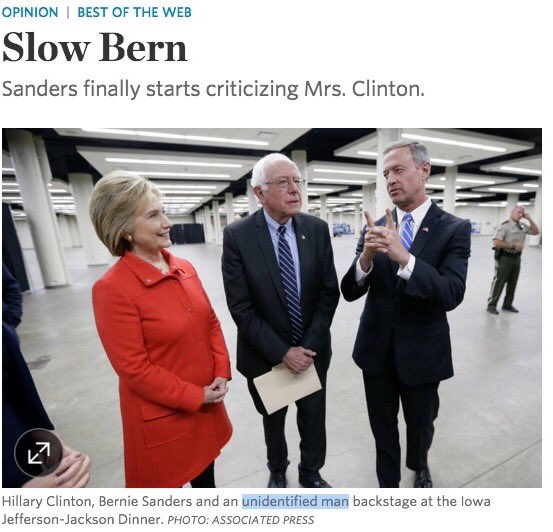
Hilary Clinton vs Bernie Sanders vs an unidentified gentleman

Ouch.

Ouch.

Highlights from the Fourth Democratic Debate | New Republic

Presidential candidates in both parties too often speak as if the President is the secret love child of The Wizard of Oz and the genie from “Aladdin.” They make incredible promises that, even if elected President, they will have no power to implement. The President’s powers are significant but constrained, especially for a Democrat facing the current Republican party, which for the most part considers compromise unprincipled.

The most important question that I’d like to see the candidates discuss in depth is, how will they pursue their policies? Given the pragmatic limits of the President’s power, and the overwhelming likelihood that the Republicans will continue controlling one or both houses of Congress, what do they pragmatically believe they can do and what levers will they pull on to do it? What they’d accomplish if they were a genie dictator is, or should be, a matter of less interest.

By that measure, Hillary Clinton was better at last night’s debate; particularly on the subject of health care, she acknowledges political realities Sanders ignores. Sanders, in contrast, talked about having the “guts” to confront Wall Street. I don’t doubt that Sanders has “guts,” but what specifically does that mean in terms of governing?

Jeet Heer nutshells the debate, and what bothers me about Sander’s campaign:

Sanders is promoting an “ethics of moral conviction” by calling for a “political revolution” seeking to overthrow the deeply corrupting influence of big money on politics by bringing into the system a counterforce of those previously alienated, including the poor and the young. Clinton embodies the “ethics of responsibility” by arguing that her presidency won’t be about remaking the world but trying to preserve and build on the achievements of previous Democrats, including Obama.

The great difficulty Sanders faces is that given the reality of the American political system (with its divided government that has many veto points) and also the particular realities of the current era (with an intensification of political polarization making it difficult to pass ambitious legislation through a hostile Congress and Senate), it is very hard to see how a “political revolution” could work.

In a post from October, Jamelle Bouie makes the depressing but accurate case for Clinton:

The only way President Sanders or President Clinton will accomplish anything is through skilled use of bureaucratic power. So far, however, both candidates are silent on how they would act as an executive. Instead, both Clinton and Sanders are essentially running as legislative leaders, when the real challenge is how she or he would utilize the substantial power they have to direct and influence bureaucrats and regulators.

That’s not to say their rhetoric isn’t important. That Sanders believes in a “political revolution” against money in politics tells you about his priorities as president. And Clinton’s legislative incrementalism gives you a good signpost to how she’ll work with Congress. But, the truth is that—in terms of writing new laws—both agendas are inert. They aren’t passing Congress. […]

And, for Democratic primary voters, who is best equipped to be president in a time of gridlock, where the choice is executive action or nothing? Clinton’s bureaucratic experience, her skill with partisan conflict, and her clear willingness to work against the spirit of the law—as illustrated by her State Department email controversy—make her a prime pick for this era of political grinding.

At this point, I’m leaning towards Clinton, as this post makes obvious. The one thing that makes me think of leaning the other way is foreign policy; Clinton is much too hawkish, and in a US president, that’s a flaw which can kill tens of thousands. But Sanders really hasn’t shown me enough of what he would do; I approve of his (relative) disinclination to use military force, but what would his positive diplomatic goals be?

I’m worried, frankly, that a Sanders administration might lack diplomatic competence, and would like to see any links or arguments Sanders supporters have to reassure me on this point.

(On the other hand, either Sanders or Clinton would be a thousand times better than the laughable and irresponsible blathering we’ve been hearing from GOP candidates lately – 1 2 3.)

Some links I found interesting:

  1. It’s time to start taking Bernie Sanders seriously – Vox Meaning not just that the press should take Sanders seriously, but that Sanders himself should start speaking and campaigning as if he could become president.
  2. Case in point: Bernie Sanders’s single-payer plan doesn’t even address the hard questions about how it would actually work.
  3. David Dayen lays out the differences between Sanders and Clinton on reforming Wall Street.
  4. Dean Baker on the debate over health care makes a good point in defense of Sanders:

    Those who think this sounds like stardust and fairy tales should read the column by Krugman’s fellow NYT columnist, health economist Austin Frakt. Frakt reports on a new study that finds evidence that public debate on drug prices and measures to constrain the industry had the effect of slowing the growth of drug prices. In short getting out the pitchforks has a real impact on the industry’s behavior.

    The implication is that we need people like Senator Sanders to constantly push the envelope. Even if this may not get us to universal Medicare in one big leap, it will create a political environment in which we can move forward rather than backward.

  5. Bernie Sanders didn’t lay out the most progressive agenda on the debate stage – Vox Martin O’Malley did. But whatever completely mysterious element it is that causes a campaign to catch fire with voters, O’Malley’s campaign clearly lacks it.
  6. Bernie Sanders calls Jordan’s hereditary dictator a “hero” – Vox
Posted in Elections and politics, Health Care and Related Issues | 21 Comments

Open Thread and Link Farm, by Grabthar’s hammer, by the suns of Worvan, you shall be remembered! Edition

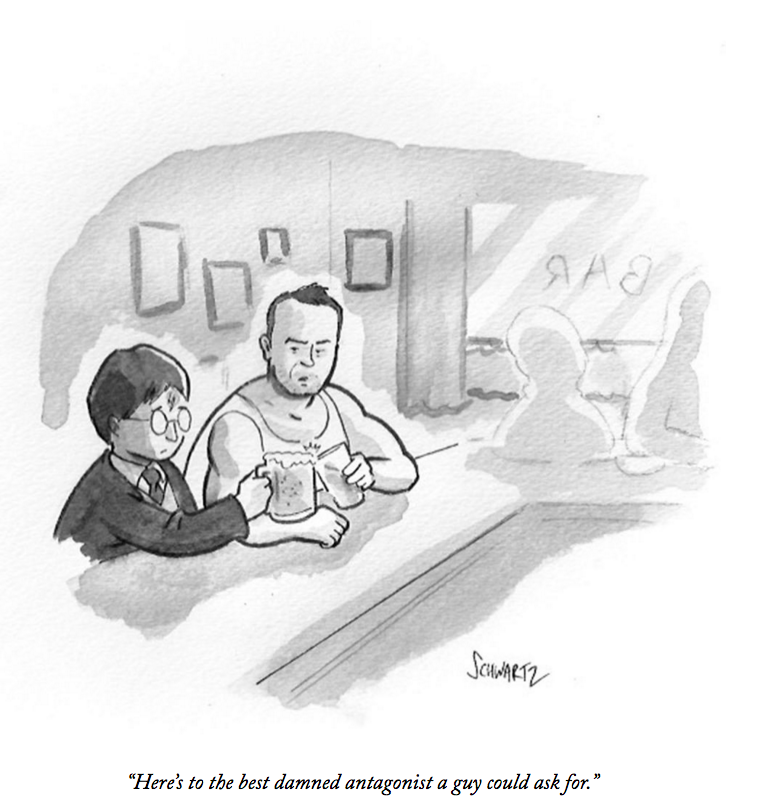
Cartoon by Ben Schwartz.

Cartoon by Ben Schwartz.

  1. Alan Rickman’s most memorable film roles and quotes – NY Daily News
  2. Oscars 2016: The nominees are blindingly white. Again. – Vox
    Of the last 40 actors nominated for an Oscar, 40 have been white.
  3. The Angoulême Grand Prix Controversy | Comicosity
    There was a big reaction this year when, of the 30 cartoonists nominated for the Angoulême Grand Prix award this year – a very prominent lifetime-achievement award – none were women.
  4. Military Strategist Explains Why Trump Leads—And Will Fail
    Ben L. linked to this in the last open thread, and I’m re-linking it here, because it’s really the most persuasive article about Trump (and the 2016 election) I’ve yet read.
  5. But on the other hand… GOP Nomination Rules Tilt the Playing Field toward Donald Trump
  6. Bernie Sanders Could Win Iowa And New Hampshire. Then Lose Everywhere Else. | FiveThirtyEight
    Save you a click: White liberals are a much larger portion of the voters in Iowa and NH than almost all other states, and Bernie has (so far) only done well among white liberals. (His home state of Vermont is one of the whitest and liberalest.)
  7. When Teamwork Doesn’t Work for Women – The New York Times
    A new study shows how female economists get less credit for their work than their male counterparts.
  8. Republicans in Congress ended the decades-long funding ban on needle exchange programs – Vox
    Once in a while the GOP does something right. In this case, I can’t give full credit, because if Republicans had been reasonable the ban would have ended years ago – but at least it’s now effectively ended (at the Federal level anyway), and that’s good.
  9. Trucks have hit this low bridge more than 100 times, and officials still haven’t fixed it – Vox
    What makes this awesome is that someone who works nearby has set up cams and regularly posts oddly hypnotic films of trucks crashing into the bridge. (Or, more accurately, into the seemingly invincible bridge protection beam the railway set up about a yard in front of the bridge.)
  10. The Best Facts I Learned from Books in 2015 – The New Yorker
    Do you know that Aaron Burr’s fire-and-brimstone preacher grandpa was Johnathan Edwards? I didn’t.
  11. Drive-By Fat Shaming | Dances With Fat
    Dances With Fat discusses that fat joke in the first episode of “Jessica Jones.” I really liked her comment on the “last acceptable” canard.
  12. Poisoned Democracy: How an Unelected Official Contaminated Flint’s Water to Save Money | Democracy Now!
    The story of lead poisoning in Flint is horrifying on so many levels; in the mindless devotion to cost-cutting and ignoring science, and in the way that systematic racism leads to children being poisoned.
  13. Lawsplainer: Was FAU Prof. James Tracy Fired in Violation of His First Amendment Rights? | Popehat
    Spoiler: probably.
  14. Sorry, grammar nerds. The singular ‘they’ has been declared Word of the Year. – The Washington Post
  15. Conservatives have a version of political correctness, too – Quartz
    “Bashing the left for political correctness has become a popular pastime for many liberals like Jonathan Chait and Katha Pollitt. By declaring your commitment to free speech, you can show your seriousness and relative political moderation. Much of the discussion of political correctness, then, is about inter-left positioning.”
  16. Harry Potter vs. Huckleberry Finn: Why the British Tell Better Children’s Stories Than Americans – The Atlantic
    I need to think about this more before agreeing or disagreeing, but it’s interesting.
  17. Obsidian Wings: How special effects eat characterization
    It all comes down to the budget.
  18. How the Gender Wage Gap Differs by Occupation | Center for American Progress
  19. To Live And Die Before A Mirror (For those of you who write military fics)
    Tips for fiction writers who are writing characters in the military. I’m not currently, but I still found this entertaining to read.
  20. A Roundtable Interview With the Cast of Hamilton — Vulture
    This is one of the better Hamilton-related interviews I’ve read, with a lot of interesting thoughts from cast members about how they approach their work. I liked Daveed Digg’s explanation for why he never sees the audience until act 2, but I’ll be obnoxious and make you click through to read it.
  21. I’m fed up of having to perform my disability | Scope’s Blog
  22. In angry, defensive memo, Manhattan DA’s office withdraws bite mark evidence – The Washington Post
    Notable for one of the most egregious examples I’ve ever seen of lying by quoting out of context – and the liar is a D.A.
  23. I’m not sure how reliable it is, but this survey of Americans found that 24.8% have less than $100 in their accounts; 23.8% have between $101 and $500; 7.7% have between $501 and $1,000; 16.4% have between $1,001 and $5,000; and 27.3% have more than $5,000 in their accounts.
    So the majority of Americans have less than $1000 in savings. I wonder if people who don’t have bank accounts were excluded, or counted in the “less than $100” category.

movies alan rickman galaxy quest gif

Posted in Link farms | 19 Comments

Interviewing Tina Connolly

A few weeks ago, I discovered that it was a lot of fun to hand people some casual interview questions and see what they had to say. This is the fourth interview I’m putting on the blog.

I met Tina Connolly in 2006 when she went to the Clarion West Writers Workshop where I’d gone the year before. Weirdly, I can’t tell you a single thing about the first time I met her 10(I wonder if she remembers? Tina, perhaps you’ll enlighten me later), but I’m sure I instantly liked her–she’s warm, smart, and a great storyteller, in person and on paper.

I published Tina several times during my run as editor at PodCastle. I’m not sure what my favorite piece was, but here’s one that’s fun — “The Goats Are Going Places.” She’s also a smart, funny narrator who read a lot of stories for us. As a narrator, she eventually started her own podcast, Toasted Cake (unfortunatey now retired), which used to run flash fiction reprints. Here she is reading one of my stories, “Again and Again and Again,” on Toasted Cake.

Tina doesn’t always write humor–her Ironskin trilogy, for instance, is a mix of steampunk, Jane Eyre, and malevolent fairies (check it out if that sounds interesting to you)–but, for me at least, her fiction always has a core of warmth like the one she radiates in person.

Tina also recently took a turn into writing young adult novels, starting with the recently published Seriously Wicked.

The Interview:

I love the humor in your writing. You have a natural, quirky voice when you write humor that doesn’t seem cliche or affected. How did you come into writing humor, and how do you approach it?

Thanks, Rachel! I love writing humor. This kind of goes with your next question, but I’m sure I started writing humor from the same reason that I loved performing. I used to say that my favorite role was the be the comedic lead in a drama. Because you get so much juicy stuff to do, and because the audience is so glad to see you. I loved being comic relief.


And I suppose also that this is my favorite kind of story—where comedy and drama are blended. Even my darker stories tend to have funny bits sneak in, and my funny stories are generally grounded by more serious themes.


On a micro level, I’m not sure if I have any advice on how I approach humor – I have a tendency to go for the joke and I indulge that. (And then, sadly, sometimes you do have to cut jokes that are dragging down the pacing.) On a macro level, I used to do a lot of farces, and I found that the sort of fast-paced plot of Seriously Wicked worked on an intuitive level for me. First you get all the plates spinning, and then you run back and forth opening and slamming the doors….eventually someone gets a pie in the face.

I know you’ve spent time on the stage. When I’m writing, I find that the comedic timing I learned from playing comedic roles helps with figuring out how to write and land humor. Do you draw on those skills?

YES. Timing is very important to me. I often write by rhythm – like, I’m not sure what is going to go in the second half of this witty banter but it needs to have a specific number of beats. My first drafts are littered with “X”s as placeholders.


In general, my time in theatre has been helpful – when I started writing I had no clue about plot, but I spent a lot of time thinking about characters – what they would and wouldn’t do. One thing that was challenging for me at the beginning is that I would leave too much unsaid, because it was always clear to me what complex things the characters were thinking! And then I slowly figured out how to get more of that out of my head and on the page.


Lately I’ve been doing playwriting and thinking about this stuff all over again. For example, there’s a good reason you’re told not to do a ‘as you know Bob” infodump in prose. And you think, sure, that’s good advice, but if you’re a beginning writer you might not understand why. But boy, when you see it on stage – one character monologuing with no purpose behind it except to infodump – you can feel the energy drop like a rock. Dialogue must be persuasive.


You recently began publishing young adult fiction as well as books for us grown-ups. What are you finding inspiring and wonderful about YA?

Even with my adult fiction, I tend to write about younger characters just starting to figure things out. I think the thing that’s wonderful about the young adult / early adulthood time period is that there’s so much you do need to figure out, and it makes for many dramatic life choices and learning arcs.


Face painting. You do it. Tell me an awesome story about face painting.

I took my face paints to Clarion West in 2006, and again to Kij Johnson’s novel workshop at KU in 2012. Great fun. Vernor Vinge was our teacher that week at CW and he let me paint a goldfish on his cheek (something about the singularity…) And Kij picked a praying mantis, and Vylar Kaftan picked a Cthulhu. It wasn’t a very good Cthulhu, but I’ve been practicing. The next one will be better.


Lovecraft, Marie Antoinette, and President Obama are all clamoring for face paint at your booth at the fair. You’ve asked them what they want, but they trust your artistic instincts. So, what are you going to paint?

Lovecraft obviously gets the improved Cthulhu. Antoinette… well, I do have a cute cupcake arm. But I think she would be happiest with the delicate swirlies around the eye, with the sparkles. Obama – well, I have to take into account the fact that I would be simultaneously super nervous and really really wanting to do a good job, so it would not be a good time to attempt something new and ridiculous. I’ve got a nice standby of an American flag with fireworks arm painting (July 4th is a popular time to hire a face painter) so I’d probably suggest that. I think his media relations people would approve that one, too.


The projects question. What are you working on, and what’s coming out?

I just turned in Seriously #2 (which is titled Seriously Shifted, and involves a whole quartet of wicked witches), and that’s due out November 2016 from Tor Teen. I’m just starting in on Seriously #3, which will be out November 2017. In the meantime, I also have my debut collection (On the Eyeball Floor and Other Stories) coming from Fairwood Press in August 2016 – there’ll be a release party at WorldCon in Kansas City!


Source: Rachel Swirsky’s blog

Posted in Interviews, Mandolin | Tagged | Comments Off on Interviewing Tina Connolly