
Interesting interview with Lance deHaven-Smith, a professor specializing in Florida election law and the author of a new book about the 2000 Florida election. From the interview:
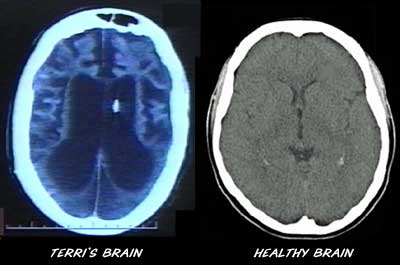
LdHS: It’s an embarrassing outcome for George Bush because it showed that Gore had gotten more votes. Everybody had thought that the chads were where all the bad ballots were, but it turned out that the ones that were the most decisive were write-in ballots where people would check Gore and write Gore in, and the machine kicked those out. There were 175,000 votes overall that were so-called “spoiled ballots.” About two-thirds of the spoiled ballots were over-votes; many or most of them would have been write-in over-votes, where people had punched and written in a candidate’s name. And nobody looked at this, not even the Florida Supreme Court in the last decision it made requiring a statewide recount. Nobody had thought about it except Judge Terry Lewis, who was overseeing the statewide recount when it was halted by the U.S. Supreme Court. The write-in over-votes have really not gotten much attention. Those votes are not ambiguous. When you see Gore picked and then Gore written in, there’s not a question in your mind who this person was voting for. When you go through those, they’re unambiguous: Bush got some of those votes, but they were overwhelmingly for Gore. For example, in an analysis of the 2.7 million votes that had been cast in Florida’s eight largest counties, The Washington Post found that Gore’s name was punched on 46,000 of the over-vote ballots it, while Bush’s name was marked on only 17,000.
RinR: For your research, you merged this set of data with detailed profiles of Florida’s electoral precincts. What did you find?
LdHS: One of the things I found that hadn’t been reported anywhere is, if you look at where those votes occurred, they were in predominantly black precincts. And (when you look at) the history of black voting in Florida, these are people that have been disenfranchised, intimidated. In the history of the early 20th century, black votes would be thrown out on technicalities, like they would use an X instead of a check mark.
So you can understand why African Americans would be so careful, checking off Gore’s name on the list of candidates and also writing Gore’s name in the space for write-in votes. But because of the way the vote-counting machines work, this had the opposite effect: the machines threw out their ballots.
I know that a lot of people are sick of hearing about ballot-counting in Florida in 2000. I’m not. To a great extent, my belief that the US has a working democracy was shattered in that election. So, also, was my belief that high-level Republicans ever act in good faith (before the 2000 election, I actually had some admiration for Scalia).
Not that I really beleive that Democrats as a whole would have acted better. (In the interview, deHaven-Smith argues that the specific Democrats who were an alternative to Jeb Bush in Florida in 2000 would have acted better, had they been in charge of vote counting; that may be the case, but I don’t believe we can generalize from those specific Democrats to Democrats in general).
DeHaven-Smith argues, persuasively, that the real problem in Florida wasn’t just bad technology; it was a system in which partisans with a strong stake in the outcome of elections, are in charge of administrating elections, and also in charge of investigating problems afterwards. This creates a strong bias against both fair elections, and very little motive for anyone to strive for absolute honesty in vote-counting.
Curtsy: Kevin Drum.





...raise taxes on all red states to pay for free healthcare for undocumented immigrants. I don't know, that last one…