On Right To Live vs Right To Autonomy; And Why Fetuses Aren’t People

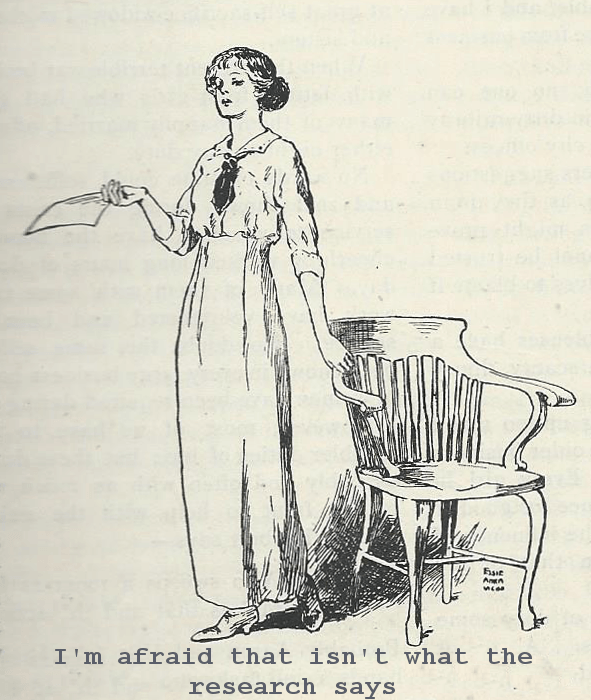
chair-as-person

This post is part of an ongoing discussion I’m having on Tumblr with “Sirwolffe.” I’ve edited the post before putting it on “Alas.”

Sirwolffe writes:

You are comparing the right to life with the right to refuse pregnancy. Isn’t it obvious that one is more important than the other? Life is the greatest gift we have, and the most important one too. How can your right to use your body how you wish override that?

It’s not self-evident that a right to life always overrides a right to bodily autonomy. ((You said “your right to use your body how you wish,” but I’m going to shorten that to “bodily autonomy.”))

Suppose I’m dying, and the only thing that can save me is being medically hooked to you for nine months, so your kidneys will take the poisons out of my blood. ((I’m swiping this example from Judith Thomson.)) You are the only person in the world with the rare blood type necessary for this to work. The procedure carries a high chance of having permanent effects on your body, and a low chance of killing you.

In that circumstance, should the police force you to be hooked up to me for nine months, whether you want to or not?

If you’re consistent in your belief that right to life overrides the right to bodily autonomy, then you’d have to agree that the police should force you to do this for me. For that matter, even if it takes nine years – or the rest of your life – you should agree to the principle that the police can force you to do this for me.

But in fact, no court in this country will force you. Because there is no legal or moral rule that my right to life always overrules your right to bodily autonomy. You cannot be legally forced to let anyone use your internal organs for their benefit. Because you have the right to bodily autonomy.

Pregnant people should have that same right.

* * *

Next, a fetus isn’t just human. It is both wholly human, and a live human. A brain-dead patient is dead, not living. An ear growing in a vat is not a whole human.

An embryo ((I deliberately use the word “embryo,” even though Sirwolffe said “fetus,” to emphasize that abortions typically happen to either embryos or early fetuses. According to Guttmacher, one-third of abortions occur at six weeks into the pregnancy or earlier, and 90% of abortions occur in the first twelve weeks. 99% of abortions take place in the first 20 weeks. The biological structures needed for any thought or consciousness to exist aren’t in place until the 28th week.)) is not a whole and complete person, any more than a foundation of a building is a whole and complete building. An embryo is made, and there is a person making it, providing all the resources and doing all the work. The embryo is literally incapable of continued existence without a pregnant person filling in the gaps of the many ways it is not yet complete.

Your argument erases that pregnant person from consideration; your argument treats them like a non-person whose rights don’t merit a moment’s consideration. A baby doesn’t magically appear, whole and finished; it is made by a person. A person with rights.

Now, why isn’t a fetus a person? Because it can’t think or feel? It will surely develop those properties within several months.

Earlier in our discussion, you agreed that a brain-dead patient is dead – and that could be a difference of only a day. If you’re allowed to say that a difference of a day, during which a person’s brain dies, can nonetheless be a morally important difference, then why can’t I say the same about a difference of four or five months?

It doesn’t matter if the brain-dead patient was alive yesterday. If they’re brain-dead now, then they are no longer a person with a right to life. Because without a brain capable of sustaining some sort of consciousness, it isn’t a person with rights.

By the same logic, it doesn’t matter if the embryo or fetus will in theory be able to be a person four months from now. The abortion isn’t being performed four months from now; it’s being performed today, on an embryo. And an embryo isn’t a person, and a non-person cannot have rights.

A pregnant person is a person, who has consciousness and rights. An embryo is, at most, a hypothetical person; it has no more ability to think or feel than a brain-dead person does, or a chair does. Maybe in several months it’ll gain that ability – or, then again, maybe not. (Even without an abortion, there could be a miscarriage, it could be born brain-dead. Etc).

So what we’re weighing here, is the rights of a real, existing person, versus the “rights” of a hypothetical person who doesn’t exist and might never exist. When these things are in conflict, shouldn’t the rights of the person who exists take precedence?

There was a time when black people were not legally considered persons.

Regardless of what the law said, there’s never been a time when black people weren’t morally and logically people. ((This is a side issue, but your understanding of history is wrong.))

Hey, what if I say chairs are people? And when you disagree, I imply that you’re being like a racist saying Blacks aren’t people. Is that a fair or logical argument? Or by making that comparison, am I assuming what’s at issue – that chairs are people?

I do agree with one thing you wrote: Being legal doesn’t make something moral. A pregnant person is a person, and morally they should have rights. Morally, you should not have the right to force them to be pregnant against their will.

Even if pro-lifers manage to create laws that treat pregnant people like slaves who don’t own their own bodies, that will just change the law. It won’t change that forced childbirth is immoral.

* * *

One last question: Imagine you’re in a burning building. There’s a hallway with two rooms, far from each other, so you only have time to run into one of the rooms and escape before the roof collapses.

In one room is an adorable four-year-old girl. (Or even a mean, grumpy four-year-old girl who hates puppies. Makes no difference to my example.) In the other room is a suitcase containing fifty petri dishes with one-day-old viable embryos, each of which has been assigned to a person who wants the embryos implanted in their wombs. So if you save those embryos, many or all of them will, six months from now, be babies.

If that were me, I would dash to save the four-year-old girl, and leave the embryos to die. No question at all. Would you really run to save the suitcase of one-day embryos, leaving the girl to die? And if you’d save the girl, aren’t you admitting that there is a moral difference between the life of a born human, and the life of an embryo?

Thanks for the discussion. I appreciate it.

Posted in Abortion & reproductive rights | 82 Comments

UPDATE: The Kim Davis Letter IS DEFINITELY A Fake

UPDATE 2:

SamC in comments provided this link. The Kim Davis letter, and the associated Twitter account, is definitely a fake. Apologies to everyone reading (and also to Mrs. Davis, if she ever runs across this post, which is happily unlikely) for being taken in by the fake.

*********************

UPDATE:

I think I got taken in by a fake Twitter account. I assumed it was real mainly because many obviously Christian conservative Twitter users were following, praising and retweeting it.

However, Liz Lee writes:

But the second passage she quotes from the Bible is incorrect. In fact, it’s totally extremely BADLY incorrect. Like, it’s so incorrect that I have a hard time believing this is real. She writes:

“I ask that you read the passage from Luke 16:18 and think of me, ‘Consider it all joy, my bretheren when you encounter various trials, knowing that the testing of your faith produces endurance.’”

However, that’s not the right passage. This passage is from James 1:2. So what is Luke 16:18? Here it is.

“Anyone who divorces his wife and marries another woman commits adultery, and the man who marries a divorced woman commits adultery.”

OMG? Seriously? Please let this be real. Please. It can be my birthday present and Christmas present. I’m going to assume it’s fake. Considering she’s been married four times and conceived children by husband #3 while she was still with husband #2, this is way too good to be true. So, I’m going to assume it is fake.

Original post is under the fold.

Continue reading

Posted in Homophobic zaniness/more LGBTQ issues, In the news | 14 Comments

Please Stop Snarking About Kim Davis’ Four Marriages

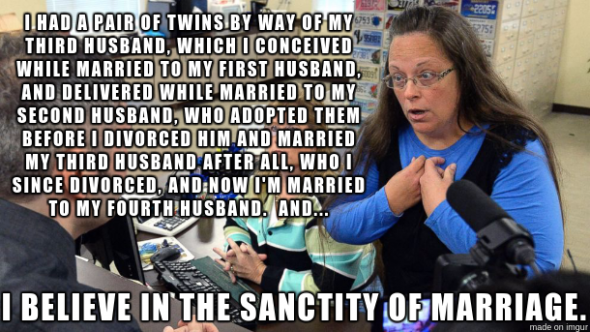
I’ve been seeing a zillion memes like this today about Kim Davis, the Christian Kentucky Clerk who is going to jail for contempt of court, because she’s refusing to do her job and issue marriage licenses to same-sex couples.

kim-davis

1) First of all, Kim Davis only converted to Christianity four years ago. But her most recent divorce was in 2008, seven years ago. The claim that she’s being a hypocrite isn’t even true.

2) Secondly, this sort of attack is slut-shaming. And gleefully vindictive in a way that makes us look ugly. And worst of all, mean to her kids, who probably don’t want thousands of strangers posting about their birth dates, or to have that information broadcast to all their classmates.

3) It’s obvious that Kim Davis can’t win legally, and the end of the legal road here is that same-sex couples will be able to get marriage licenses everywhere in Kentucky. So nothing is accomplished by attacking Kim Davis personally, apart from making her even more of a martyr for her cause.

4) While we’re at it, if you see anyone attacking Kim Davis for her looks, please tell them to go fuck themselves.

UPDATE: Seriously, Kim Davis’ lawyer? Seriously? Lawyer representing Kim Davis compares her to a Jew under the Nazis

Posted in In the news, Same-Sex Marriage | 20 Comments

Don’t Be Fooled – Kate Paulk’s Kinder, Gentler Sad Puppy Slate Is Still A Slate.

puppies

The Hugo Awards – are we all sick to death of my posting about the Hugo Awards? Hell yes, you say? Well, can we can stand one more post on the subject? Okay, then! – are voted on in two stages. From the Hugo Award FAQ:

How are the results decided?

Voting for the Hugos is a two-stage process. In the first stage voters may nominate up to five entries in each category. All nominations carry equal weight. The five entries that get the most nominations in each category go forward to the final ballot. […]

Why do you have a two-stage system?

Hundreds and hundreds of science fiction and fantasy works are published each year. No one, not even the top reviewers in the field, can possibly read/see all of them. Other awards limit the field by restricting themselves to works of certain types (e.g. only fantasy), or by type of work (e.g. only books), or by where they are published, or by the nationality of the author. The Hugos attempt to cover the whole field. The voting system explicitly accepts that no one can have seen/read everything. It relies on the fact that many people participate to find the five works that are most popular (that is have been seen/read and enjoyed by most people), and then there is a run-off between them in the final ballot.

So the first stage of Hugo Award voting is a form of crowdsourcing, whittling down those “hundreds and hundreds” of stories to just five in each category.

For instance, in 2012 (before the puppies), 611 Hugo voters turned in ballots for short stories. The most popular short story, E. Lily Yu’s amazing The Cartographer Wasps and the Anarchist Bees, was listed on only 72 of those 611 ballots (about 12%). At least 60% of those 611 ballots didn’t vote for any of the top five nominated stories.

Nippon_hugo_archive1And that’s fine. That’s how the Hugo nominations are designed to work. 611 Hugo voters, acting as individuals, each nominate whatever short stories they think are award-worthy. From that list of hundreds of short stories, the five most-nominated make it to the final ballot.

Unfortunately, it’s an easy system to game, as the Puppies have proven. If you can form a voting bloc of just 100 people who will nominate an agreed-upon list, instead of voting as individuals, that’s enough to completely overwhelm the much larger number of Hugo voters who are voting as individuals. 100 people voting for just 5 works will beat out 500 people voting from among hundreds of works.

In the case of the Sad Puppies, Brad Torgersen solicited suggestions on his blog, and then – either working by himself, or (as Larry Correia claimed) in consultation with Larry Correia, John Wright, Sarah Hoyt, and V*x D*y – chose five nominees. ((It appears that Torgersen et al pretty much ignored the reader selections they solicited: “of the 16 written fiction nominees on Torgerson’s slate, 11 – more than two-thirds – had not actually been nominated by anyone in the crowd-sourced discussion.” ))

Next year’s Sad Puppies slate – although they’re not calling it a slate – will be run by Kate Paulk. On a podcast, she outlined some plans:

For starters the word slate is not going to appear anywhere. For second [Cross talk] I am not doing a slate, I am doing a list of the most popular works in all of the various categories as submitted by people who read on any of the various blogs that will have me. And I’m going to post ultimately the top ten of each, with links to the full list of everything that everybody wanted to see nominated, and I’m going to be saying “hey if you really want to see your favorite authors nominated your best bet is to pick something of theirs from the most popular in the list as opposed to the least popular.” That is going to be what it is. I don’t care who ends up on that list. I don’t care if David Gerrold ends up being the top of the list somewhere. That’s not the point, the point is that I want to see the voting numbers both for nomination and for actual voting go up above 5,000 up above 10,000, because the more people who are involved and who are voting the harder it is for any faction including puppies to manipulate the results.

Except this is manipulating the results. Because she’s telling the Puppies to vote strategically from a common list (“your best bet is to pick something of theirs from the most popular in the list”) instead of doing what they should, which is voting as individuals for whatever works they’ve personally read and consider the best.

This isn’t as blatant a slate as Torgersen’s was – but it’s still an attempt to consolidate the votes of the Sad Puppies, from hundreds of possible stories to just a handful of choices. By the time of the final Hugo vote, there appeared to be 400-500 Sad Puppies, about 100 of whom voted strict party line. If even half of those Sad Puppies strategically choose their votes from Paulk’s “top ten” list, while the thousands of non-Puppy voters, voting as individuals, split their votes among hundreds of stories, then bloc voters will once again be able to lock out the rest of us.

If Paulk sincerely wants to participate fairly, rather than running a slate, she should ask her readers to post their recommendations (like Scalzi and others do). And then – that’s it. Don’t consolidate, don’t list in order of popularity, don’t encourage strategic voting – just crowdsource a list of reader’s favorite choices, and tell readers to vote as individuals.

* * *

three-body-problemMany puppies are crowing that this year’s “Best Novel” winner – the excellent, if flawed, Three Body Problem – would not have won without a few hundred puppy voters joining with the majority of voters to beat out The Goblin Emperor (also excellent, also flawed).

That’s true, but it’s also true that Three Body Problem, which was not on either Puppy slate, would not have been nominated if Marko Kloos hadn’t honorably declined his slated nomination. In other words, it’s only because the Puppies screwed up that TBP was nominated at all.

Various leading Puppies have said that they would have nominated TBP if they had read it on time – but, as it happened, none of the handful of people (2? 5? Whatever) who made the decision had read TBP.

And that illustrates exactly what’s wrong with allowing slates to choose the Hugo nominees, rather than Hugo voters nominating as individuals. A crowd of hundreds of Hugo voters, voting as individuals, wouldn’t have left Three Body Problem off the list – but the Puppy slates did.

(Actually, Kloss wasn’t the only novelist to decline a Hugo nomination this year – Larry Correia, who founded the Puppies, made a big show of allowing himself to be nominated, and then declining the nomination. Ironically, if neither Kloss and Correia had declined their nominations, then this year’s Hugo best novel would have been Ancillary Sword, a novel the Puppies loathe.)

* * *

One more point. I’ve seen several Puppies argue that the “no award” vote was gaming the awards, equivalent to how Puppies gamed the nominations.

That’s nonsense.

“No Award” didn’t beat the Puppy nominees because a minority gamed the system and locked out the majority. It beat the Puppy nominees because that’s how the majority of Hugo voters voted. When the majority votes for an outcome, and that outcome wins, that’s not “gaming the system.” That is the system.

Posted in Hugo Awards | 39 Comments

I got the advance copy of the new Hereville book!!!

I’m horribly pleased.

The book will be on sale in November!

Posted in Hereville | 24 Comments

The Stories That Should Have Been 2015 Hugo Nominees, With Links

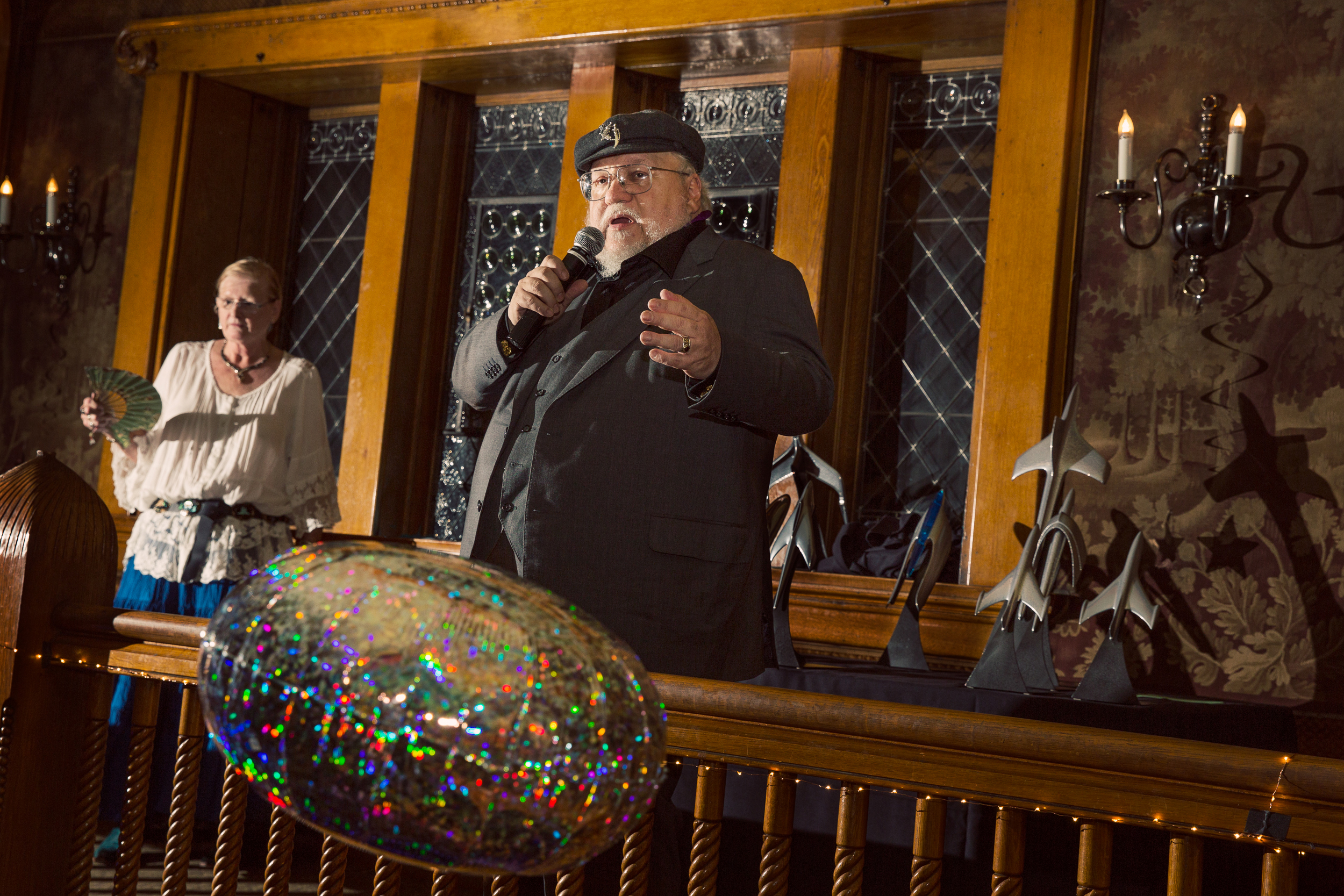
George RR Martin hands out his own "Alphie" awards at the Hugo Losers Party, August 23, 2015.

George RR Martin hands out his own “Alphie” awards at the Hugo Losers Party, August 23, 2015.

Tobias Buckell posted this compilation of the Hugo nominees that would have been if the nomination process hadn’t been hijacked with slate voting.

One of the most unfair things about the use of slates this year, is that many stories that deserved a Hugo-nom boost in visibilty and readership, were bumped off the list by the use of slate voting.

So here is the list again, but with links to all the stories I could find online, in order to facilitate reading. In the case of the novels and some of the novellas, I link to the books’ Amazon pages. I’ve also added “Goodnight Stars” to the short story list, for the reasons explained in my previous post.

Best Novel

Ancillary Sword by Ann Leckie
The Goblin Emperor by Katherine Addison
The Three Body Problem by Liu Cixin
Lock In by John Scalzi
City of Stairs by Robert Jackson Bennet

Best Novella

The Slow Regard of Silent Things by Pat Rothfuss
The Regular by Ken Liu (epub, mobi/Kindle).
Yesterday’s Kin by Nancy Kress (Excerpt)
Grand Jete by Rachel Swirsky
The Mothers of Voorhisville by Mary Rickert

Best Novelette

The Day the World Turned Upside Down by Thomas Olde Heuvelt
Each to Each by Seanan McGuire
The Devil in America by Kai Ashante Wilson
The Litany of Earth by Ruthann Emrys
The Magician and Laplace’s Demon by Tom Crosshill

Best Short Story

The Jackalope Wives by Ursula Vernon
The Breath of War by Aliette de Bodard
The Truth About Owls by Amal El-Mohtar
When It Ends, He Catches Her by Eugie Foster*
A Kiss With Teeth by Max Gladstone
Goodnight Stars by Annie Bellet

Apart from the novels, I’ve read three of these so far – Grand Jete, The Jackalope Wives, and The Mothers of Voorhisville – and they were all excellent. Oh, and The Day the World Turned Upside Down – which I read because it was Hugo-nominated – which I thought was okay, it had some nice bits, and I liked what an awful person the protagonist was, but overall not a memorable story.

Which have you read?

Posted in Hugo Awards, In the news | 6 Comments

Hugo Awards Are In; Puppies Lose Big; The Alternative Nominees; E Pluribus Hugo Proposal Passes Its First Vote

Best NovelThe Three Body Problem by Cixin Liu, translated by Ken Liu (Tor Books)
Best Novella – No Award
Best Novelette – “The Day the World Turned Upside Down” by Thomas Olde Heuvelt (Lightspeed, April 2014)
Best Short Story – No Award
Best Related Work – No Award
Best Graphic StoryMs. Marvel Volume 1: No Normal (Marvel Comics)
Best Dramatic Presentation (Long Form)Guardians of the Galaxy
Best Dramatic Presentation (Short Form)Orphan Black: “By Means Which Have Never Yet Been Tried”

Best Professional Editor (Short Form) – No Award
Best Professional Editor (Long Form) – No Award
Best Professional Artist – Julie Dillon
Best SemiprozineLightspeed Magazine, edited by John Joseph Adams
Best FanzineJourney Planet, edited by James Bacon, Christopher J Garcia, Colin Harris, Alissa McKersie, and Helen J. Montgomery
Best FancastGalactic Suburbia Podcast
Best Fan Writer – Laura J. Mixon
Best Fan Artist – Elizabeth Leggett
The John W. Campbell Award – Wesley Chu

This is about as good a result as we could have hoped for, after the Rabid Puppies (and their sidekick the Sad Puppies) successfully gamed the nominations. Apart from Guardians of the Galaxy – which, looking at the numbers, could have been nominated and won without any Puppy help – not a single Puppy-nominated work won.

Because Worldcon has released voting numbers, we now know who would have been nominated if the puppies hadn’t gamed the system. Tobias Buckell has compiled the results in the fiction categories:

Best Novel

Ancillary Sword by Ann Leckie
The Goblin Emperor by Katherine Addison
The Three Body Problem by Liu Cixin
Lock In by John Scalzi
City of Stairs by Robert Jackson Bennet

Best Novella

The Slow Regard of Silent Things by Pat Rothfuss
The Regular by Ken Liu
Yesterday’s Kin by Nancy Kress
Grand Jete by Rachel Swirsky
The Mothers of Voorhisville by Mary Rickert

Best Novelette

The Day the World Turned Upside Down by Thomas Olde Heuvelt
Each to Each by Seanan McGuire
The Devil in America by Kai Ashante Wilson
The Litany of Earth by Ruthann Emrys
The Magician and Laplace’s Demon by Tom Crosshill

Best Short Story

Goodnight Stars by Annie Bellet
The Jackalope Wives by Ursula Vernon
The Breath of War by Aliette de Bodard
The Truth About Owls by Amal El-Mohtar
When It Ends, He Catches Her by Eugie Foster*

JWC Award for Best New Writer
Wesley Chu
Andy Weir
Alyssa Wong
Carmen Marchado
Django Wexler

Note that Mandolin’s wonderful novella “Grand Jete” would have been nominated for a Hugo (as it was nominated for both the Nebula and for the World Fantasy Award). Congratulations to Mandolin, and to all the other alternative Hugo nominees.

I did modify this list in one way. Tobias left Annie Bellet’s “Goodnight Stars” off the list of short-story nominations. Bellet’s story was on the Puppy slate, and was nominated, but Bellet withdrew her nomination, for entirely admirable reasons.

However, the statistics Worldcon has released (pdf link) the nomination numbers, we know that “Goodnight Stars” got the most nominating votes of any nominee, with 230. In a puppy-free vote, “Goodnight Stars” would have needed 42 nominating votes to make the ballot (to beat Max Gladstone’s “A Kiss With Teeth”), giving Bellet a margin of 188 votes. Puppy favorite story “On A Spiritual Plain,” by Lou Antonelli, received 184 nominating votes; another Puppy favorite, “The Parliament of Birds and Bees,” received 151. It thus seems certain that even if the Puppies hadn’t gamed the system, “Goodnight Stars” would have been nominated for best short story. And without Puppies, Bellet would not have withdrawn her nomination.

I’ve got guests coming over soon, so even though I have lots more to say, that’ll have to wait until later.

A couple of recommended links:

Who Won Science Fiction’s Hugo Awards, and Why It Matters | WIRED

Even if you don’t read the whole thing, scroll down to the end and read about George Martin’s loser party, featuring the Alfie Awards.

2015 Hugo Stats: Initial Analysis | Chaos Horizon
Chaos Horizon attempts to estimate how many Rabid and Sad voters there were.

UPDATE: Folks at File 770 are reporting that E Pluribus Hugo has passed by a margin of 186 to 62. Under Worldcon rules, a change to the rules like that needs to pass two years in a row before it can be implemented, but that healthy margin of passage speaks well for E Pluribus Hugo’s chances next year.

In an earlier post, here’s how I described the E Pluribus Hugo proposal:

The proposal I favor is “Least Popular Elimination,” in which voters could still nominate up to five works per category, but the votes are counted in a way that mathematically favors works that appear on the broadest number of voters’ ballots while diluting (but not completely eliminating) the power of slate voting. A detailed explanation of “Least Popular Elimination” voting is available here. While LPE voting is not as intuitive as the other two proposals, I believe it would be more effective.

If E Pluribus Hugo passes next year, then the year after that Puppies can return to being what they always were – a bunch of grumpy SF/F fans who have no power out of proportion to their numbers, and who most people will happily ignore.

UPDATE 2: After reading Kevin P’s comment, I’m not sure if “Goodnight Stars” would have made it sans pups; maybe the fifth nominee would have been Max Gladstone’s “A Kiss With Teeth” after all. Maybe a week of smarter people than me crunching the numbers will bring more clarity to this.

Posted in Hugo Awards, In the news | 60 Comments

WTF, New York Post? Why Are You Advocating Rape?

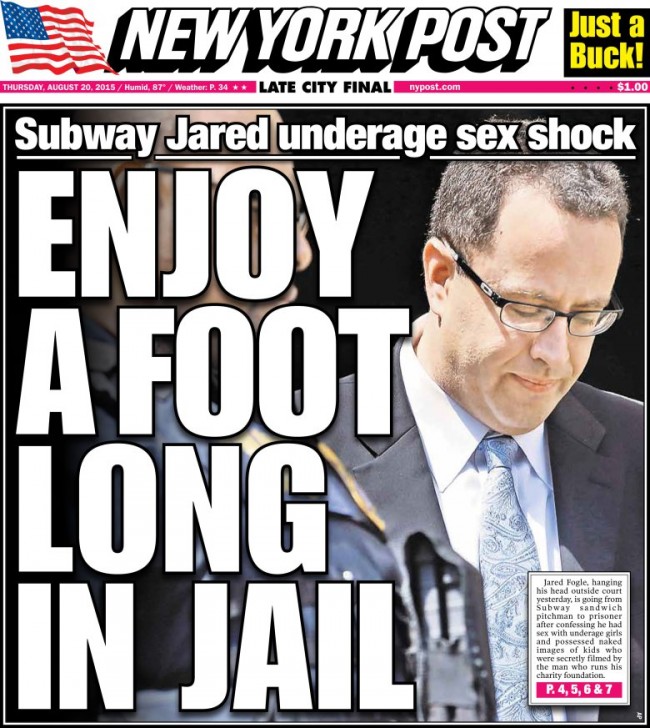
So famous dieter and Subway spokesman Jared Fogle has admitted to paying minors for sex (which is, as I understand it, statutory rape) and having child pornography, and will spend between five and thirteen years in prison, as well as paying restitution of $100,000 each to 14 identified victims.

This is the New York Post’s headline: “Enjoy A Foot Long In Jail.”

jared-nypostWTF, New York Post? What the fucking fuck?

Rape jokes about prisoners (and usually about male prisoners) are commonplace and disgusting. And it’s notable that they often don’t just joke about rape, but implicitly endorse rape. This headline isn’t merely joking about rape happening, it’s eagerly hoping for rape to happen. It’s approving of rape as a form of punishment.

(It’s also unoriginal and trite – it’s a joke that thousands of Twitter users and schoolyard wits made before the Post did – but the triteness doesn’t bother me.)

What Fogle did was evil and inexcusable. But if he is raped in prison, that would also be evil and inexcusable. It’s not complicated.

Here’s a handful of related links:

  1. Obama: We Need to Stop Making Jokes About Prison Rape | Mediaite
  2. Rape Should Not Part of the Penalty for Prisoners | Advocate.com
  3. Top 10 Alternatives to Today’s NY Post Headline
  4. New York Post cover blasted over tasteless Jared Fogle ‘joke’ – Digiday
  5. We Asked Prison Inmates How Jared Fogle Will Get Treated Behind Bars | VICE | United States
  6. Stop the Jared Fogle “footlong” jokes: Why do we still find prison rape acceptable, let alone funny? – Salon.com
  7. The New York Post’s Subway Jared rape joke is awful—but not just for the reason you think
Posted in Prisoner rape, Rape, intimate violence, & related issues, Sexism hurts men | 4 Comments

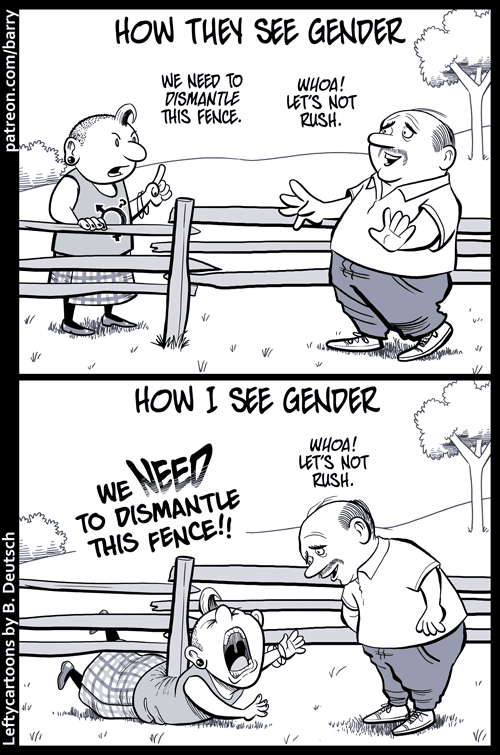
Cartoon: The Gender Fence

gender-fence-550
If you argue with the more intelligent conservatives about gender issues, sooner or later you are challenged with a famous quote from G. K. Chesterton:

In the matter of reforming things, as distinct from deforming them, there is one plain and simple principle; a principle which will probably be called a paradox. There exists in such a case a certain institution or law; let us say, for the sake of simplicity, a fence or gate erected across a road. The more modern type of reformer goes gaily up to it and says, “I don’t see the use of this; let us clear it away.” To which the more intelligent type of reformer will do well to answer: “If you don’t see the use of it, I certainly won’t let you clear it away. Go away and think. Then, when you can come back and tell me that you do see the use of it, I may allow you to destroy it.”

That argument makes sense as far as it goes; but what it ignores is why the “modern type of reformer” wants the fence taken down. It ignores the possibility that the person wanting the fence taken down is reacting to real and immediate pain, and that there might actually be some urgency in the situation.

Transcript of cartoon.

This cartoon has two panels.
PANEL ONE
In the first panel, a genderqueer person whose gender presentation is ambiguous, is talking to a suburban-looking man wearing a polo shirt. There’s a old-fashioned wooden rail fence running between them.

CAPTION: How they see gender.
GENDERQUEER PERSON (sternly): We need to dismantle this fence.
SUBURBAN MAN (cheerfully): Whoa! Let’s not rush.

PANEL TWO
The same scene, except now the post of the fence is going through the genderqueer person’s back, pinning them to the ground, and they are in agony.

CAPTION: How I see gender.
GENDERQUEER PERSON (agonized): WE NEED TO DISMANTLE THIS FENCE!
SUBURBAN MAN (cheerfully): Whoa! Let’s not rush.

Posted in Cartooning & comics, Lesbian, Gay, Bi, Trans and Queer issues | 67 Comments

No, The Washington Post-Kaiser Family Foundation Survey of Sexual Assault Is Not Bogus

nationalreivew

This is another guest post by Carla, which originally appeared on her blog Writing in Water, and appears here with her kind permission.

For more than 20 years, the idea of a crisis of sexual assault against women has been under attack; this attack has acquired new vigour in the wake of the White House’s focus on sexual assault on college campuses. When in June the Washington Post released a survey, in conjunction with the Kaiser Family Foundation, appearing to confirm the claim that one in 5 women will be sexually assaulted while at college, it was inevitable that critical articles would soon start appearing in the media. The National Review was one of the first to respond with a piece titled ‘The Post’s New Poll on Campus “Sexual Assault” is Bogus.’ While there are other surveys with larger sample sizes and more rigorous methodology that offer better evidence for the alarming levels of sexual victimisation faced by college women, the National Review article, which I will discuss here, nonetheless illustrates why we should be wary of laypeople in the media purporting to debunk sexual violence research.

Claim 1. This survey’s results resemble those of the unreliable 2007 Campus Sexual Assault Survey

The National Review begins by noting that the results of the Washington Post­ Kaiser survey are similar to the 2007 Campus Sexual Assault Survey (CSA), whose results, it is claimed, were “suspect from the start” because that survey used “an exceedingly generous definition of sexual assault and its response rate was relatively low.” This is misleading. To start with, the Washington Post­Kaiser survey is consistent with a body of research over several decades, not a single survey. (( For example, see Gross, A et al (2006), ‘An Examination of Sexual Violence Against College Women,’ Violence Against Women 12.3: 288­300; Smith, P et al (2003), ‘A Longitudinal Perspective on Dating Violence Among Adolescent and College­Age Women,’ American Journal of Public Health, 93.7: 1104­9; Cloutier, S et al (2002), Journal of Epidemiology and Community Health 56: 265­71; Fisher, B et al (2000), Sexual Victimization of College Women, Washington DC: National Institute of Justice; Humphry, J and White, J (2000), ‘Women’s Vulnerability to Sexual Assault from Adolescence to Young Adulthood,’ Journal of Adolescent Health, 27: 419­24; Greene, D and Navarro, R (1998), ‘Situation­Specific Assertiveness in the Epidemiology of Sexual Victimization Among University Women,’ Psychology of Women Quarterly, 22: 589­604. ))

Second, it is completely untrue that CSA used “an exceedingly generous definition of sexual assault.” CSA defined sexual assault as 1) oral, anal and vaginal sex and 2) “forced touching of a sexual nature (forced kissing, touching of private parts, grabbing, fondling, rubbing up against you in a sexual way, even if it is over your clothes)” that took place in the context of physical force/threats of physical force or incapacitation. Some critics have attempted to claim, unconvincingly, that the questions about incapacitated sexual assault in CSA are worded in such a way that they capture consensual sexual activity; I discuss this here. A smaller number of critics, including the National Review, have also attempted to argue that “forced kissing” is not really sexual assault. As Van Jones’s swift takedown of the editor of the National Review when he attempted to make this claim on ABC’s The Week shows, we need only ask the (male) proponents of this idea how they feel about being forcibly kissed by another man to underscore how thin this objection really is.

The second part of the National Review’scriticism of CSA, that “its response rate was relatively low” (around 42% of invited participants responded) is also unconvincing. There is little evidence that the survey’s results were affected by response bias. The authors of the survey actually went to some trouble to gauge if it was a problem—for example, they compared respondents who responded early with those who had to be prompted several times—and found no evidence of any. (Incidentally, the problem of bias in sexual violence surveys is more likely to work in the opposite way from which critics imagine. That is, reluctance to disclose these sensitive and traumatic events means they are more likely to undercount episodes of sexual violence.)

Claim 2. The survey’s results are much lower than those of the National Crime Victimization Survey

The National Review article next brings up that favourite of rape survey critics, the National Crime Victimization Survey (NCVS). Describing it as a “more comprehensive and rigorous” survey than CSA, the National Review notes that it found a sexual violence rate
of 7.6 per 1000. In reality, NCVS is widely recognised as a poor measure of sexual violence prevalence and its results are completely out of step with the collective results of 30 years of sexual violence surveys. These problems are recognised by the Bureau of Justice Statistics, which is currently contracting with researchers to improve the sexual violence portion of the survey.

NCVS primarily owes its unreliability to the wording of the question about sexual assault. In this question, respondents are first asked if anyone has “attacked or threatened you in any of these ways,” before being read a variety of violent crimes; the one asking about sexual violence is worded “Any rape, attempted rape or other type of sexual attack.” This question relies upon victims of sexual assault recognising that they have been raped and/or viewing it as an “attack,” and the context of the question makes it clear that the interviewer is asking about crimes that are on a par with being violently attacked with a weapon.

There are many reasons why victims of sexual assaults that fall within the purview of this question would not realise that they do, however. The dominant conception of ‘real’ sexual violence is that it is perpetrated by strangers with weapons who attack chaste women who actively resist. Sexual violence, including rape, that doesn’t fit this script (in other words, the vast majority), such as that perpetrated by intimate partners or in the context of heavy drinking, is routinely trivialised or not viewed criminal, and its victims are blamed or disbelieved. Unsurprisingly, therefore, it is extremely common for victims of sexual assault to blame themselves and downplay what happened (note that this does not mean that they were not traumatic events). We also know that the majority of victims of rape do not use the word “rape” to describe their experience. Moreover, the word “attack” in the NCVS sexual violence question implicitly excludes sexual violence that takes place in the context of incapacitation, or where the victim didn’t actively resist. It is, therefore, wholly unsurprising that many victims of sexual assault would not consider their experiences to align with the kinds of assaults that NCVS is asking about, even if they do.

Claim 3. The survey includes “unwanted sexual contact” in its definition of sexual assault, which is so broad that it includes legal acts and even innocent misunderstandings

The National Review‘s main criticism revolves around the fact that the survey questions asking about sexual assault include the phrase “unwanted sexual contact.” It claims that this is a much broader term than “sexual assault” and “can encompass behaviors that are not only not criminal, but may not … even constitute unlawful sexual harrassment.” In addition, the article claims, ‘“unwanted” is not the same as “without consent”’ and can “encompass a variety of circumstances, up to and including entirely legal misunderstandings and legal (though immoral) emotional manipulation.”

First, however, there is no formal definition of “sexual assault.” It is simply a term used by researchers to include a set of behaviours, usually broader than just rape; exactly what it includes depends on the researcher. Some states use the term in legislation, but its definition varies. Second, the question respondents were actually read lists possible types of “unwanted sexual contact” as 1) vaginal, oral or anal sex and 2) “Forced touching of a sexual nature,” with interviewers instructed to “read if needed” the following clarification: “forced kissing, touching of private parts, grabbing, fondling, rubbing up against you in a sexual way, even if it is over your clothes” (as can be seen, this question was modelled on CSA). Respondents were then asked if they had experienced any of these kinds of unwanted sexual contact in the context of 1) physical force or threats of physical force and 2) incapacitation. Sexual acts that take place in the context of physical force, threats of physical force and/or incapacitation do not involve ambiguity about consent.

Claim 4. The survey’s definition of sexual assault doesn’t “come close” to legal definitions of sex crimes

The National Review goes on to claim that “These definitions don’t come close to matching the legal definition of the various sex crimes prohibited by various state laws.” For example, it says, “the phrase ‘forced touching of a sexual nature’ isn’t precise enough to encompass ‘sexual battery’ under Tennessee law.” In answer to this, it should first be pointed out that legal definitions are not necessarily a good way of defining sexual assault. At one time, not always so very long ago, for example, spousal rape, rape of men, incapacitated rape and rapes where the victim did not actively resist were not criminalised. As this paper points out, legislation in some jurisdictions still reflects these outdated ideas. We surely do not believe that, say, spousal rape only exists if it is written into law. But even putting this aside, it’s hard to understand the National Review‘s quibble.

The National Review gives a link to Tennessee definitions of sexual assault and invites readers to compare the definition of “sexual battery” with the Washington Post­Kaiser survey’s definition of “forced touching of a sexual nature.” The Tennessee definition of “sexual battery” is as follows:

(a) Sexual battery is unlawful sexual contact with a victim by the defendant or the defendant by a victim accompanied by any of the following circumstances:

(1) Force or coercion is used to accomplish the act;

(2) The sexual contact is accomplished without the consent of the victim and the defendant knows or has reason to know at the time of the contact that the victim did not consent;

(3) The defendant knows or has reason to know that the victim is mentally defective, mentally incapacitated or physically helpless; or

(4)The sexual contact is accomplished by fraud.

(b) As used in this section, “coercion” means the threat of kidnapping, extortion, force or violence to be performed immediately or in the future.

Tennessee legislation defines “sexual contact” as:

the intentional touching of the victim’s, the defendant’s, or any other person’s intimate parts, or the intentional touching of the clothing covering the immediate area of the victim’s, the defendant’s, or any other person’s intimate parts, if that intentional touching can be reasonably construed as being for the purpose of sexual arousal or gratification.

“Intimate parts” are defined as “the primary genital area, groin, inner thigh, buttock or breast of a human being.”

This definition of sexual battery, which includes “sexual contact accomplished by fraud” and non- violent threats, actually includes acts that are not included in the Washington Post­-Kaiser survey’s definition of forced sexual touching. Moreover, it’s mystifying why sexual touching that takes place in the context of physical force, threats of physical force or incapacitation should be considered inconsistent with this legislation. The National Review does not elaborate. And while I am certain creative minds could come up with ways in which the Washington Post­Kaiser definition of forced sexual touching could be misconstrued, this does not translate to it being misinterpreted in practice. We are, after all, talking about ordinary people responding to a survey, not lawyers hunting out technicalities for a court case.

One final point: although the Washington Post-Kaiser survey does not ask about experiences of rape separately from experiences of forced touching, other surveys have found that victims disclosing only non­rape forms of sexual assault make up a relatively small proportion of the results. CSA, for example, upon which the Washington Post­Kaiser survey is modelled, found that only 28% of victims of physically forced and 23% of victims of incapacitated sexual assault disclosed only forced sexual touching. Since, as I mentioned earlier, it is well-known that women tend to downplay experiences of sexual assault, this is unsurprising. Respondents to surveys of sexual violence are probably less likely to disclose less serious assaults, meaning these surveys probably undercount episodes of non-rape sexual assault.

A final word

Because most people are not familiar with sexual violence research, and probably lack the inclination to even read the survey instrument, the claims in this article may seem more plausible than they are. Certainly, if the comments section is anything to go by (I did not see a single person questioning the criticism of the survey), this piece has convinced some readers. But calling the Washington Post­Kaiser survey “bogus” is an inappropriate way to characterise the work of the researchers who designed and carried it out—nor does it change the fact that, yes, it is very likely that one in five American women will be the victims of sexual assault while at college.

References
Posted in Rape, intimate violence, & related issues | 104 Comments