No, men aren’t more likely to be hit by an asteroid than falsely accused of rape

So this article – “5 Things More Likely To Happen To You Than Being Falsely Accused Of Rape” – has apparently been reblogged or liked more than 35,000 times on Tumblr. I’m not sure how big that is by Tumblr standards, by by bloggy standards it’s huge.

It’s also completely wrong, as Scott at Slate Star Codex points out, because – aside from all the other problems with measuring something like “false rape accusations” accurately, or for that matter the odds of lotteries or of errant space rocks – the author of the post calculated the odds of being falsely accused for any one sexual encounter and compared that to odds of other events happening ever during a lifetime.

But of course, that’s nonsense – for the comparison to be valid, the writer would have had to compare lifetime odds of a false rape accusation to lifetime odds of (being hit with a meteorite, playing in the NFL, etc).

The author of the post, Charles Clymer, hasn’t responded to Scott yet. But I don’t see any way Clymer’s apples-to-oranges method can be logically justified.

What’s notable here is not that a blogger messed up his statistics (mistakes happen), but that 35,000 folks liked or reblogged his mistake, and I think it’s fair to guess that very few of them looked skeptically at the claim and wondered “is this true?”

Scott blames it on big bad feminism:

Do not trust anything that comes out of the feminist blogosphere. When you see something in the feminist blogosphere, your default assumption should be that it is approximately as honest as this Clymer article.

In comments at his blog (where there’s a fair amount of debate between Scott and I), I responded:

This is so hyperbolic that I suspect it’s actually harmful, as it encourages either team rallying (“damn straight, feminists are all liars!”) or defensiveness (“anti-feminist insults”) instead of thought.

I do think that you’re talking about a real phenomenon, but it’s not at all limited to the feminist blogosphere (nor is it as universal in the feminist blogosphere as you imply). If you see more than the usual number of bad stats in the feminist blogosphere, that is probably because your own interests lead you to look more for those bad stats than for bad stats in (say) gun blogs (both sides), climate change skepticism blogs, anti-evolution blogs, truther blogs, tea party blogs, etc..

That said, I don’t disagree with you that it’s all-too-common for feminists to accept false statistics as long as those statistics align with our confirmation biases. I think this is a more severe problem on the internet, and probably most severe on Tumblr and similar social media. But I’ve also observed the same problem with offline feminism, including some feminist academics, which is pretty shameful.

I think a lot of this comes from the culture of contempt that dominates contemporary politics (I can’t say if it dominated politics in the past). The more we view people who disagree with us as irredeemably evil and acting out of bad motives, the more difficult it becomes for any criticism to seem credible enough to take seriously. This makes it extremely unlikely that bad statistics will be caught and discredited within a movement, even if the mistakes are pointed out by outsiders.

Treating this as something especially unique and toxic within feminism is a mistake, I think, not only because I’m a feminist, but because it’s a misdiagnosis. The tendency I’m talking about is happening throughout our political culture, among feminists and anti-feminists, liberals and conservatives, etc etc. An analysis that singles out feminists as extra-evil-demagogues is an analysis that is wrong about reality and thus unlikely to offer any good solutions.

* * *

Related post: Are Feminist Blog Stats Atypically Bad?

Posted in Feminism, sexism, etc | 36 Comments

Publication News! “Detours on the Way to Nothing” and “How the World Became Quiet”

I have two pieces of publication news that I wanted to put out through the blog! Of course, they’re both a couple of weeks late. ;)

Detours on the Way to Nothing

First, I am really pleased to say that one of my older stories, “Detours on the Way to Nothing,” has been reprinted in Lightspeed Magazine. It originally appeared in Weird Tales which was being edited by Ann Vandermeer at the time and I am *so glad* that I got to be part of her run. It was one of my first five or ten acceptances, and I was over the moon. I’m glad that the story is out there for more people to look at now.

Here’s a link and a taste:

It’s midnight when you and your girlfriend, Elka, have your first fight since you moved in together. Words wound, tears flow, doors slam. You storm out of the apartment, not caring where you go as long as it’s far away from her. When you step off the front stoop onto the sidewalk, that’s the moment when the newest version of me is born.

Jude Griffin also interviewed me about the story. Another excerpt:

What was the genesis for “Detours On The Way To Nothing”?

I usually start writing stories with an idea, instead of an image, but for this one, it just started with an image.

How the World Became Quiet

Also, my short story, “How the World Became Quiet: A Post-Human Creation Myth,” is going to be reprinted in John Joseph Adams’ anthology, WASTELANDS 2. You can see the cover here and the table of contents includes super cool people like Junot Diaz, Paolo Bacigalupi, Genevieve Valentine, Keffy Kehrli, Maria Dahvana Headley, and Nancy Kress.

“How the World Became Quiet” is the titular story from my Subterranean collection which came out this fall, HOW THE WORLD BECAME QUIET: MYTHS OF THE PAST, PRESENT, AND FUTURE, which is sold out from the press but still available from some vendors like Amazon and Barnes and Noble.

Here’s a brief excerpt from the story:

During the first million years of its existence, mankind survived five apocalypses without succumbing to extinction. It endured the Apocalypse of Steel, the Apocalypse of Hydrogen, the Apocalypse of Serotonin, and both Apocalypses of Water, the second of which occurred despite certain contracts to the contrary. Mankind also survived the Apocalypse of Grease, which wasn’t a true apocalypse, although it wiped out nearly half of humanity by clogging the gears that ran the densely-packed underwater cities of Lor, but that’s a tale for another time.

Humans laid the foundation for the sixth apocalypse in much the same way they’d triggered the previous ones.

Posted in Uncategorized | 1 Comment

How To Misreport A Rape Prevalence Study, National Review Style

Katherine Connell in the National Review writes:

In its definition of rape, the CDC’s “National Intimate Partner and Sexual Violence” survey includes sex that occurred when the victim was drunk or high, regardless of whether she was incapacitated or unable to give consent. Participants were asked to respond to the question: “When you were drunk, high, drugged, or passed out and unable to give consent, how many people ever had vaginal sex with you?” A woman could list instances of consensual sex she had while intoxicated that she did not consider to be rape — that were in fact not rape — and the researchers would nonetheless classify her as a rape victim.

Connell’s point, I think, is that although the researchers intended interview subjects to hear:

“When you were [drunk, high, drugged, or passed out] and [unable to give consent], how many people ever had vaginal sex with you?”

Perhaps what they actually heard was:

“When you were [drunk, high, drugged,] or [passed out and unable to give consent], how many people ever had vaginal sex with you?”

That would be a problem. Maybe the researchers should have put that question into some sort of context, making it clear what they were referring to? You know, like the actual, full text of the question from the survey did:

Sometimes sex happens when a person is unable to consent to it or stop it from happening because they were drunk, high, drugged, or passed out from alcohol, drugs, or medications. This can include times when they voluntarily consumed alcohol or drugs or they were given drugs or alcohol without their knowledge or consent. Please remember that even if someone uses alcohol or drugs, what happens to them is not their fault. ((Note: When I originally wrote this post, I accidentally left the sentence “Please remember that even if someone uses alcohol or drugs, what happens to them is not their fault” out, due to a cut and paste error.))

When you were drunk, high, drugged, or passed out and unable to consent, how many people ever….

* had vaginal sex with you? By vaginal sex, we mean….

The National Review certainly doesn’t stand alone on this one – see Christina Hoff Sommers, who made the same mistake (or “mistake”?) in the Washington Post. As did Jacob Sullum in Reason. So did Charlotte Hayes at the Independent Woman’s Forum (although she was just quoting the Sommers piece, as did World News Daily and about a thousand right-wing blogs).

In fact, I’ve been looking all afternoon, and I haven’t found a single right-wing source discussing the NISVS that didn’t truncate the “When you were drunk, high, drugged, or passed out” question in exactly the way Katherine Connell did.

I can see how the error happened; the CDC document that Sommers linked to contains only a summary of the questionnaire, not the full questionnaire. So it would be an easy mistake to make, especially if you don’t know much about social science and what these sort of questionnaires look like. ((That excuse won’t wash with Christina Hoff Sommers, who has been reporting on (and misrepresenting) rape surveys for decades, and should therefore have known better.))

But it’s also confirmation bias at work. They found what they wanted, so why risk messing that up by doing further research and finding out what the questionnaire actually said?

Posted in Christina Hoff Sommers, Rape, intimate violence, & related issues | 56 Comments

Rachel Swirsky’s Novelette Recommendations, 2013

Methodology same as short story. Guilt identical as well. ;)

MY FAVORITE NOVELETTES:

Paranormal Romance” by Chris Barzak – This rang really true to a lot of my experiences which I’m sure is part of why I like it. Also, my father is named Lyle, which is significant for reasons. The short pitch–a witch who can cast love spells contemplates her own love life–sounds mildly cutesy. The story is, indeed, very gentle, and has a sense of humor with itself. I like the warmth it has for its characters. I felt like this was a great example of how to do light-hearted well with candor and intelligent observation.

Painted Birds and Shivered Bones” by Kat Howard – I feel like Kat Howard and I are circling the same images and obsessions, writing-wise, which creates this interesting web of reactions for me, both positive and negative, this deep intrigue often mixed with a yearning for the story to be slightly different (where I’m sensing the difference between her artistic obsessions and mine?). Anyway, we’re clearly in the same wheelhouse here with painters, feathers, transformation, fairy tales, which are the building blocks of this story. I think I’d vaguely like something a bit more from the plot, but of course I would. ;) Rich imagery, interesting read.

“Monday’s Monk” by Jason Sanford (downloadable versions at link) – A Buddhist monk works to preserve nanotechnology. A sense of humor, warmth to the characters, interesting plot and imagery.

Boat in Shadows, Crossing” by Tori Truslow – Really funky writing style, cool setting, awesome weird gender stuff, neat images like wicker basket fish. I now want an aquarium full of wicker basket fish. Please make that so, Tori Truslow. Second-world fantasy, an unusual fairy-tale-like piece about a farmer’s child who goes off to the city to make a fortune and meet a haunted bride. But a lot weirder than that and more unexpected.

ALSO QUITE GOOD:

The Litigation Master and the Monkey King” by Ken Liu – In historical China, a clever man can manipulate the court system, and enjoys playing tricks on the wealthy that can’t come back to harm him. He is forced to evaluate his choices when a court case threatens his own skin. I liked the light, funny style of this, in particular with the way that it contrasted with the material as it veered darker.

A Rumor of Angels” by Dale Bailey – I don’t know whether or not this is fair, but in my head, this kind of became Biblical Dust Bowl. Closely observed, strong detail, and strongly well-woven language. Also reminds me of Chiang’s “Hell Is the Absence of God.

I SHOULD MENTION:

Say Goodbye to the Little Girl Tree” by Chris Reynaga – I haven’t read this story in a couple of years so I can’t be specific in my recommendation. I’m pretty sure it needs a trigger warning. It’s a deeply dark story, boundlessly disturbing in ways that exceed the actual text. It’s a tangle that I didn’t feel totally capable of deciphering, though I’ve discussed it a bit with the author. Read at your own risk because it is so disturbing, but I also found it odd and unique.

“They Shall Salt the Earth with Seeds of Glass” by Alaya Dawn Johnson – I wanted to like this more than I did and I fear that the fault may be with my reading and not with the text. In a post-apocalyptic world where aliens (or as good as aliens) have taken over, an older sister helps her younger search for an illegal abortion in order to spare her the pain of raising a child in the unstable and dangerous world. I liked a lot about it including the writing and the characters, but somehow it never “sang” for me, and I wonder if that was just because I was tired when I read it. Alaya’s work is always worth reading. (And I’ll mention here, again, that her young adult novel THE SUMMER PRINCE is excellent and the best piece of her work I’ve read so far.)

EDIT: It was just pointed out to me that “A Hollow Play” is a novelette, not a short story. Slot it in with “also quite good.”

"A Hollow Play" by Amal El Mohtar – A sweet story, but not in a saccharine way–more sort of an odd, unexpected sweetness, the kind that comes from unusual character observation.

Posted in Uncategorized | Comments Off on Rachel Swirsky’s Novelette Recommendations, 2013

Rachel Swirsky’s Short Story Recommendations, 2013

Again, due to my time pinch, I did not have a chance to read everything that I wanted to. I'm going to try to cram in a few more stories before the end of the reading period but since that's nigh, I wanted to blog what I had now. I had outlined about 250 pieces of short fiction that I wanted to read, and I expect I'll hit about half that. I feel enormously guilty about it. :P

I'm doing my write-up quickly so I won't be hitting all the stories I enjoyed and won't be writing as much in depth as I have in other years.

Methodology was to gather recommendations from editors and other curators of the field (including authors whose taste I respect) where I could and start my reading with those, followed by reading things based on the author. Some other methods including year's best lists (such as Tor's) crept in as a proxy for contacting editors personally. I didn't reach everything I outlined as something I wanted to read.

MY FAVORITES:

The Traditional” by Maria Dahvana Headley – A fierce, surreal story as two lovers give each other anniversary gifts that riff on the old traditionals even as they try to survive the apocalypse. Visceral, weird language and imagery in a way that felt very muscular to me, a little acid and angry. Sometimes these types of heavily surreal stories don't work for me, especially if I feel that the imagery is being included for being neat or pretty rather than having an underlying strength of being connected to the narrative emotionally in some way. In this case, the emotion strongly came through to me, although the story is one that it's very difficult to create a capsule comment on because of its oddness. I valued it for the way that it focused my sight and my emotion in a strong punch of words and images. It's a story that rides the reader.

this is a ghost story” by Keffy Kehrli – This story riffs off of Kurt Cobain's suicide of which I admit I know little; luckily, friends of mine who do know about it say that the story works well when you do. I can say that it worked well for me even though I knew I was missing large swaths of references. Like Headley's story, this one has a savageness of emotion and prose that cuts through the story itself; it's a very direct, emotional shout at and with the reader. I found it raw and real. It has some of the best prose I've read this year.

Both of these stories are very strange and almost like poetry in the way that they use language and imagery to demand the reader take them on their own terms. I think that's what I was craving this year; I see a strong thread of it in the stories that I picked.

ALSO SUPER GOOD:

The Shoot-Out at Burnt Corn Ranch over the Bride of the World” by Cathrynne M. Valente – Another strange, demanding story that I can't intellectually quantify my interest in, although I do note that it's similar to M. K. Hobson's "The Hotel Astarte" which was an influence on me early in my career and which uses many of the same tropes as this one does. The title does a good job of summarizing it, though I'll add that it takes place in a magical, post-apocalyptic America, ruled over by mythologically ordained royalty and wizards. But not in a very literal way. It's odd and slippery and heavily voiced; it demanded of me, and I followed.

Silent Bridge, Pale Cascade” by Benjanun Sriduangkaew — I'm rapidly learning how to spell Benjanun's last name without looking at a reference which I will have to learn to do because her work is just so interesting. All her work that I've read is very interesting, although I thought this story was her winner from the year. It's a far future about a colonial empire, in which an incarnation of an uploaded general must confront her ex-wife on behalf of her empire in order to prevent her colonized home from succeeding. Like much far future work, this story loops away from the comfortable details of the present into very strange imagery, wrapping around toward the oddness of surrealism or high fantasy. I love the many-mouthed orchid sword that the main character carries.

Selected Program Notes from the Retrospective Exhibition of Theresa Rosenberg Latimer” by Ken Schneyer — As someone who took many years of art lessons and a very little bit of art history, I am a total sucker for stories that are told through the lens of art criticism. I thought this story did a really striking and intelligent job of it. I won't lie; the strength of the story lies in the format; it will strike people for whom it doesn't work as a gimmick story, I expect, and that's not unreasonable. But the gimmick has the strength of being one that is wholly integrated with the narrative in an intelligent way. Plus, I like it.

Bess, the Landlord's Daughter, Goes for Drinks with the Green Girl” by Sofia Samatar — My favorite story from GLITTER & MAYHEM, although no one else seems to have recognized that it was quite as brilliant as I recognized it to be. Well, everyone else who didn't recognize that, recognize it now! This surreal story is about two ghost girls who are known by their ghost stories and how they navigate their unlives in the wake of that endless, unavoidable trauma. I thought it discussed living with violence really intelligently as well as being beautifully written.

The Master Conjurer” by Charlie Jane Anders – I'm just totally disarmed by Charlie Jane's whimsical, sarcastic, funny love stories, of which this is one. (The other is below.) In this one, a man casts a spell without any kickback, and everyone goes bananas over his "clean casting" even though he doesn't want or think he deserves the attention. He's strange, and the people he interacts with are strange, but they all feel like warmly observed people, rendered from a sharp perspective that regards the world with a bit of a sigh and calls us all silly and pats us on the head. "Oh, you," says the perspective, half-smiling. "Oh, us. Oh, life."

"Complicated and Stupid" by Charlie Jane Anders — See above. This one is about a therapy that can revivify love.

OTHERS TO ENTHUSE ABOUT:

"Sister Twelve: Confessions of a Party Monster" by Chris Barzak – Retellling of twelve dancing princesses–I was particularly hung up on some of the images in the night club which were rendered in beautiful language.

"With Her Hundred Miles" by Kat Howard – Another gorgeously imagistic story, in Howard's trademark style, this one about dreams and Hades. Somewhat disturbing, very vivid and emotionally demanding, didn't quite all tie together for me.

"Abyssus Abyssum Invocat" by Genevieve Valentine – Works primarily for me as a mood piece with, again, striking imagery, particularly several embedded mermaid stories, and the image of a woman's wrist appearing and disappearing (into a jacket, into the waves).

"Ghost Days" by Ken Liu – The story of an artifact told in several timelines, from its creation in 1905 to its possession by a half-alien girl in the far future. I loved all the little character vignettes and the definitions of different times, places, and crises. I was prepared to love this even more than I did, but unfortunately, I felt that the end didn't stand up to the beginning, and that it became a bit sentimental. Still strong and interesting.

"Hear the Enemy, My Daughter" by Ken Schneyer – The mother of a young daughter comes to know the aliens that she's been warring against, and realizes their soldiers are mother/daughter teams. One thing I particularly liked about this was the unsentimental rendering of children and motherhood, which didn't deny strong ties between them, but also looked at moments of pain and weakness and tediousness.

"Call Girl" by Tang Fei – A young girl sells stories which she finds by looking at the code of the universe. On finishing the story, it felt a bit slight to me, perhaps because I didn't have any characters to hold onto and the idea itself wasn't interesting enough to me to hold the whole story. But it was interesting and unusual and I was absorbed while reading.

"Invisible Planets" by Hao Jingfang – A frame story underpins the descriptions of a number of planets and their cultures. I was, on the one hand, quite charmed by this, but on the other, felt that the structure was something I'd seen several times before, and wasn't quite sure it transcended it… but it was definitely a worthwhile and interesting read with some lingering details.

"Old, Dead Futures" by Tina Connolly – Strong mood piece about a young man kept in a perpetual state of anger so that he can manipulate the future. Very dark.

"In Metal, In Bone" by An Owomoyela – Rich, precise detail, and a certain emotional layering that I'm unused to associating with Owomoyela's work (although sie is usually brilliant, I was struck by the ways in which this built on but was different from earlier work). A man who can divine history from objects is set to identifying bones in a war zone.

"(R + D) / I = M" by E. Catherine Tobler – Martians and misunderstandings, spun out in a delicate kind of prose that made the story persuasive and absorbing.

"Cry of the Kharchal" by Vandana Singh – Unusual mix of science fiction and fantasy with some gorgeous language, imagery and moments, although I wasn't sure that I felt it hung together as a whole (largely because the pieces didn't match up for me when I tried to hold them against each other; why would X cause Y specifically? etc)

"The Insect and the Astronomer" by Kelly Barnhill – Two strange creatures search for love with each other. Heavy imagery, very weird and somewhat humorous, no real strong plot driver, very Kelly Barnhill.

"A Fine Show on the Abyssal Plain" by Karin Tidbeck – I'm a bit mixed on this one as the morbid ending felt a little predictable to me, I guess? Or rather, I suppose, the striking strangeness of the beginning led me to expect that the whole piece would be as cut free from prior narrative assumptions, which it wasn't. But I liked the way it unfolded, the imagery and the mood, and how I felt when I was reading it.
Posted in Uncategorized | Comments Off on Rachel Swirsky’s Short Story Recommendations, 2013

Hereville Wins A Cybil Award

I’m thrilled to announce that Hereville: How Mirka Met a Meteorite has won the 2013 Cybil Award for best middle-grade graphic novel!

cymbils-award

You can see the full list of winners here. Congratulations to all my fellow winners. Congrats as well to all the nominees in my category: Matt Phelan, John Lewis, Andrew Aydin, Nate Powell, Nathan Hale, Jennifer Holm, Matthew Holm, and Greg Ruth.

It’s an amazing list (John Lewis? When will I ever again be on the same list as John Lewis?), and I really am honored to be on it.

Posted in Hereville | 14 Comments

Rachel Swirsky’s Novella Recommendations 2013

I admit that I'm partially writing this because I want to draw attention to Veronica Schanoes' "Burning Girls" which I think might have slipped between the cracks when it doesn't deserve to!

MY NOVELLA FAVORITES THIS YEAR:

"Burning Girls" by Veronica Schanoes: Veronica is fantastic with writing vivid, striking Jewish historial pieces such as this retelling of Rumplestiltskin that follows the story of two sisters as they try to survive the pogroms of the old world and the garment factories of the new world. I didn't feel that the ending was entirely earned by the story, but I love the characters and their exchanges, the fantastic detail, the clever interweaving of the fairy tale and the history, and I said this already, but the character, who is acidly wonderful.

"Wakulla Springs" by Ellen Klages and Andy Duncan: I'd been anticipating this collaboration for years, and it's been ongoing for longer than that! This novella tells the stories of people whose lives are bound up with the Wakulla Springs park and the movies that were filmed there, including Tarzan and The Creature from the Black Lagoon. Both Andy and Ellen excel at historical pieces with rich characters and amazing dialogue; together, they create really beautiful language, and I just am bowled over by the dialogue. This is a piece to get lost in the beauty of! Complex social issues make this even more interesting. I would argue that it's not speculative fiction, but who cares?

"The Weight of the Sunrise" by Vylar Kaftan: Vylar's been calling this piece her "Incawank." It's an alternate history wherein the Incan empire managed to survive and flourish, though it is still plagued by smallpox outbreaks. When America wants to rebel against Britain, the fledgling republic offers the Incans a vaccine in exchange for a huge sum of gold. The gold has religious associations and giving it up would be terrible for the Incans, but the American doesn't care. I thought there were some problems in this with bluntness and with awkward exposition, but overall it was a really interesting and unusual read.

"Spin" by Nina Allan: I'm ashamed to say that I have on hand two more novellas by Nina Allan and haven't had time to read them and it's entirely possible that they would both be on this list with "Spin" if I could carve out the hours. My lack of time this year is very frustrating. Nina is an underappreciated, brilliant short fiction writer, and it frustrates me that she doesn't get more traction. You should read her! Her calm, precise linguistic control and gift for telling detail of setting and character makes her writing intriguing, emotional, and immersive. In a Greek-myth-inspired modern world where magic exists and the oracles at Delphi were really clairvoyant, the daughter of a silk dyer foretells the future in tapestries, brilliantly and beautifully described. This is a beautiful, luxurious piece to read, with beautiful descriptions of the art, the setting and the character's emotional states.

WITH BONUS DISTINCTION TO:

"Martyr's Gem" by C.S.E. Cooney: High fantasy about a stuttering fisherman who everyone assumes is stupid and his unexpected marriage to a wealthy woman who is obsessed with avenging her sister's murder. There are some world-building consistency issues, especially inasmuch as my inner anthropologist wanted to argue with the way that some of the cultural details didn't match up, but they weren't drastic. There were also some structural issues, but again, they weren't drastic. It felt more like the story felt rough hewn in a way that worked for me, especially since it was partially about old-fashioned storytelling, which wouldn't necessarily be polished and ground down to a smooth surface. It carries itself on verve, humor, interesting details, unexpected threads, and strong characters. It's a rewarding read that reaches beyond the rough patches to something unusual and memorable.

I really wish I'd had a chance to read the rest of Nina's novellas. If I do, and I have the time and energy, I'll try to review them. Repeating that Nina Allan is a really brilliant, under-appreciated writer, and people should check her out if they can.

Posted in Uncategorized | 1 Comment

Eight Things I Hate About 23 Trends Guys Hate

o-FAKE-NAILS-570

I really loathe articles like “23 Trends Guys Hate (But Women Love).” Let me count the reasons why.

1) The misogyny.

This article is stuffed with anti-woman tropes, from the prude vs slut dichotomy (high shorts are bad because they show too much butt; but “mullet” skirts are bad for showing too little), to gems like this one about pantsuits: “Men’s business suits…you’re a woman, not a man.”

2) The misandry.

The premise of the article is anti-male, because it assumes “guys” share one big mass-mind, and we all think the same way by virtue of being male. Screw that shit.

3) The even more misogyny.

Another implied premise of the article is that the way we should judge how a woman looks is if it’s pleasing to men. Yuck. Why can’t she be dressed to please herself?

4) And another bit of misogyny.

“But women love”? So now women are the ones with one big mass-mind?

5) The snobbery.

I kind of hate people who hate on people who try dressing up in public. ((Unless they’re really really funny about it, of course.)) (All the photos for this article were taken from Lookbook, a street fashion site). I’m the world’s most boring dresser (jeans, t-shirt), but that just makes me appreciate all the more people who put in the effort. It’s all about making people feel as insecure as possible by being as unforgiving as possible.

By the way, if you hate on guys for wearing fedoras (or what you mistakenly think are fedoras), I kind of hate you too. Sorry!

6) The conformity.

How dare you wear bangles that clang! How dare you wear bright hats when it’s not even cold outside! How dare you have really funny fake fingernails! These things might make you look odd, idiots! Stop it! Conform!

7) The being an asshole about people’s bodies.

“It makes the fittest girl look frumpy and the less fit girls look even more unfortunate.” Ha ha ha that’s so funny go bite yourself and die of rabies you dinkass.

8) Responses featuring yet more misandry, mixed liberally with homophobia.

From the comments: “Are we supposed to believe this list was compiled by a heterosexual man?” Or this one: “Honestly not one f***en guy I know has any idea what any of this s*** you all call fashion is about.”

Look, I’m not interested in fashion, either. But I notice things like really entertaining looking leggings (starscapes! Florals!) or really cool nails or fun hats. The idea that all men are blind to all possible fashion choices is just another version of acting as if all men think the same way about all things.

(Via).

Posted in Feminism, sexism, etc, Sexism hurts men | 4 Comments

The Sleepwalker Statue and Freedom of Speech

sleepwalker

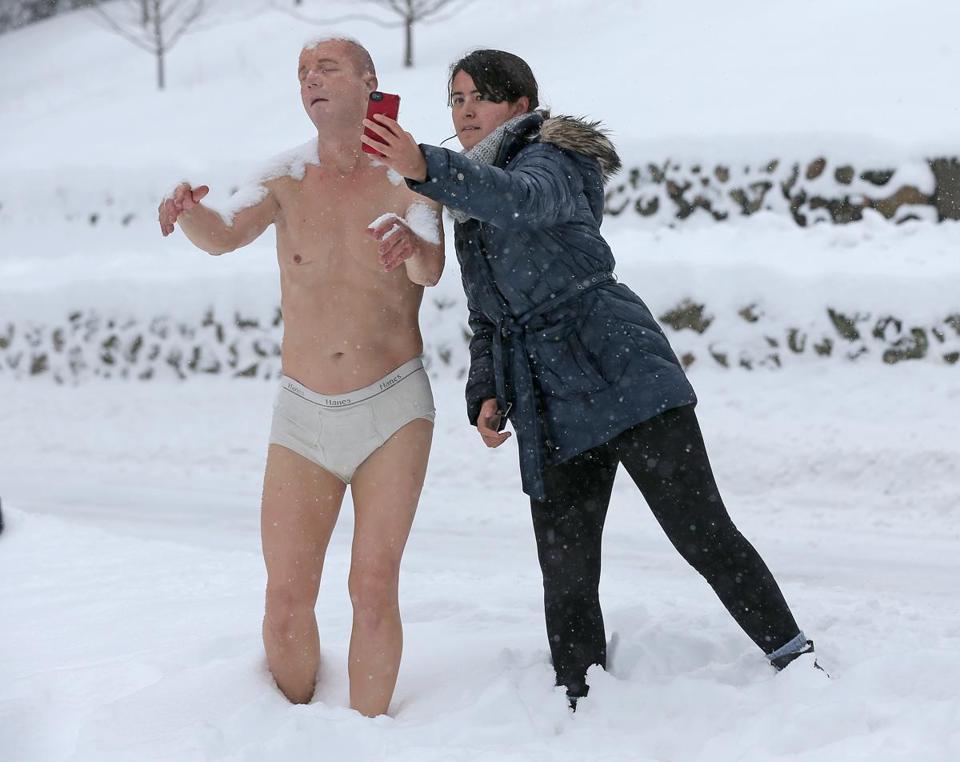
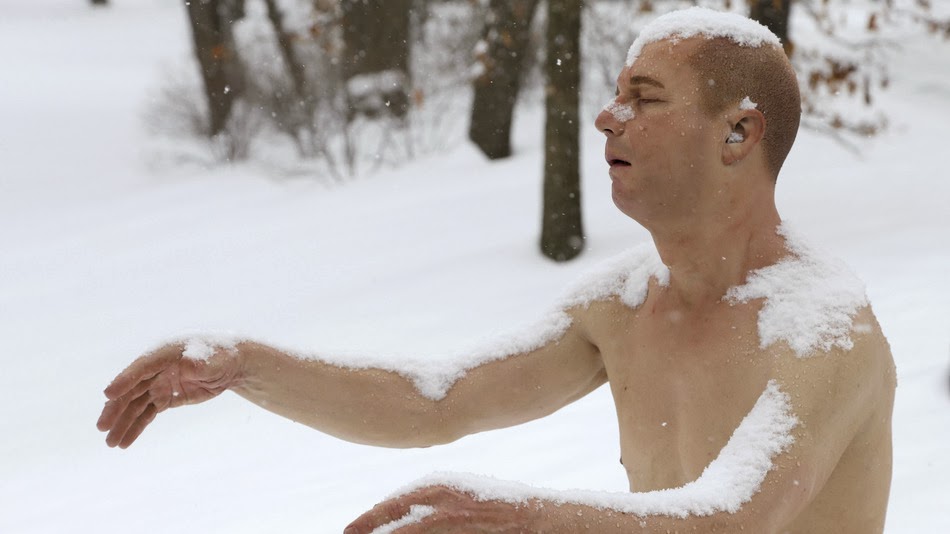
On the Wellesley campus, the Davis Museum is showing an exhibit of sculptor Tony Matelli’s work, including the above statue set up outside the museum. A student objected to this, on the grounds that the statue could potentially be “triggering,” and started a petition to move “Sleepwalker” inside the museum.

From the petition:

We also stand firm that art, particularly outdoor art installations, are valuable parts of our community. We welcome outdoor art that is provocative without being a site of unnecessary distress…

Although to bring Frederick Douglass up in this context is rhetorical overkill – he had much more crucial fish to fry – I just can’t help but be reminded of this quote from Douglass:

Those who profess to favor freedom and yet depreciate agitation, are people who want crops without ploughing the ground; they want rain without thunder and lightning; they want the ocean without the roar of its many waters.

sleepwalker-snowIt’s good to think about how public art affects all members of the community. But I still disagree with the petition. The cost to art, and the art-loving public, of insisting that no public art that could even hypothetically cause distress should ever be seen is too high. And the list of things that are potential triggers is simply too long – a friend of mine has PTSD that can be triggered by teddy bears, for instance, and Dylan Farrow finds it difficult to look at toy trains. I don’t say this to make fun of my friend, or of Farrow. The suffering they experience is real, but trying to remove all potential triggers from public art would essentially require removing all public art.

Charlotte Alter in Time writes:

Our new Awareness Culture has done a lot of good in the world, especially when it comes to forcing us to acknowledge issues that affect people in the minority. It’s because of Awareness Culture that we rightly call Blurred Lines sexist, Paula Deen racist, and keep our pronouns straight when talking about transgender people.

But the problem with Awareness Culture is the expectation that once offended – or, in most cases, once a hypothetical offensiveness has been identified – the world must immediately act to make the “bad thing” disappear. There’s something spoiled about our knee-jerk reaction to abolish anything that could be considered even remotely insensitive. The message is, “it’s possible that someone somewhere might feel momentarily bad because of this, so get rid of it right this second! And by the way, you’re an asshole if you don’t agree.”

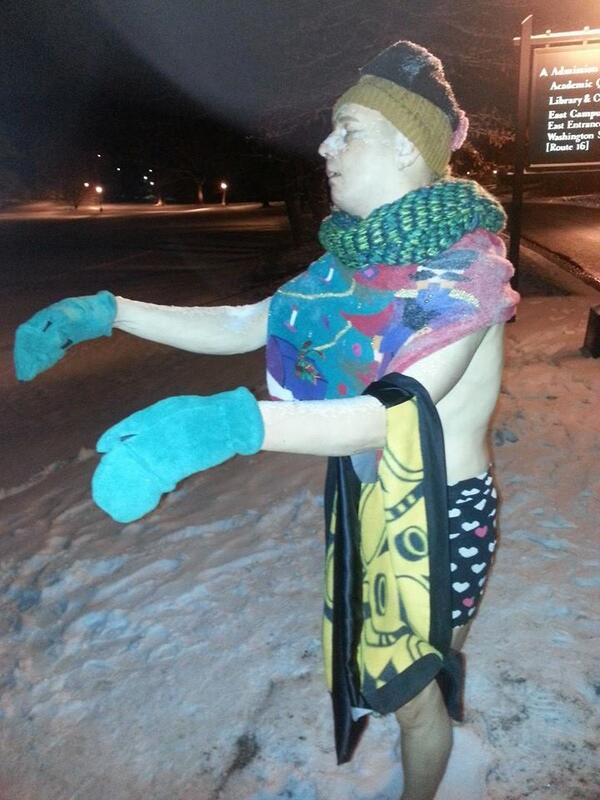
sleepwalker-dressedAlthough I agree with the above quote, at other times Alter’s rhetoric soars high above reasonableness – i.e., “It’s the refrain of a generation of sheltered children who grew up to insist on sheltering themselves as adults,” as if the people who have signed this petition represent their entire generation. In fact, lots of young people in the area have been responding to “Sleepwalker” in other ways, such as taking selfies, starting a twitter feed from the Sleepwalker, and building it a snow friend. (See also “Boobtube”‘s take on it.). And anytime you find yourself typing “Soviet-level censorship” about campus activists circulating a petition, you’re in serious need of a chill pill mixed liberally with some perspective wine.

But for true silliness, we need to turn to the right-wing libertarian Reason site. Zenon Evans, in “Is Wellesley’s Underwear-Clad Statue Too Scary For Free Speech?,” writes:

So, she started a petition demanding the university stick Sleepwalker inside the museum, away from the public eye. 722 people, about one-third the school’s student population, have signed.

Wow, that sure makes it sound like a third of the student population signed the petition! But, actually, the change.org petition doesn’t have any way of limiting signers to students. The “recent signatures” feature on the petition page lists where the signatures are coming from, and (currently at least) not one of the recent signatures are from Wellesley. Of course, it’s possible that someone who lists themselves as being from Texas is nonetheless a current Wellesley student. It’s also possible someone listed as from Wellesley isn’t a student. I have no way of knowing whether or not the people signing are Wellesley students, and neither does Mr. Evans.

sleepwalker-armsBut that’s a minor point. My major complaint is that Evans – who calls the petition an attempt to “censor” the statue – and whoever wrote the headline seem to have no idea what free speech is. It is not an affront to free speech for a Wellesley student to start a petition asking the administration to move a piece of public art. On the contrary, it’s hard to imagine any free speech regime which would not include students starting petitions regarding all sorts of public matters. Conservatives really don’t seem to understand that freedom of speech does not include freedom from criticism.

Amanda Marcotte, not for the first time, has the most sensible take I’ve seen:

I’m sure this story is on its way to a conservative media outlet near you, where some white, privileged man in tighty-whities will roll his eyes about the hysterical feminists, which, in this case, well—good call. Still, one thing I’ve been trying to keep in mind is that the women getting wound up about the statue are really young and just starting to explore the identity of “feminist.” College is a time for taking everything too far, from drinking beer to sports fandom to sexual drama to using your fancy new vocabulary words picked up in women’s studies courses. Which doesn’t mean that one should refrain from having a laugh over this, of course. Let’s hope Fred Armisen and Carrie Brownstein are taking careful notes for the next season of Portlandia.

See also: Sleepwalking Man in Underwear Sculpture Is Unpopular at a Women’s College | Slog

Posted in Feminism, sexism, etc, Free speech, censorship, copyright law, etc., In the news, Mind-blowing Miscellania and other Neat Stuff | 35 Comments

Love This Cartoon By Clay Butler

sidewalk_bubblegum_150

I came across this cartoon on Facebook – where it was poorly reproduced and had Butler’s credit at the bottom cut out (why do people do that? I can see why people reblog and repost cartoons that lack a credit line – I do that myself – but who cuts out the credit line in the first place, and why?). To me, the cartoon is clearly about rich people who yell “class warfare!” every time someone criticizes, well, rich people. But reading the comments on Facebook, many people seem to take it as a straightforward cartoon about postmodernism.

(With only a small change to how the stepped-on character is drawn, it could also work as a cartoon about racism, or misogyny, or transphobia, or homophobia, etc.) (ETA: Well, actually, you don’t need to change it at all to potentially be about transphobia or homophobia.)

Anyhow, Clay Butler’s “Sidewalk Bubblegum” archive is here, and well worth checking out.

Posted in Class, poverty, labor, & related issues, Comics I Like | 14 Comments